Jal Shakti Minister Paatil urges India to conserve water
Synopsis
Union Jal Shakti Minister C. R. Paatil posted a Hindi call to action on 7 August 2026, urging Indians to conserve water through small daily habits. Invoking the slogan 'Jal hai toh kal hai,' the post aligns with the Jal Jeevan Mission's push to address India's deepening water scarcity through both infrastructure and behavioural change.
Key Takeaways
Union Jal Shakti Minister C.
Paatil posted a water conservation appeal on 7 August 2026 .
The Hindi post urged citizens to adopt small daily habits to prevent future water scarcity.
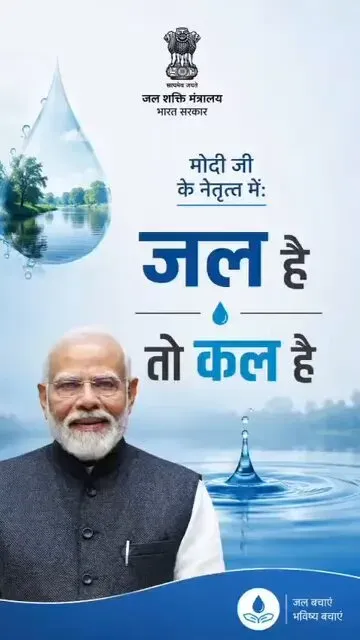
The slogan 'Jal hai toh kal hai' ('If there is water, there is a tomorrow') is the guiding philosophy of the Jal Jeevan Mission .
The Jal Jeevan Mission , launched in 2019 , aims to provide tap-water connections to all rural households in India.
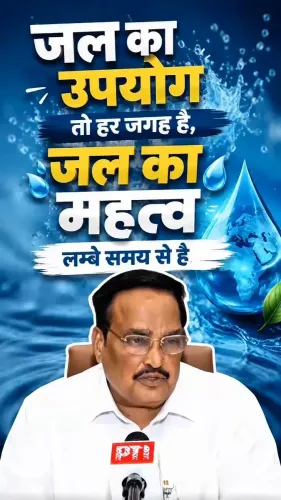
The post was accompanied by a video, indicating a broader ministry awareness campaign.
India holds roughly 4% of global fresh water while supporting 18% of the world's population, making behavioural change a critical policy lever.
Every sip counts. That is the message Union Jal Shakti Minister C. R. Paatil sent to the nation on Friday, 7 August 2026, posting a sharp, Hindi-language call to action that distilled India's water crisis into a single line: 'Jal hai toh kal hai' — 'If there is water, there is a tomorrow.'
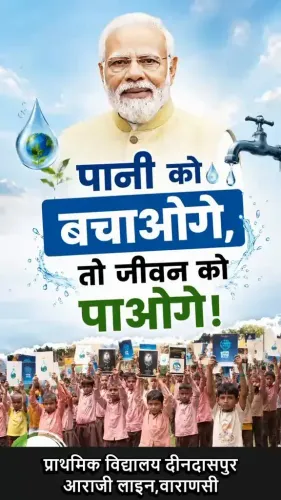
Posting on X, Minister Paatil wrote: 'Make big changes through small habits. Understand the value of every sip, take care of water. This is the only solution to avoid tomorrow's scarcity. If there is water, there is a tomorrow.'
A slogan rooted in national water policy
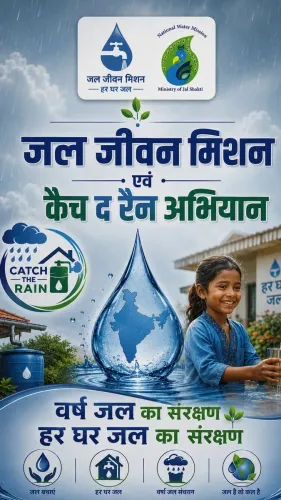
The phrase 'Jal hai toh kal hai' is not incidental — it is the governing philosophy behind the Jal Jeevan Mission, the flagship central scheme launched in 2019 to deliver functional tap-water connections to every rural household in India. The Ministry of Jal Shakti, which Paatil heads, sits at the centre of that effort, overseeing water resources, river development, and drinking water supply programmes across the country. But infrastructure alone cannot solve scarcity. That is precisely the gap this post addresses. Successive governments have paired large pipeline-and-reservoir programmes with public behavioural campaigns, recognising that groundwater depletion and seasonal drought are as much a product of everyday habits as of policy failures. Paatil's message fits squarely into that tradition — nudging citizens to see conservation not as sacrifice, but as self-preservation.Why the 'small habits' framing matters
The minister's framing — 'choti-choti aadaton se bade-bade badlav', or 'big changes through small habits' — is deliberate. India's water stress is not uniform: urban residents waste through leaky infrastructure and unchecked consumption, while rural communities in states like Rajasthan, Maharashtra, and Uttar Pradesh face acute seasonal shortages. A message pitched at individual behaviour reaches both audiences simultaneously, without requiring a policy announcement. The post accompanies a video, suggesting the ministry is running a wider awareness push rather than making a standalone statement. Watch for new state-level conservation drives or Jal Jeevan Mission progress updates in coming budget or monsoon sessions — this kind of ministerial messaging often signals a campaign is building. The arithmetic of India's water future is unforgiving. The country holds roughly four per cent of the world's fresh water but supports eighteen per cent of its population. Every habit changed at the household level is, in aggregate, a policy win. Paatil's post is a reminder that the minister knows it.Point of View
The minister reinforces brand continuity for the scheme while addressing a gap that pipes and taps alone cannot fill. The timing — mid-monsoon, when water feels abundant — is strategically counterintuitive, reminding citizens that seasonal rains mask a long-term structural deficit. It signals that the ministry's communication strategy is maturing from project announcements toward sustained public engagement.
NationPress
7 Aug 2026
Frequently Asked Questions
What did Jal Shakti Minister C. R. Paatil post about water conservation?
Minister Paatil posted a Hindi message on 7 August 2026 urging Indians to make big changes through small daily habits, understand the value of every sip of water, and conserve water to avoid future scarcity, ending with the slogan 'Jal hai toh kal hai' — 'If there is water, there is a tomorrow.'
What is the Jal Jeevan Mission and how does it relate to this message?
The Jal Jeevan Mission is a central government scheme launched in 2019 to provide functional tap-water connections to every rural household in India. The slogan 'Jal hai toh kal hai' is closely associated with the mission, and the Ministry of Jal Shakti, which Paatil heads, oversees its implementation.
Why is water conservation important in India?
India holds approximately four per cent of the world's fresh water while supporting around eighteen per cent of its population. Groundwater depletion and seasonal scarcity affect millions, making both large-scale infrastructure and everyday behavioural change essential to long-term water security.
Who is C. R. Paatil?
C. R. Paatil is the Union Minister of Jal Shakti in the Government of India, a senior BJP leader, and a former BJP Gujarat state president.
What does 'Jal hai toh kal hai' mean?
'Jal hai toh kal hai' is a Hindi phrase meaning 'If there is water, there is a tomorrow.' It serves as the core slogan of India's water conservation and Jal Jeevan Mission campaigns, linking water availability directly to the nation's future.