Bihar Signs ₹21,000 Cr MoU with NABARD for Roads & Bridges

Synopsis
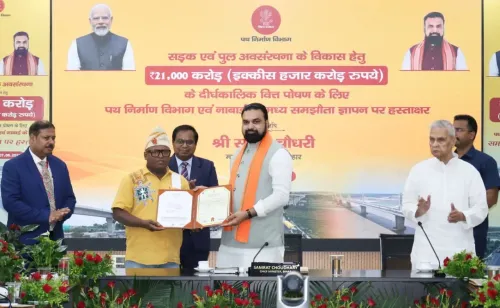
Bihar's Road Construction Department and NABARD signed a ₹21,000 crore MoU on 7 August 2026 for long-term financing of road and bridge infrastructure, with Chief Minister Samrat Choudhary presiding at the Sankalp auditorium in Patna.
Key Takeaways
₹21,000 crore in long-term financing committed through an MoU between Bihar's Road Construction Department and NABARD .
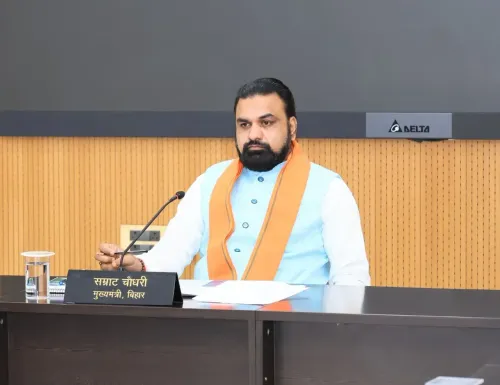
The signing took place on 7 August 2026 at the 'Sankalp' auditorium, Lok Sewak Avas, Patna , in the presence of CM Samrat Choudhary .
NABARD , established in 1982 , has financed state road and bridge projects through its Rural Infrastructure Development Fund (RIDF) since 1995 .
Funding is structured as long-term financing with multi-year repayment tied to project execution milestones.
Key beneficiaries include rural residents, farmers, and road users across Bihar.
Phased project rollout and state maintenance budget allocations will determine real-world impact.
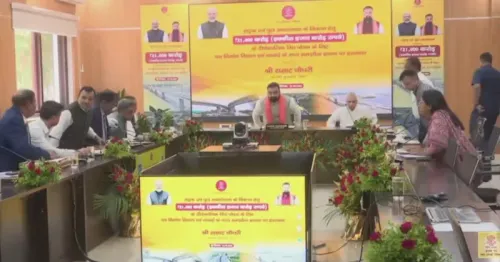
Twenty-one thousand crore rupees — that is the scale of the bet Bihar is placing on its roads and bridges. The Chief Minister's Office of Bihar announced on Friday, 7 August 2026 that the state's Road Construction Department signed a landmark Memorandum of Understanding with NABARD for long-term financing of road and bridge infrastructure across the state, with the ceremony held in the presence of Chief Minister Samrat Choudhary at the 'Sankalp' sabhagar ('Sankalp' auditorium) at Lok Sewak Avas, Patna.
₹21,000 Crore on the Table — What the MoU Covers
The agreement formalises a long-term funding arrangement between Bihar's Road Construction Department and the National Bank for Agriculture and Rural Development (NABARD) specifically for the development of road and bridge infrastructure across the state. MoUs of this structure typically cover multi-year repayment schedules tied to phased project execution — meaning the money flows as construction milestones are met, not in a single disbursement.
NABARD's mandate makes it a natural partner here. Established in 1982, the institution has channelled long-term financing into rural infrastructure for decades, and its Rural Infrastructure Development Fund (RIDF) — launched in 1995 — has backed state road and bridge projects across India in a recurring institutional pattern. Bihar is now tapping that pipeline at a scale that signals serious ambition.
Why Bihar's Road Gap Has Long Demanded This Scale
Bihar has persistently pursued expanded road and bridge networks to stitch together a state where river crossings and rural connectivity have historically throttled economic movement. For farmers, the stakes are direct: better roads cut post-harvest transit times, reduce spoilage, and open access to wider markets. For the broader economy, improved intra-state connectivity is a prerequisite for industrial investment.
NABARD financing through state departments is not new to India, but a single-MoU commitment at ₹21,000 crore for one state's road and bridge programme represents a substantial institutional push. The phased rollout of projects under this arrangement — and how quickly Bihar's Road Construction Department can translate the financing into on-ground contracts — will determine whether the commitment becomes transformative or merely aspirational.
The Sankalp Auditorium Signing — Symbolism and Stakes
The choice of venue carries its own signal. Sankalp translates to 'resolve' or 'commitment' — and the state government's decision to host the signing at the Chief Minister's official residence complex, with CM Samrat Choudhary presiding, elevates this beyond a routine departmental exercise. It positions the MoU as a political priority, not just a bureaucratic transaction.
Watch for subsequent state budget allocations for road maintenance — because financing construction is only half the equation. Infrastructure built without a maintenance pipeline degrades fast, and Bihar's track record on that front will be the real test of whether this ₹21,000 crore bet pays off.
Point of View
000 crore NABARD-backed MoU is the kind of headline number that signals political intent as much as fiscal planning — Bihar's leadership is framing infrastructure investment as the centrepiece of its development narrative. NABARD's RIDF has been a workhorse for state road financing across India for three decades, but the scale of this single commitment stands out and reflects Bihar's continued push to close a historically wide connectivity gap. The real analytical question is execution: Bihar has attracted large infrastructure commitments before, and the speed of project tendering and contractor mobilisation will determine whether this MoU translates into roads on the ground or remains a press-conference milestone. If the phased disbursement mechanism holds discipline, this could meaningfully accelerate rural economic integration across the state.
NationPress
22 Sept 2026
Frequently Asked Questions
What is the Bihar NABARD MoU for roads and bridges?
Bihar's Road Construction Department signed a Memorandum of Understanding with NABARD on 7 August 2026 for ₹21,000 crore in long-term financing to develop road and bridge infrastructure across the state.
What is NABARD's role in Bihar road construction?
NABARD provides long-term institutional financing for rural infrastructure projects. Its Rural Infrastructure Development Fund (RIDF), active since 1995, has backed state road and bridge projects across India, including in Bihar.
Who was present at the Bihar NABARD MoU signing?
Chief Minister Samrat Choudhary presided over the signing ceremony, held at the 'Sankalp' auditorium at Lok Sewak Avas in Patna on 7 August 2026.
How will the ₹21,000 crore NABARD funds be used in Bihar?
The funds are designated for the development of road and bridge infrastructure across Bihar, with disbursement typically tied to phased project execution milestones under multi-year repayment schedules.
Who benefits from Bihar's new road and bridge financing deal?
The primary beneficiaries are rural residents, farmers, and everyday road users across Bihar, who stand to gain from improved connectivity, reduced travel times, and better market access.