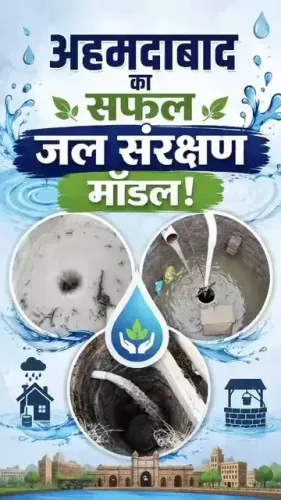
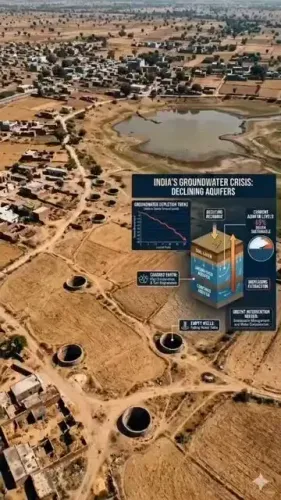
Jal Shakti Minister Paatil champions water conservation as national movement
Synopsis
Union Jal Shakti Minister C. R. Paatil invoked the monsoon season on 17 July 2026 to champion India's water-conservation agenda, calling Jal Jeevan Mission and Catch the Rain pillars of a national movement toward self-reliant water management under PM Modi's leadership.
Key Takeaways
Paatil , Union Minister of Jal Shakti, posted on 17 July 2026 framing water conservation as a mass people's movement.
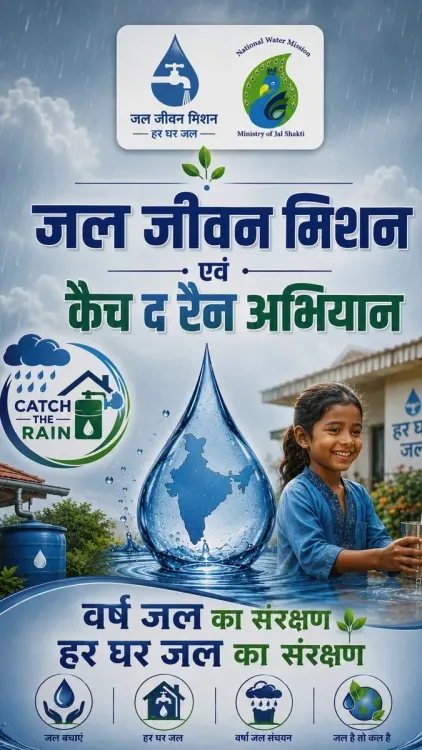
He cited Jal Jeevan Mission and the Catch the Rain campaign as twin pillars of India's water-security strategy.
Jal Jeevan Mission was launched in 2019 to deliver piped tap water to every rural household in India.
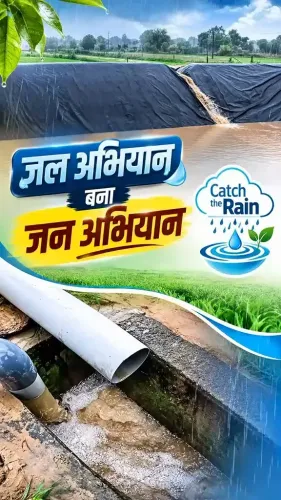
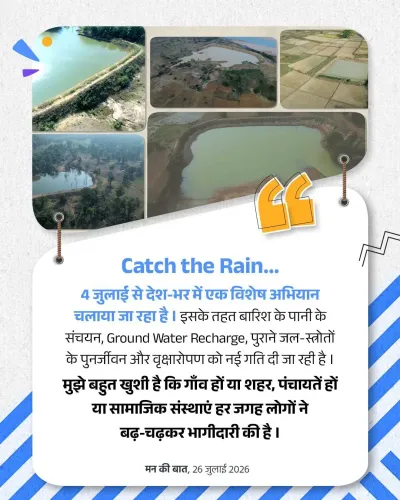
The Catch the Rain campaign, started in 2020 , runs as an annual pre-monsoon drive promoting rainwater harvesting and groundwater recharge.
The Atal Bhujal Yojana , also approved in 2019 , targets community-led groundwater management in priority blocks.
The post aligns water security with the government's broader Viksit Bharat development vision, emphasising self-reliant water management.
Union Jal Shakti Minister C. R. Paatil on Friday, 17 July 2026, called water conservation a mass people's movement, crediting Prime Minister Narendra Modi's leadership for transforming India's approach to water security through flagship schemes including Jal Jeevan Mission and the Catch the Rain campaign.
Posting in Hindi on X, Paatil wrote: 'जहाँ वर्षा की हर बूंद सहेजी जाती है, वहीं समृद्ध भविष्य की नींव रखी जाती है' — 'Where every raindrop is conserved, there the foundation of a prosperous future is laid.' He described rainwater harvesting, groundwater recharge and public participation as the three pillars driving India toward self-reliant water management.
Context
The post arrives as India enters the heart of the 2026 monsoon season, the window the Ministry of Jal Shakti has consistently used to amplify water-conservation messaging. Paatil framed the twin programmes — Catch the Rain and Jal Jeevan Mission — not merely as administrative schemes but as a 'national campaign to ensure water security for coming generations.'
The Ministry of Jal Shakti was itself formed in 2019 by merging the erstwhile ministries of water resources and drinking water and sanitation, signalling the government's intent to treat supply-side and demand-side water challenges under a single institutional umbrella.
Policy Backdrop
Jal Jeevan Mission was announced in the 2019 Union Budget with the goal of providing a functional household tap connection to every rural home. The scheme set an original target of 2024 and has since been extended with an urban component, making piped water access a central plank of the government's rural infrastructure agenda.
The Catch the Rain campaign, launched by the ministry in 2020, is institutionalised as an annual pre-monsoon drive encouraging states, local bodies and citizens to create rainwater harvesting structures and recharge groundwater aquifers. Complementing both is the Atal Bhujal Yojana, approved in 2019, which targets groundwater management in priority blocks through community-led approaches. Together, these programmes constitute the government's integrated vision for water self-reliance, a theme Paatil invoked explicitly with the hashtag #ViksitBharat.
Stakeholders and Impact
Rural households and farmers are the primary beneficiaries of this policy cluster. Piped tap connections reduce the burden — disproportionately borne by women and girls — of fetching water over long distances, while groundwater recharge initiatives directly support agricultural communities dependent on wells and borewells.
The minister's emphasis on 'janandolan' (people's movement) and 'janbhagidari' (public participation) signals that the government views community mobilisation, not just infrastructure spending, as a critical delivery mechanism. State governments are assessed through annual action-plan evaluations tied to the Catch the Rain calendar, creating a competitive accountability layer between the centre and states.
What's Next
Attention will now turn to the release of the next Jal Jeevan Mission progress dashboard and state-level Catch the Rain action-plan evaluations, both expected ahead of the close of the 2026 monsoon season. Any parliamentary discussion on water-sector budgetary allocations in the upcoming budget session will also be closely watched.
Paatil's post reinforces that water security will remain a high-visibility political and policy priority as the government advances its Viksit Bharat development narrative — with conservation framed as both a civic duty and a developmental imperative for future generations.
Point of View
The minister simultaneously advances a policy narrative and a political brand. The framing of Jal Jeevan Mission and Catch the Rain as a unified 'national campaign' rather than discrete schemes reflects the centre's effort to project coherence across a complex, multi-agency water agenda. With JJM timelines having been extended beyond the original 2024 target, such messaging also serves to sustain public confidence in eventual delivery.
NationPress
16 Oct 2026
Frequently Asked Questions
What is the Catch the Rain campaign in India?
Catch the Rain is an annual pre-monsoon campaign launched by India's Ministry of Jal Shakti in 2020 to encourage rainwater harvesting, creation of water storage structures, and groundwater recharge across states and local bodies.
What is Jal Jeevan Mission and what is its goal?
Jal Jeevan Mission is a central government scheme announced in the 2019 Union Budget that aims to provide a functional household tap connection with piped drinking water to every rural home in India.
Who is C. R. Paatil and what ministry does he head?
C. R. Paatil is a senior BJP leader and former Gujarat state president who currently serves as Union Minister of Jal Shakti, the ministry responsible for water resources, drinking water and sanitation.
What is Atal Bhujal Yojana?
Atal Bhujal Yojana is a central scheme approved in 2019 to improve groundwater management in water-stressed priority blocks through community participation and data-driven planning.
What is the Ministry of Jal Shakti?
The Ministry of Jal Shakti was formed in 2019 by merging the earlier ministries of water resources and drinking water and sanitation, creating a single body to oversee India's water supply and conservation agenda.