East Turkistan exiles petition UN to label China a colonial power
Synopsis
For the first time in UN history, an exiled government has formally petitioned the UN's decolonisation committee to designate China as a colonial power. The East Turkistan Government-in-Exile's 25-page submission invokes the same decolonisation framework that freed over eighty nations — and directly challenges China's position as a permanent Security Council member sitting on the very body it is accused before.
Key Takeaways
The East Turkistan Government-in-Exile (ETGE) and ETNM submitted a 25-page petition to the UN C-24 on 6 May 2025 .
The petition seeks to designate China as an "occupying power" and inscribe East Turkistan as a 'Non-Self-Governing Territory' .
No state or entity has previously challenged China as a colonial power before any UN body, according to the ETGE.
China's five-year plan allegedly projected 13.75 million forced labour transfers between 2021 and 2025 ; UN Special Rapporteurs warn actual numbers may exceed this.
The petition flags China's conflict of interest as a permanent UN Security Council member sitting on the decolonisation oversight committee.
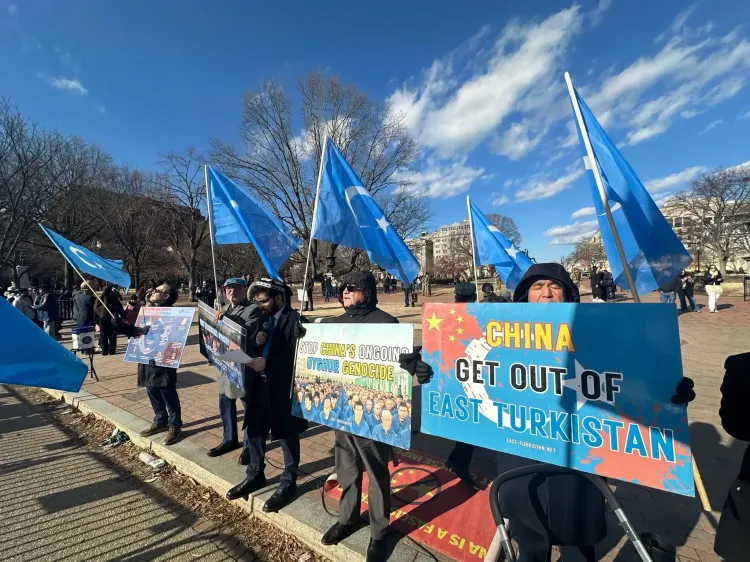
The East Turkistan Government-in-Exile (ETGE) has submitted a formal petition to the United Nations Special Committee on Decolonisation (C-24), requesting that the UN General Assembly designate China as the "occupying power" over East Turkistan. The 25-page petition, filed jointly with the East Turkistan National Movement (ETNM) on Tuesday, 6 May, also seeks the inscription of East Turkistan — officially known as the Xinjiang Uyghur Autonomous Region — as a 'Non-Self-Governing Territory' under the UN framework.
What the Petition Demands
According to the ETGE, a successful inscription would trigger a binding international framework obligating the UN to oversee East Turkistan's path toward self-determination. The exiled authorities noted that no state or entity has ever formally challenged China as a "colonial power" before any UN body — making this petition a first of its kind in the organisation's history.
Mamtimin Ala, President of the ETGE, said: "More than eighty nations achieved their independence through the decolonisation framework. Today, the people of East Turkistan formally assert that same right before the United Nations."
Allegations Against China
The petition alleges that the "genocide" of Uyghurs, Kazakhs, Kyrgyz, and other Turkic peoples in Xinjiang is entering its thirteenth year this month. The exiled authorities claim that "mass internment, credibly documented organ harvesting, forced sterilisation, and the separation of nearly one million children from their families" by Chinese authorities continue unabated in the region.
The petition further cites China's own five-year plan for the region, which reportedly projected 13.75 million forced labour transfers between 2021 and 2025. The ETGE also referenced warnings by UN Special Rapporteurs earlier this year that actual numbers of labour transfers have exceeded official projections and that such practices "may amount to enslavement as a crime against humanity."
The Legislative Angle
The petition opens with a pointed assertion: "The era of colonialism has not ended. It is being legislated." The ETGE cited the 'Law on Promoting Ethnic Unity and Progress', adopted by the National People's Congress in Beijing on 12 March, which the exiled authorities allege codifies "the erasure of distinct peoples and cultures into a single Chinese identity."
Salih Hudayar, Foreign Minister of the ETGE and President of the ETNM, said: "The ongoing genocide is rooted in China's colonial occupation of East Turkistan. Decolonisation and the restoration of our independence are the only effective guarantees of our people's survival."
Structural Challenge to the UN
Notably, the petition also calls for addressing what the ETGE describes as "China's conflict of interest as a permanent Security Council member and participant in the very committee mandated to oversee decolonisation" — a structural argument that complicates any prospect of UN action. Critics of the current framework have long argued that permanent Security Council membership creates an inherent accountability gap when the accused state holds veto power.
What Happens Next
The C-24 committee will need to formally consider the petition before any General Assembly action can be initiated. Given China's standing as a permanent UN Security Council member, the diplomatic path forward is expected to be deeply contested. The outcome of this petition could set a significant precedent for how the UN handles decolonisation claims against major powers.
Point of View
However, is building an evidentiary record and a normative framework that future tribunals, sanctions regimes, or diplomatic coalitions could draw upon. The invocation of the decolonisation framework is strategically shrewd: it bypasses the human rights machinery — which Beijing has successfully blunted — and routes the claim through a different UN body with a distinct mandate. Whether C-24 acts or not, the petition forces a structural conversation about whether the UN's decolonisation architecture can apply to a sitting permanent member, a question the organisation has never had to answer.
NationPress
22 Sept 2026
Frequently Asked Questions
What is the East Turkistan Government-in-Exile's petition to the UN about?
The ETGE has petitioned the UN Special Committee on Decolonisation (C-24) to designate China as the 'occupying power' over East Turkistan and to inscribe the region as a 'Non-Self-Governing Territory'. If accepted, this would trigger a binding UN framework obligating oversight of East Turkistan's path to self-determination.
Has any country or group ever challenged China as a colonial power at the UN before?
According to the ETGE, no state or entity has ever formally challenged China as a 'colonial power' before any UN body prior to this petition, making the 6 May 2025 submission a first in UN history.
What specific abuses does the petition allege in Xinjiang?
The petition alleges mass internment, credibly documented organ harvesting, forced sterilisation, and the separation of nearly one million children from their families. It also cites China's own five-year plan projecting 13.75 million forced labour transfers between 2021 and 2025.
Why does the petition raise China's UN Security Council membership?
The ETGE argues that China holds a conflict of interest as a permanent Security Council member while also participating in the C-24 committee mandated to oversee decolonisation — the very body being petitioned to act against China.
What law does the petition cite as evidence of cultural erasure?
The petition references the 'Law on Promoting Ethnic Unity and Progress', adopted by China's National People's Congress on 12 March, which the ETGE alleges codifies the erasure of distinct Turkic peoples and cultures into a single Chinese national identity.