Tibet, East Turkistan exile groups urge US Congress action on Chinese occupation
Synopsis
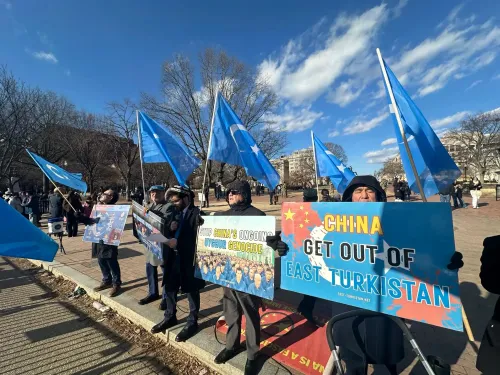
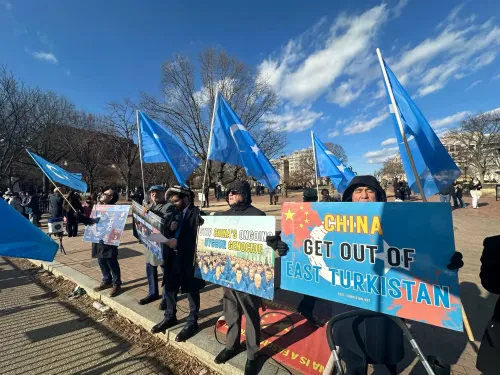
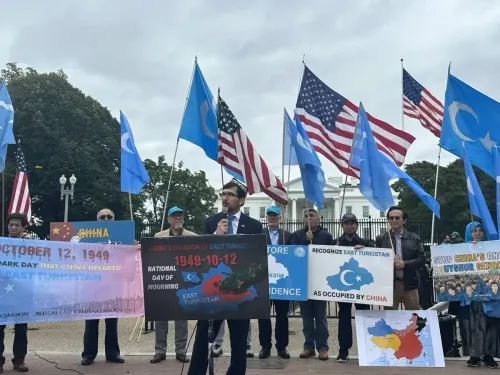
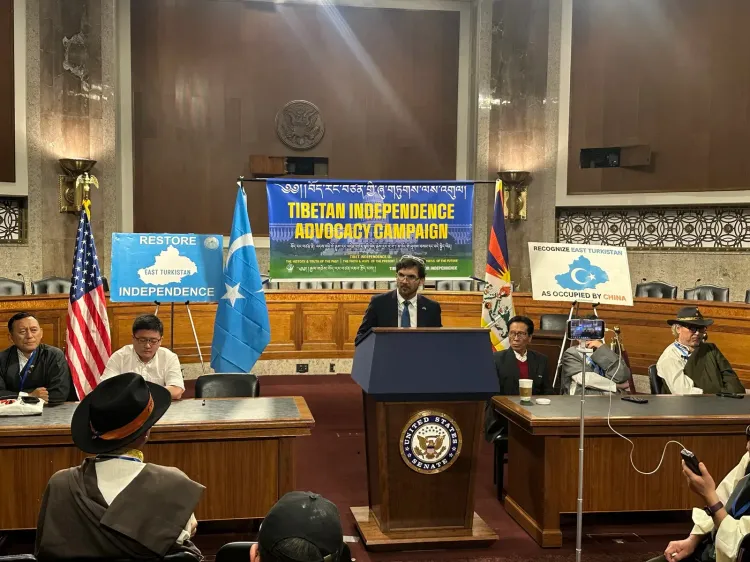
Four Tibetan and East Turkistani exile organisations took their independence push directly to Capitol Hill on 15 May, meeting offices of six senators and over twenty House members. With the US marking 250 years of independence, exile leaders invoked the Captive Nations Law and argued that human rights frameworks alone cannot end what they call China's colonial occupation — only full independence can.
Key Takeaways
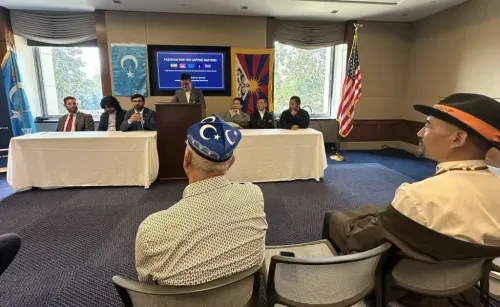
Exile groups from Tibet and East Turkistan held a joint advocacy event at the Dirksen Senate Office Building , Washington DC , on 15 May 2025 .
Representatives met with offices of six senators and more than twenty House members .
ETNM President Salih Hudayar called China 'a colonial empire' and demanded international recognition of East Turkistan as an occupied country.
Tibetan Patriots for Independence submitted a formal petition calling for Tibet's independence and recognition of 13 February as Tibet Independence Day.
The ETNM stated East Turkistan is in its thirteenth year of genocide under 76 years of Chinese occupation; Tibet in its seventy-fifth year .
Groups invoked the Captive Nations Law , arguing it obligates the US to support peoples seeking freedom.
Exiled representatives from Tibet and East Turkistan jointly pressed members of the United States Congress on 15 May 2025 to formally support independence for both territories, which they characterised as living under Chinese colonial occupation. The advocacy event, held at the Dirksen Senate Office Building in Washington DC, was organised by four exile organisations and included direct meetings with the offices of six senators and more than twenty House members.
Who Was Present and What They Demanded
The event brought together the Tibetan Patriots for Independence, the East Turkistan Government in Exile (ETGE), the East Turkistan National Movement (ETNM), and the East Turkistan National Fund (ETNF). Speakers called on Washington to recognise East Turkistan as an occupied country, back independence for both territories, and support the capacity of their peoples to resist what they described as Beijing's colonial and assimilationist policies.
Key Statements From Exile Leaders
Salih Hudayar, President of the ETNM and Foreign Minister of the ETGE, argued that China functions not as a nation-state but as a colonial empire. 'China is not a nation-state but a colonial empire,' he said, alleging that Beijing is pursuing a colonial project in the twenty-first century. He contended that the existing global human rights framework has proven insufficient, and that the international community must confront the structural cause of the occupation rather than its surface-level effects. 'You cannot stop a genocide while preserving the occupation that created it. Independence is not a radical demand; it is the only way to guarantee the human rights and very survival of our people,' Hudayar said.
Tenzin Wangdu, leader of the Tibetan Patriots for Independence and a former secretary of the Tibetan Youth Congress, submitted a formal petition to Congress calling for support for Tibet's independence and official recognition of 13 February as Tibet Independence Day. The petition also sought opposition to China's forced assimilation policies, protection of Tibetan religion, language, and culture, release of all Tibetan political prisoners, and safeguarding of Tibet's environment. 'Historically, Tibet was an independent and sovereign nation with its own government, language, culture, religion, currency, and national identity. We ask members of U.S. Congress to stand with the Tibetan people in support of freedom, human rights, religious liberty, and the recovery of Tibet's independence,' Wangdu said.
The Broader Context
The ETNM noted that as the United States marks 250 years of its own independence, East Turkistan — also known as the Xinjiang Uyghur Autonomous Region of China — enters what the group describes as its thirteenth year of genocide under 76 years of Chinese colonial occupation, while Tibet is said to be in its seventy-fifth year under Chinese rule. The groups also invoked the Captive Nations Law, a US legislative instrument, arguing it obliges Washington to stand with peoples still seeking freedom. This comes amid sustained international scrutiny of Beijing's policies in Xinjiang, which have drawn widespread condemnation from Western governments and human rights organisations, though China consistently rejects the characterisation of its actions as repressive or colonial.
What Comes Next
The advocacy teams' direct engagement with more than two dozen congressional offices signals an effort to build legislative momentum, though no specific bills or resolutions were announced at the event. The petition submitted by the Tibetan Patriots for Independence is expected to be formally entered into the congressional record. Observers note that US-China relations remain under significant strain, which could lend these exile groups greater access on Capitol Hill than in previous years.
Point of View
These groups are finding more receptive ears in Congress than they did a decade ago — but receptivity is not legislation. The invocation of the Captive Nations Law is strategically shrewd: it frames independence not as a radical ask but as a pre-existing US legal commitment. What mainstream coverage tends to miss is that the coalition-building between Tibetan and Uyghur groups is itself relatively new, and a unified front materially strengthens their lobbying hand. The harder question — whether any of this translates into binding US policy — remains unanswered.
NationPress
23 Sept 2026
Frequently Asked Questions
What happened at the Tibet and East Turkistan advocacy event in Washington?
Exiled representatives from Tibet and East Turkistan held a joint advocacy event at the Dirksen Senate Office Building on 15 May 2025, urging US Congress members to support independence for both territories from what they described as Chinese colonial occupation. They met with offices of six senators and more than twenty House members.
Who is Salih Hudayar and what did he say?
Salih Hudayar is the President of the East Turkistan National Movement and Foreign Minister of the East Turkistan Government in Exile. He argued that China functions as a colonial empire and called on the US and other nations to recognise East Turkistan as an occupied country and support its independence.
What did the Tibetan Patriots for Independence petition ask for?
The petition called for US congressional support for Tibet's independence, official recognition of 13 February as Tibet Independence Day, opposition to China's forced assimilation policies, protection of Tibetan religion, language and culture, release of Tibetan political prisoners, and protection of Tibet's environment.
What is the Captive Nations Law and why did the groups invoke it?
The Captive Nations Law is a US legislative instrument that calls on the United States to stand with peoples still seeking the recovery of their freedom and independence. The exile groups cited it to argue that Washington has a pre-existing legal obligation to support Tibet and East Turkistan.
How long have Tibet and East Turkistan been under Chinese rule according to exile groups?
According to the ETNM, East Turkistan has been under Chinese colonial occupation for 76 years and is in its thirteenth year of what the group describes as genocide. Tibet is said to be in its seventy-fifth year under Chinese occupation. China disputes both characterisations.