Jaishankar wraps CHOGM 2026 visit to Antigua and Barbuda

Synopsis
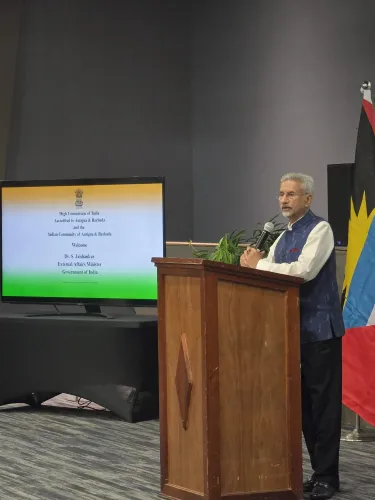
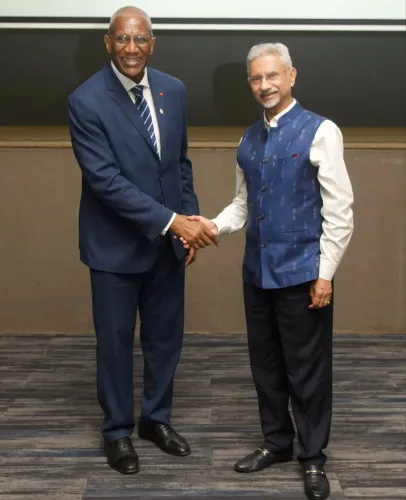
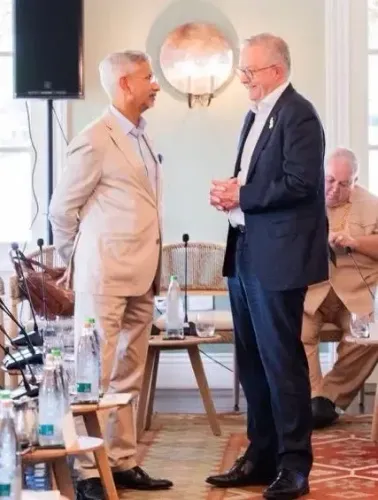
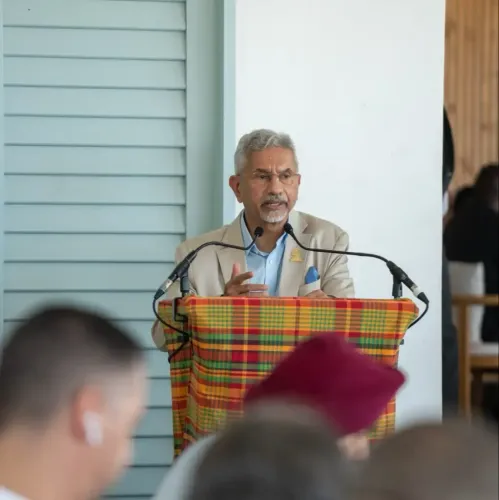
External Affairs Minister Dr. S. Jaishankar wrapped up his visit to Antigua and Barbuda for CHOGM 2026 on 6 November, reinforcing India's engagement with Caribbean Commonwealth nations and its commitment to the multilateral forum's climate and development agenda.
Key Takeaways
Jaishankar concluded India's ministerial visit to Antigua and Barbuda for CHOGM 2026 on 6 November 2026 .
Antigua and Barbuda is hosting CHOGM for the first time; India has participated in the summit since 1983 .
India established diplomatic relations with Antigua and Barbuda in 1981 , the year the island nation gained independence.
India engages the Caribbean through the India-CARICOM mechanism, using high-level visits to advance trade, climate, and development priorities.
Small island Commonwealth states are central to global conversations on climate resilience and development finance — areas where India plays an active bridging role.
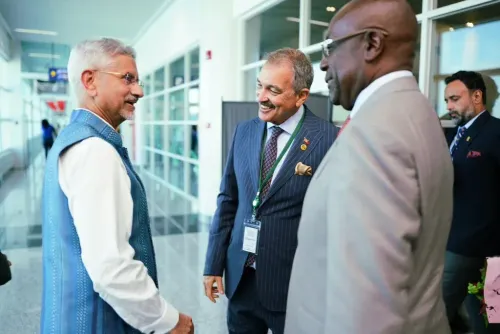
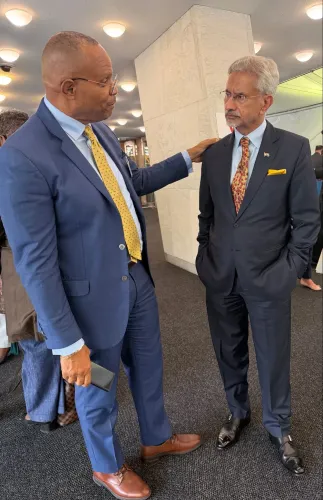
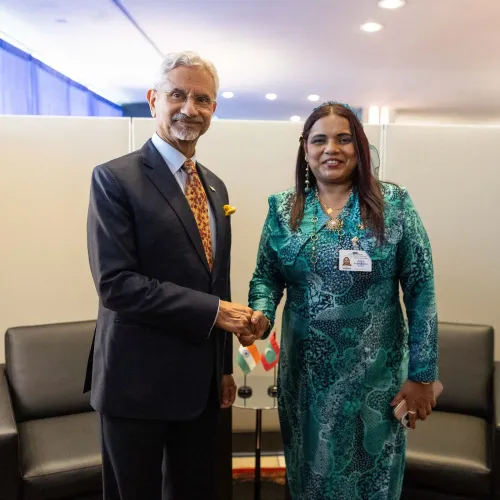
India's diplomatic footprint in the Caribbean just got a sharper outline. Union External Affairs Minister Dr. S. Jaishankar concluded his visit to Antigua and Barbuda on Friday, 6 November 2026, capping India's engagement at CHOGM 2026 — the Commonwealth Heads of Government Meeting hosted by the twin-island nation.
India at CHOGM 2026 in St. John's
Antigua and Barbuda, which gained independence from Britain in 1981 — the same year India established formal diplomatic ties with the country — is hosting the Commonwealth's flagship summit for the first time. CHOGM brings together leaders from across the 56-member Commonwealth, and India's participation at the ministerial level signals the weight New Delhi attaches to the multilateral forum.
India has been a consistent presence at successive CHOGM gatherings since 1983, using the platform to advance shared priorities on climate resilience, trade, and development finance — issues that resonate acutely with small island states like Antigua and Barbuda, which sit on the front line of rising sea levels.
India-Caribbean ties and the CARICOM thread
Dr. Jaishankar's stop fits a deliberate pattern. India has steadily deepened engagement with the Caribbean through the India-CARICOM mechanism, using high-level visits to translate multilateral goodwill into bilateral deliverables. Bilateral stops at the margins of large summits — or immediately before and after them — routinely serve as the moment agreements are signed and diplomatic tone is set.
The Indian diaspora is a living thread across the Caribbean: countries like Trinidad and Tobago and Guyana carry a substantial Indo-Caribbean heritage, lending an additional human dimension to India's regional diplomacy beyond pure statecraft.
What the visit signals for Commonwealth diplomacy
For a grouping that spans six continents and roughly 2.7 billion people, CHOGM's agenda increasingly reflects the concerns of its smallest and most climate-exposed members. India — itself a major voice on climate finance and the Global South — arrives at this summit with both the scale to lead and the credibility to broker.
The conclusion of Dr. Jaishankar's visit marks the close of India's immediate on-ground engagement, but the diplomatic momentum from St. John's will likely inform India's Commonwealth positions through the next summit cycle.
When a minister of Jaishankar's stature personally travels to a small-island host nation for CHOGM, the message isn't just ceremonial — it's a statement that the Caribbean matters on India's foreign-policy map.
Point of View
Long treated as a periphery on India's foreign-policy map, is increasingly viewed as a meaningful constituency in multilateral forums like the Commonwealth and the UN General Assembly. India's consistent CHOGM attendance since 1983, now elevated to the EAM level, is a marker of that reappraisal. The visit also reinforces Prime Minister Modi's broader 'Global South' diplomatic brand, with the Caribbean as a natural fit.
NationPress
6 Nov 2026
Frequently Asked Questions
What is CHOGM 2026 and where is it being held?
CHOGM 2026 — the Commonwealth Heads of Government Meeting — is the flagship summit of the 56-member Commonwealth, held in Antigua and Barbuda in the Caribbean. It is the first time the twin-island nation is hosting the gathering.
Why did Jaishankar visit Antigua and Barbuda?
Dr. S. Jaishankar represented India at CHOGM 2026 in Antigua and Barbuda, using the multilateral summit to engage Commonwealth partners and advance India's positions on climate, trade, and development.
What are India's diplomatic ties with Antigua and Barbuda?
India established formal diplomatic relations with Antigua and Barbuda in 1981 , the same year the island nation gained independence from Britain. The two countries are fellow Commonwealth members.
What is the India-CARICOM relationship?
India engages Caribbean nations collectively through the India-CARICOM mechanism, which facilitates high-level dialogue and cooperation on trade, climate resilience, and development finance across the Caribbean Community.
How long has India been attending CHOGM?
India has been a participant at successive Commonwealth Heads of Government Meetings since 1983 , consistently engaging the forum on shared global priorities.