East Turkistan exiles slam Pakistan for backing China's Xinjiang stance
Synopsis
The East Turkistan Government-in-Exile has accused Pakistan of being an 'active accomplice' to China's alleged genocide in Xinjiang — calling it not an isolated lapse but an annual ritual. With Islamabad's latest joint statement backing Beijing's 'just stance' on Xinjiang, the exiled group's Foreign Affairs Minister says Pakistan's claim to defend oppressed Muslims worldwide is now 'hollow.'
Key Takeaways
The East Turkistan Government-in-Exile (ETGE) condemned Pakistan on 27 May for endorsing China's position on Xinjiang in a bilateral joint statement.
Pakistan reportedly backed 'China's just stance on issues concerning Xinjiang' in the joint communiqué with Beijing.
The ETGE alleged Pakistan has become an 'active accomplice' to what it describes as genocide, citing a pattern of annual endorsements.
The group claims over 16,000 mosques have been demolished and millions of Muslims interned — allegations China denies.
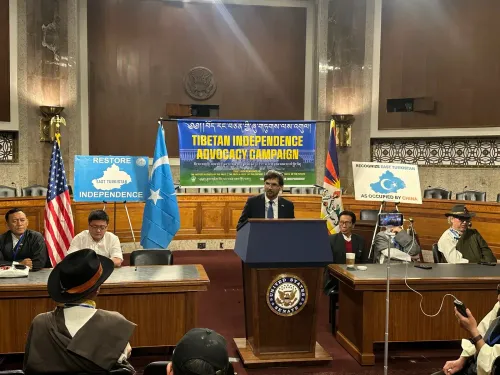
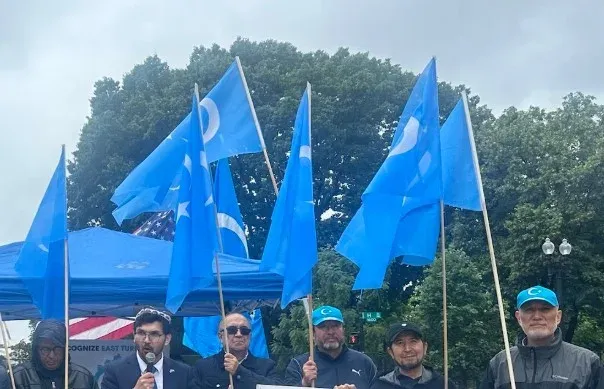
ETGE Foreign Affairs Minister Salih Hudayar said Islamabad's endorsement exposes its claim to defend Muslims as 'hollow.' The ETGE urged Pakistani citizens to reject their government's stance and support East Turkistan's 'liberation and independence.'
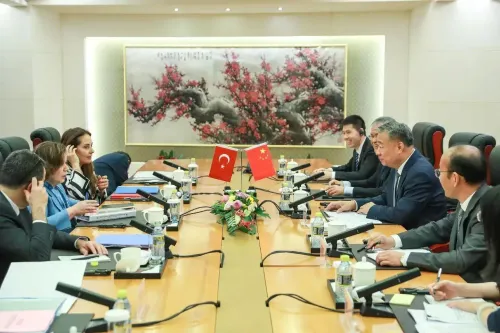
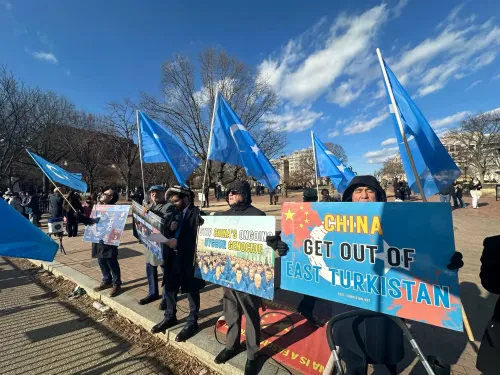
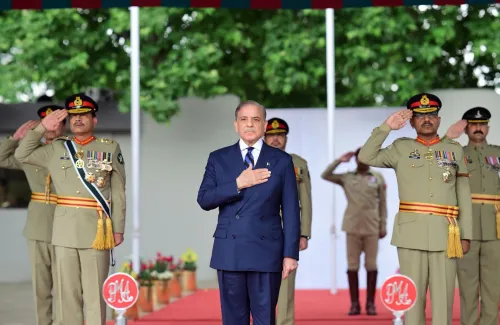
The East Turkistan Government-in-Exile (ETGE) on 27 May accused Pakistan of repeatedly endorsing Beijing's alleged 'genocide' and 'colonial occupation' of East Turkistan — the region internationally recognised as the Xinjiang Uyghur Autonomous Region of China. The condemnation followed a joint statement issued by Pakistan and China in which Islamabad reportedly backed 'China's just stance on issues concerning Xinjiang.'
What the ETGE Alleged
The exiled authority described Pakistan as an 'active accomplice' to what it characterised as the 'gravest colonial occupation and genocide' of the region. It called on the Pakistani government to reverse its 'treacherous actions' and cease supporting Beijing's policies in Xinjiang.
According to the ETGE, this was not an isolated incident but part of an annual pattern in which Islamabad routinely echoes Beijing's position through joint statements. The group alleged that Pakistan had 'long ago traded its sovereignty for Chinese loans, weapons, and patronage.'
The ETGE's Specific Accusations
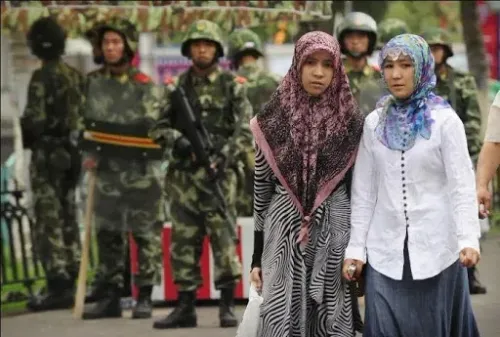
In a formal statement, the ETGE listed a series of alleged abuses it says Pakistan has now endorsed as 'just.' These include, according to the group: the internment of millions of Muslims in what it described as concentration camps; mass forced labour; forced sterilisation of Muslim women; the removal of over a million children to be raised outside Islamic faith; the killing of tens of thousands for organ harvesting; the demolition of more than 16,000 mosques; and the criminalisation of Muslim names, prayer, fasting, and Quranic practice in the region.
These are the ETGE's claims and characterisations. China has consistently denied allegations of systematic abuse in Xinjiang, describing its policies there as counter-terrorism and vocational training measures.
The 'ETIM' Label Dispute
The ETGE also rejected the joint statement's reference to the so-called 'ETIM,' arguing the label was 'fabricated by China after 9/11 by copying the acronym of the East Turkistan Independence Movement to recast a legitimate liberation struggle as terrorism.' The group further alleged that it was in Pakistan — described as China's 'all-weather ally' — that Beijing constructed the narrative of a Uyghur 'Islamist terrorist' threat through the establishment of the 'East Turkistan Islamic Party' in 1997.
ETGE Foreign Affairs Minister's Statement
Salih Hudayar, Minister of Foreign Affairs and Security of the ETGE, said: 'That Pakistan, a state that presents itself as a defender of oppressed Muslims, would bless the genocide and colonial subjugation of tens of millions of Muslims and parrot their executioner's propaganda exposes that claim as hollow. Islamabad's signature does not make genocide and colonial occupation just.'
What the ETGE Is Demanding
The exiled authorities urged the Pakistani public to reject their government's endorsement of China's policies in East Turkistan and to support what the ETGE termed the region's 'swift liberation and independence.' The statement signals a sharper confrontational posture from the exile group as China-Pakistan diplomatic coordination on Xinjiang appears to deepen.
Point of View
Where geopolitical alignment has become the price of investment. What makes this episode notable is the ETGE's explicit framing of Pakistan not merely as a bystander but as an original architect of the 'Uyghur terrorist' narrative dating to 1997. That claim, if substantiated, would recast Islamabad's role from passive endorser to active co-author of the suppression framework. Mainstream coverage tends to treat these exile statements as rhetorical; the harder question is whether any multilateral forum — the OIC in particular — will hold Pakistan accountable for its Xinjiang positions, given that the organisation has itself been criticised for silence on Uyghur rights.
NationPress
25 Sept 2026
Frequently Asked Questions
What did Pakistan say about Xinjiang in its joint statement with China?
Pakistan reportedly endorsed 'China's just stance on issues concerning Xinjiang' in a joint statement issued with Beijing. The East Turkistan Government-in-Exile condemned this as an endorsement of what it describes as genocide and colonial occupation of the region.
Who is the East Turkistan Government-in-Exile (ETGE)?
The ETGE is an exiled political body that claims to represent the people of East Turkistan — the region China administers as the Xinjiang Uyghur Autonomous Region. It operates from Washington and advocates for Uyghur rights and the region's independence.
What specific abuses does the ETGE say Pakistan has endorsed?
The ETGE claims Pakistan has effectively endorsed a range of alleged abuses including mass internment, forced labour, forced sterilisation, removal of children, organ harvesting, demolition of over 16,000 mosques, and criminalisation of Islamic practice. China denies these characterisations.
What is the 'ETIM' and why does the ETGE reject the label?
The East Turkistan Islamic Movement (ETIM) is a designation used by China and some governments to label a Uyghur militant group as a terrorist organisation. The ETGE rejects the label, arguing China fabricated it after 9/11 to recast a liberation movement as terrorism.
What is the ETGE demanding from Pakistan?
The ETGE is calling on the Pakistani government to reverse its endorsement of China's Xinjiang policies and urging Pakistani citizens to reject their government's stance. It is also demanding support for East Turkistan's 'swift liberation and independence.'