Mahua Moitra demands Education Minister's ouster after Wangchuk detained
Synopsis
TMC MP Mahua Moitra condemned the reported forcible detention of Ladakhi activist Sonam Wangchuk ahead of a planned 20 July march, also flagging a Police Commissioner transfer and demanding the Education Minister's resignation in a post on 18 July 2026.
Key Takeaways
TMC MP Mahua Moitra posted on 18 July 2026 alleging that activist Sonam Wangchuk was forcibly detained ahead of a 20 July march .
Moitra also alleged that the Police Commissioner was transferred in connection with the planned demonstration.
She demanded the resignation of the Education Minister , linking ministerial accountability to the reported crackdown.
Wangchuk has campaigned for Ladakh's statehood and Sixth Schedule protections since the region became a Union Territory without a legislature in August 2019 .
The 20 July march is now a focal point for both the opposition and the government's response to Ladakhi rights demands.
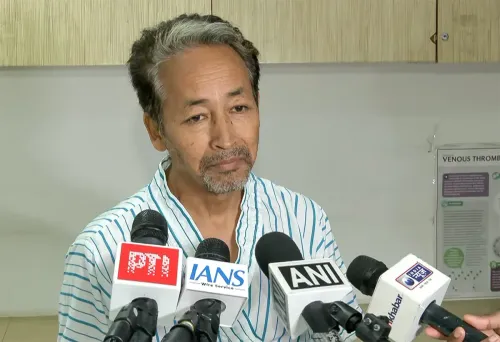
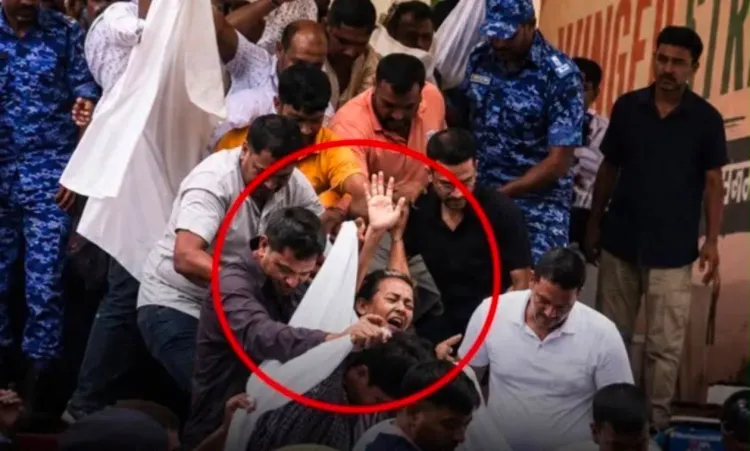
TMC MP Mahua Moitra on Saturday, 18 July 2026, sharply criticised the government after climate activist and Ladakhi reformer Sonam Wangchuk was reportedly detained ahead of a planned march scheduled for 20 July, calling for the resignation of the Education Minister and flagging the transfer of the Police Commissioner as evidence of official nervousness.
Context
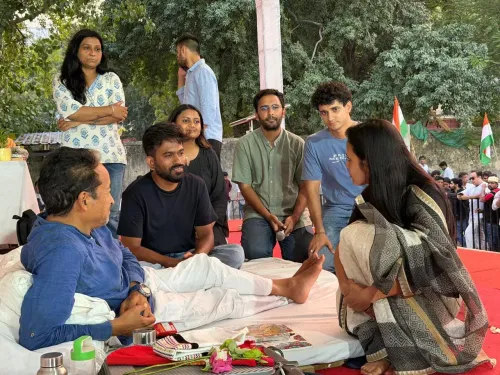
Moitra posted on X: 'So scared of 20th July March that @Wangchuk66 had to be dragged away forcibly & Police Commissioner changed. Education minister must go!' The post was accompanied by an image and was published on the morning of 18 July 2026. The statement directly links the detention of Wangchuk and an administrative reshuffle in the police leadership to what she characterises as government anxiety over the upcoming march.
Sonam Wangchuk, widely recognised as a grassroots education innovator and environmental campaigner from Ladakh, has in recent years become a prominent voice for Ladakh's statehood demand and the protection of its ecology and cultural identity. He has previously led hunger strikes and long marches to press these demands on the national government.
Policy Backdrop
Wangchuk's activism has centred on two broad demands: the restoration of full statehood to Ladakh — which was bifurcated from Jammu & Kashmir and made a Union Territory without a legislature in August 2019 — and the extension of Sixth Schedule protections to safeguard tribal land and cultural rights in the region. These demands have remained unresolved through multiple rounds of dialogue between Ladakhi representatives and the central government.
The invocation of the Education Minister by Moitra is notable. Wangchuk first gained national and international attention through the SECMOL (Students' Educational and Cultural Movement of Ladakh) initiative, which reimagined schooling for Himalayan communities, and his work partly inspired the Bollywood film 3 Idiots. Critics of the government's handling of Ladakh's post-2019 status have argued that promises made to the region on employment, land rights, and political representation have not been fulfilled.
Stakeholders and Impact
The 20 July march, as referenced in Moitra's post, appears to be a mobilisation tied to Wangchuk's ongoing campaign for Ladakh's rights. If the police commissioner was indeed transferred in the days immediately preceding the march, it represents a significant administrative move that opposition parties are likely to scrutinise. Moitra's intervention signals that the issue is gaining traction beyond Ladakh's immediate political constituency and is being adopted as a national opposition talking point.
The demand that the Education Minister resign adds a layer of accountability politics to what is primarily a civil-liberties and federalism dispute. By naming the minister, Moitra is framing the detention not merely as a law-and-order decision but as a political one with ministerial ownership.
What's Next
The 20 July march now becomes a focal point. Whether authorities permit it to proceed, and under what conditions, will determine the next phase of this standoff. Opposition parties, having amplified the detention publicly, are likely to raise the matter in Parliament and through coordinated social-media pressure. Wangchuk's ability to reach New Delhi and lead the march — or the government's response if he is prevented from doing so — will shape the political narrative around Ladakh's unresolved constitutional status for weeks to come.
Point of View
Two days before the march, suggests the opposition is seeking to pre-empt a crackdown narrative and maximise pressure before any confrontation on the ground. The transfer of a Police Commissioner on the eve of a major demonstration is a detail that will be difficult for the government to explain away, and it hands the opposition a concrete procedural grievance to anchor a broader argument about the erosion of democratic space in Union Territories. This episode is likely to accelerate demands in Parliament for a debate on Ladakh's constitutional status.
NationPress
16 Oct 2026
Frequently Asked Questions
Why was Sonam Wangchuk detained before the 20 July march?
According to TMC MP Mahua Moitra's post on 18 July 2026, Wangchuk was 'dragged away forcibly' ahead of a march planned for 20 July. Official reasons for the reported detention had not been publicly stated at the time of Moitra's post.
What is the 20 July march about?
The 20 July march is linked to Sonam Wangchuk's ongoing campaign for Ladakh's rights, including demands for full statehood and Sixth Schedule protections for the Union Territory, which has been without an elected legislature since August 2019.
Why is Mahua Moitra demanding the Education Minister's resignation?
Moitra holds the Education Minister accountable for what she characterises as the government's politically motivated detention of Wangchuk, who is globally recognised for his education-reform work in Ladakh through the SECMOL initiative.
Who is Sonam Wangchuk?
Sonam Wangchuk is a Ladakhi engineer, education innovator, and climate activist best known for founding SECMOL and for inspiring the character Phunsukh Wangdu in the film 3 Idiots. He has led hunger strikes and marches demanding statehood and tribal protections for Ladakh.
What is Mahua Moitra's political background?
Mahua Moitra is a Lok Sabha MP from Krishnanagar, West Bengal, representing the All India Trinamool Congress. She is a prominent opposition voice known for raising constitutional and civil-liberties issues in Parliament.