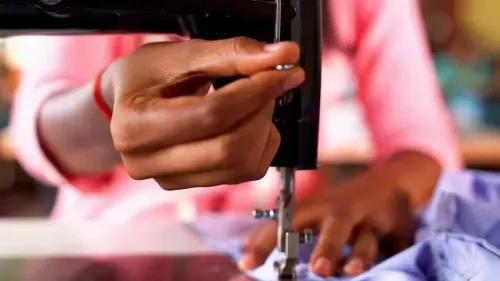
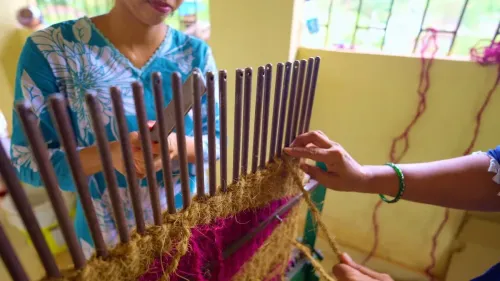
Goa CM Office Backs Women's Skill Training in Tailoring
Synopsis
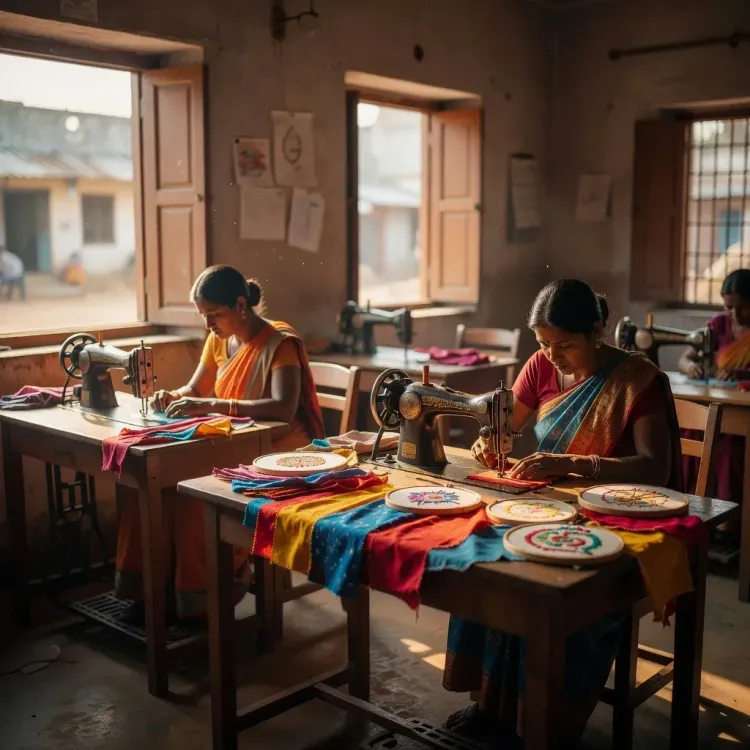
The Chief Minister's Office of Goa on 18 July 2026 announced that a Centre is training the first batch of 22 women in tailoring and hand embroidery, equipping them with industry-relevant skills for self-employment and sustainable livelihoods under the state's gender-inclusive vocational push.
Key Takeaways
The Chief Minister's Office of Goa announced a vocational training initiative on 18 July 2026 .
A Centre is currently training the first batch of 22 women in tailoring and hand embroidery.
The programme is designed to deliver industry-relevant skills enabling self-employment and sustainable livelihoods .
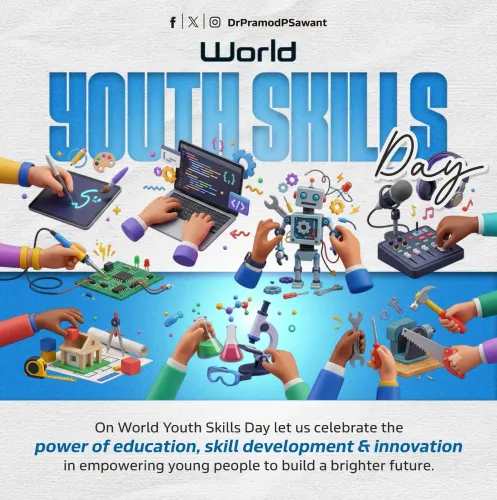
The initiative aligns with the national Skill India mission and Pradhan Mantri Kaushal Vikas Yojana , both launched in 2015.
Future benchmarks include subsequent training batches and enterprise or placement outcomes among graduates.
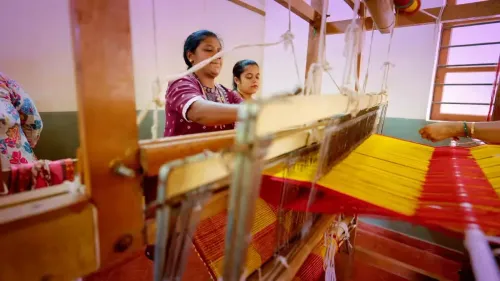
The Chief Minister's Office of Goa on Saturday, 18 July 2026 highlighted a vocational initiative under which a Centre is training the first batch of 22 women in tailoring and hand embroidery, equipping them with industry-relevant skills for self-employment and sustainable livelihoods.
Context
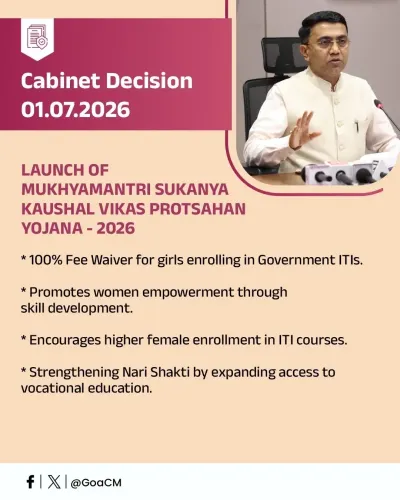
The post, shared from the official handle of Chief Minister Dr. Pramod Sawant's office, states that 'through structured courses in tailoring and hand embroidery, the Centre is training the first batch of 22 women with industry-relevant skills, enabling them to pursue self-employment and sustainable livelihoods.' The announcement underscores the state government's focus on gender-inclusive vocational training as a pathway out of wage dependency.
The initiative targets women seeking to build independent income streams in the apparel and handicrafts sector — two areas with consistent local and tourist demand in Goa.
Policy Backdrop
The programme aligns with the national Skill India mission, launched in 2015, which scaled vocational training across sectors including apparel, textiles, and traditional crafts. The Pradhan Mantri Kaushal Vikas Yojana (PMKVY), also operational since 2015, has funded short-duration skill courses at state-level centres, with tailoring and embroidery among the most widely offered modules for women.
Indian states have increasingly adopted short-duration vocational courses in traditional crafts to promote women's self-employment, reducing dependence on formal wage labour. Goa's programme fits squarely within the national emphasis on gender-inclusive skill development overseen by the Ministry of Skill Development and Entrepreneurship.
Stakeholders and Impact
The immediate beneficiaries are the 22 women in the first training batch, who gain structured, industry-relevant competencies in tailoring and hand embroidery — skills with direct market application in Goa's garment, boutique, and tourism-linked handicraft economy. Successful completion opens pathways to home-based enterprise, micro-business formation, or supply to larger retail and export chains.
Women entrepreneurs in Goa stand to benefit from the state's existing tourism infrastructure, which creates organic demand for handcrafted and embroidered products. The programme also contributes to broader goals of financial independence and gender equity in the workforce.
What's Next
Observers will watch for the rollout of subsequent batches beyond the initial 22 trainees, as well as data on placement rates and enterprise formation among graduates. Integration with state-level marketing support — such as facilitated access to craft fairs, e-commerce platforms, or government procurement — could significantly amplify the programme's economic impact.
The scale and continuity of the initiative will determine whether it evolves into a replicable model for women's skill development across Goa's diverse talukas, signalling a deeper institutional commitment to livelihood-linked vocational education.
Point of View
The state sidesteps questions about formal employment absorption and instead frames success around enterprise formation, a metric harder to audit but easier to celebrate. The focus on tailoring and hand embroidery is also strategic: these are low-capital, home-compatible trades that resonate with women in semi-urban and rural Goa. Whether the programme scales meaningfully will depend on whether marketing and market-linkage support follows the training investment.
NationPress
16 Oct 2026
Frequently Asked Questions
What is the Goa government training 22 women to do?
The Goa government's vocational centre is training 22 women in tailoring and hand embroidery through structured, industry-relevant courses aimed at enabling self-employment and sustainable livelihoods.
Which national scheme supports tailoring training for women in Goa?
The Pradhan Mantri Kaushal Vikas Yojana (PMKVY), operational since 2015, funds short-duration skill courses including tailoring and embroidery at state-level centres across India, including in Goa.
Who is the Chief Minister of Goa overseeing this initiative?
Dr. Pramod Sawant has served as Chief Minister of Goa since 2019 and oversees state-level welfare and skill development initiatives for women and youth.
How does Goa's women skill training connect to Skill India?
Goa's vocational programme in tailoring and embroidery aligns with the national Skill India mission launched in 2015, which scaled vocational training in apparel and handicrafts to promote gender-inclusive self-employment.
What happens after the first batch of 22 women completes training?
Subsequent batches are expected to follow; key outcomes to watch include enterprise formation rates, placements, and potential integration with state marketing support for hand-embroidered products.