Joshi hails Vikram-1 launch as milestone for private space
Synopsis
Union Minister Pralhad Joshi on 18 July 2026 celebrated Skyroot Aerospace's Vikram-1 becoming India's first privately developed orbital rocket to reach orbit under Mission Aagaman from Sriharikota, calling it a historic milestone enabled by PM Modi's space-sector reforms.
Key Takeaways
Vikram-1 by Skyroot Aerospace successfully reached orbit under Mission Aagaman on 18 July 2026 .
It is described as India's first privately developed orbital rocket to achieve orbit.
The launch took place from Satish Dhawan Space Centre, Sriharikota, Andhra Pradesh .
India is positioned as potentially the third country globally with a private company capable of orbital launch.
The mission is a product of space reforms announced in June 2020 and the Indian Space Policy 2023 , backed by regulator IN-SPACe .
A comprehensive Space Activities Bill remains pending in Parliament as the next major legislative step.
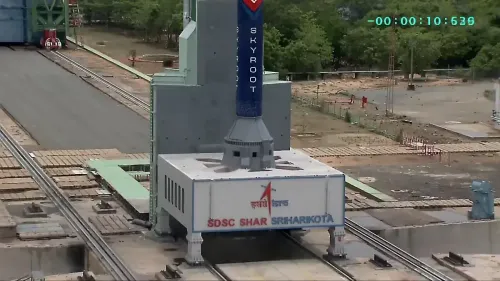
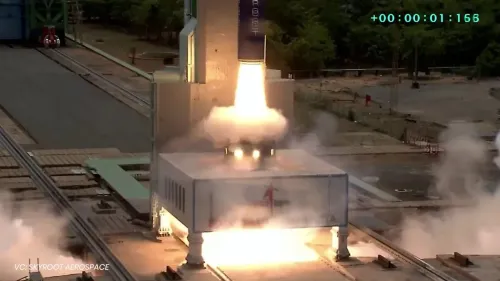
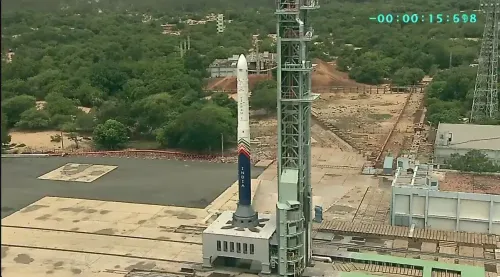
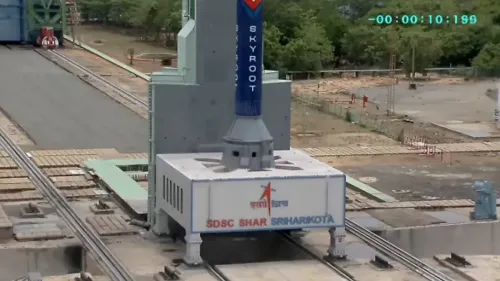
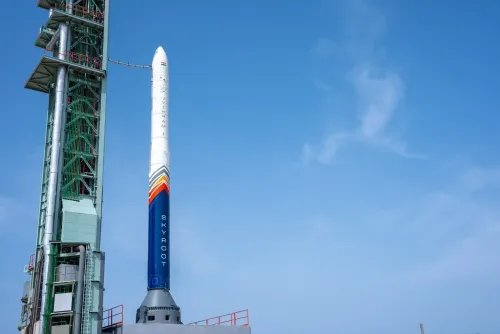
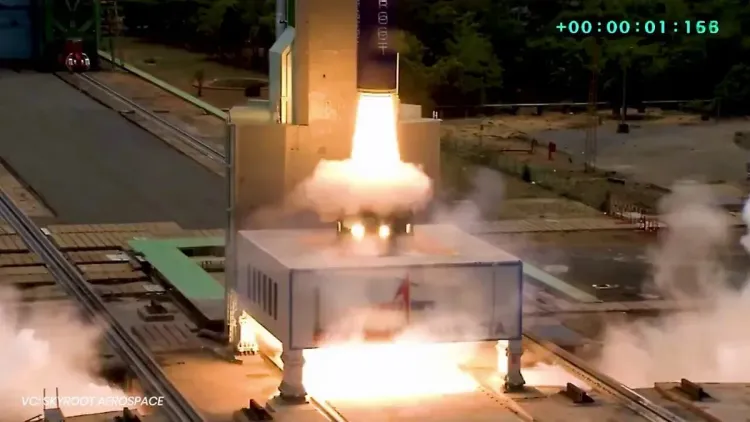
Union Consumer Affairs Minister Pralhad Joshi on Saturday, 18 July 2026, celebrated the successful orbital launch of Vikram-1 under Mission Aagaman by Skyroot Aerospace from the Satish Dhawan Space Centre, Sriharikota, calling it a historic milestone for India's private space sector.
Context
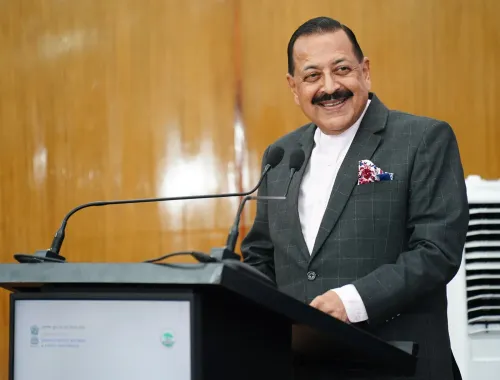
Joshi described the achievement as 'a new chapter in India's space journey,' noting that Vikram-1 became India's first privately developed orbital rocket to successfully reach orbit. He added that the feat brings India closer to becoming 'the third country in the world with a private company capable of launching a rocket into orbit,' crediting the success to the 'bold reforms and visionary leadership' of Prime Minister Narendra Modi.
Skyroot Aerospace, a Hyderabad-based start-up founded in 2018, has developed the Vikram series of small-lift launch vehicles. The company is among the first wave of Indian private firms to attempt end-to-end rocket development and launch operations, a domain historically monopolised by ISRO.
Policy Backdrop
The launch is a direct outcome of space-sector reforms initiated by the Government of India in June 2020, which opened launch services, satellite manufacturing and data dissemination to private entities for the first time. The government simultaneously established IN-SPACe (Indian National Space Promotion and Authorisation Centre) as a single-window regulatory body to facilitate and authorise non-governmental space activities.
The Indian Space Policy 2023 further codified private-sector roles in end-to-end launch and satellite operations, providing a clearer legal and commercial framework. These successive policy steps mirror the global 'NewSpace' trend, where private capital and entrepreneurship have dramatically reduced the cost of access to orbit in other major spacefaring nations.
Stakeholders and Impact
A successful orbital mission by a private Indian company has significant implications for the commercial small-satellite market, where global demand for affordable, rapid launch services has surged. Indian and international satellite operators, defence users, and earth-observation firms stand to benefit from a domestically available private launch option.
For India's broader start-up ecosystem, Mission Aagaman signals that deep-technology ventures in capital-intensive sectors can reach operational milestones under the current policy environment. ISRO continues to provide infrastructure access — including the Satish Dhawan Space Centre at Sriharikota, Andhra Pradesh — to private launch providers under the IN-SPACe framework.
What's Next
Attention will now turn to the commercialisation roadmap for Vikram-1 and Skyroot Aerospace's pipeline of follow-on missions, as the company looks to convert this orbital demonstration into paying launch contracts. Parliament is also expected to take up a comprehensive Space Activities Bill that would provide a more permanent legislative foundation for the private space economy.
India's ambition to capture a larger share of the global commercial launch market — projected to grow substantially through the decade — will depend on the pace at which private operators can scale cadence, reduce per-kilogram launch costs, and attract international payloads to Indian rockets.
Point of View
If confirmed, would represent the most tangible proof-of-concept yet for India's decade-long effort to commercialise space access — a policy arc that began under the 2020 reforms and was deepened by the 2023 Space Policy. Minister Joshi's celebratory post is consistent with the BJP government's broader messaging that economic liberalisation, extended to strategic sectors, produces world-class outcomes. The framing of India as 'the third country' with a private orbital launch capability is a pointed geopolitical signal, placing India alongside the United States and potentially China in a select club. Whether Skyroot can convert this milestone into a commercially sustainable launch cadence will determine how durable this narrative proves.
NationPress
18 Jul 2026
Frequently Asked Questions
What is Vikram-1 and who made it?
Vikram-1 is a small-lift orbital launch vehicle developed by Skyroot Aerospace, a Hyderabad-based private space start-up founded in 2018. It is India's first privately built rocket to successfully reach orbit.
What is Mission Aagaman?
Mission Aagaman is the name given to the orbital launch campaign for Skyroot Aerospace's Vikram-1 rocket, which lifted off from the Satish Dhawan Space Centre at Sriharikota on 18 July 2026.
Which countries have private companies that can launch rockets into orbit?
Minister Pralhad Joshi's post states that India's success with Vikram-1 brings it closer to being the third country in the world where a private company has achieved orbital launch capability, after the United States.
What reforms enabled private rocket launches in India?
The Government of India announced space-sector reforms in June 2020 opening launch and satellite services to private players. IN-SPACe was created as the regulatory body, and the Indian Space Policy 2023 further formalised private-sector roles in end-to-end space operations.
What is IN-SPACe and what does it do?
IN-SPACe, or the Indian National Space Promotion and Authorisation Centre, was established in 2020 as a single-window agency under the Department of Space to regulate, promote, and authorise non-governmental space activities in India.