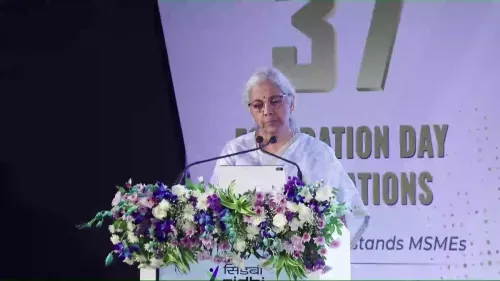
Sitharaman flags SIDBI's first agri-blended finance push for chilli farmers
Synopsis
Finance Minister Nirmala Sitharaman highlighted SIDBI's maiden integrated agri intervention, backing the VALARI chilli processing brand with ₹3.83 crore in blended finance and ₹50 lakh in working capital, supporting nearly 1,000 farmers including 472 women members with ISO 22000 and ZED certifications.
Key Takeaways
The VALARI brand produces chilli powder, chilli flakes, and packaged whole chillies with ISO 22000 and ZED quality certifications.
SIDBI has disbursed ₹3.83 crore through a blended finance model combining grants, performance-linked repayable assistance, and working capital support.
An additional ₹50 lakh in working capital assistance has been provided alongside the blended finance package.
Nearly 1,000 farmers back the project, with approximately 472 women members among them.
This is SIDBI's first integrated intervention directly linked to farmer collectives, marking a widening of its traditional MSME mandate.
The model is positioned as a replicable template for agri-value-chain formalisation across other commodities and states.
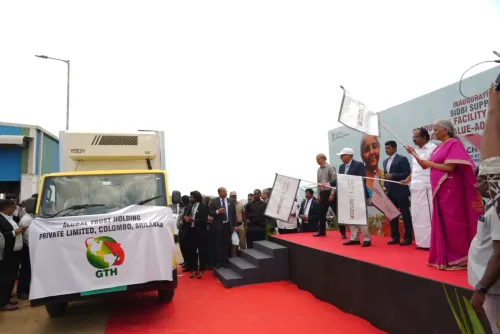
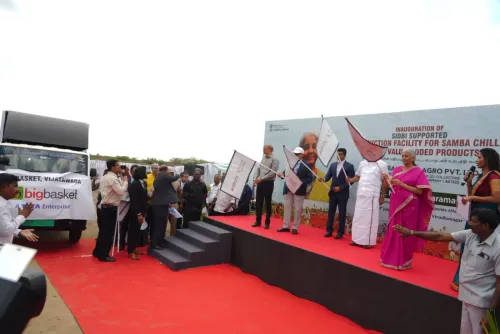
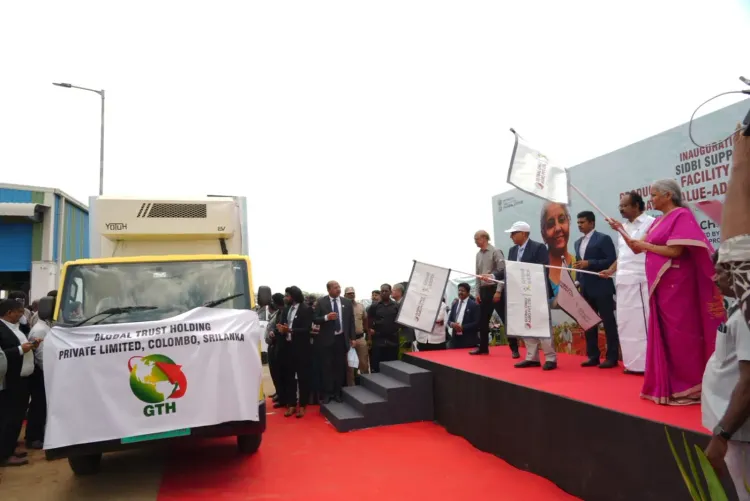
Union Finance Minister Nirmala Sitharaman on Saturday, 18 July 2026 highlighted a first-of-its-kind intervention by SIDBI (Small Industries Development Bank of India) that links farmer collectives to blended finance, backing a chilli processing centre under the 'VALARI' brand in what the minister described as a landmark step for agri-MSME integration.
Context
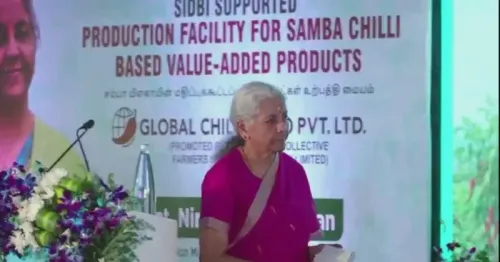
In the second part of a two-post thread, Sitharaman shared details of a processing unit that produces chilli powder, chilli flakes, and cleaned packaged whole chillies under the VALARI brand. The centre's quality systems are backed by ISO 22000 certification and the ZED (Zero Defect Zero Effect) certification, both of which signal compliance with food-safety and environmental manufacturing standards.
The project has drawn support from nearly 1,000 farmers, of whom approximately 472 are women members — a detail the minister chose to highlight, underscoring the gender dimension of the intervention.
Policy Backdrop
SIDBI, established in 1990 as India's principal financial institution for micro, small and medium enterprises, has traditionally focused on refinance and project finance for MSME units. This intervention marks what the minister called a 'historic first' for the institution — its maiden integrated engagement directly linked to farmer collectives.
Through a blended finance model, SIDBI has combined grant assistance, performance-linked repayable assistance, and working capital support. The total blended finance disbursed stands at ₹3.83 crore, supplemented by an additional ₹50 lakh in working capital assistance.
The ZED scheme, launched in 2015 by the Ministry of MSME, encourages micro and small enterprises to adopt zero-defect manufacturing and environmentally responsible practices. Its inclusion here signals an attempt to bring informal agri-processing units into a formal quality framework.
Stakeholders and Impact
The direct beneficiaries are small chilli growers, with women farmers constituting nearly half the participating membership. By channelling finance through a collective structure and attaching it to a branded product — VALARI — the model attempts to move farmers up the value chain from raw produce to packaged, certified goods.
The dual certification of ISO 22000 (food safety management) and ZED positions VALARI products for organised retail and potentially export markets, widening income opportunities beyond local mandis. Blended finance instruments that combine non-repayable grants with working capital are increasingly seen as necessary to de-risk first-generation agri-processing entrepreneurs who lack collateral.
What's Next
The minister's post frames this as a replicable template — SIDBI's 'first integrated intervention' with farmers implies the institution may scale similar models to other commodities or geographies. Policymakers and MSME ministry officials are likely to watch the VALARI pilot's performance metrics — farmer income uplift, capacity utilisation, and repayment rates — before rolling out analogous structures elsewhere.
With the Union Budget cycle and MSME ministry guidelines offering natural policy windows, further announcements on blended-finance expansion for agri-value chains could follow, particularly as the government continues to push domestic value addition in spices and food processing.
Point of View
The messaging is calibrated to resonate with both rural welfare and formal-economy narratives. The framing of this as SIDBI's 'historic first' raises the stakes for replication: if the VALARI pilot delivers measurable income gains, it could inform MSME ministry guidelines and even Budget allocations for blended agri-finance. The broader arc points toward a gradual repositioning of development finance institutions as active participants in farm-to-market value chains, not merely passive lenders.
NationPress
18 Jul 2026
Frequently Asked Questions
What is the VALARI brand and what products does it make?
VALARI is a branded chilli processing initiative that produces chilli powder, chilli flakes, and cleaned packaged whole chillies. Its quality systems hold ISO 22000 food-safety certification and ZED (Zero Defect Zero Effect) certification.
How much money has SIDBI provided for this chilli processing project?
SIDBI has provided ₹3.83 crore through a blended finance model that combines grant assistance and performance-linked repayable assistance, along with a separate ₹50 lakh in working capital support.
What is the ZED certification and why does it matter for MSME food units?
The ZED (Zero Defect Zero Effect) scheme was launched by the Ministry of MSME in 2015 to promote quality manufacturing and environmentally responsible practices among micro and small enterprises. For food processing units, it signals compliance with production standards that can improve market access.
How many farmers are involved in the VALARI chilli project?
Nearly 1,000 farmers support the project, of whom approximately 472 are women members, making gender inclusion a notable feature of the initiative.
Why is this SIDBI intervention considered a first?
This is described as SIDBI's first integrated intervention directly linked to farmer collectives, combining grant, repayable assistance, and working capital in a single blended finance package — a departure from its traditional role as a refinancer for MSME lenders.