FM Sitharaman Launches 4 MSME Initiatives via SIDBI

Synopsis
Union Finance Minister Nirmala Sitharaman formally launched four SIDBI-backed MSME initiatives on 25 May 2026: a co-lending platform with Regional Rural Banks, the MoRE rural enterprise modernisation programme, a ₹5 lakh micro credit card for Udyam-registered businesses, and a machinery exchange portal.
Key Takeaways
SIDBI-RRB Co-Lending Platform launched to enable digital joint lending for MSMEs in semi-urban and rural areas, combining SIDBI's expertise with RRBs' grassroots reach.
MoRE Programme provides cluster-based credit and technical support to non-farming rural enterprises including jaggery units, pottery units, flour mills, and brass artisans.
Micro Credit Card Scheme offers Udyam-registered micro enterprises revolving credit of up to ₹5 lakh with 75% guarantee coverage and no mandatory primary security.
SIDBI MSME Exchange – Machinery Portal integrates OEM access with SIDBI financing to accelerate capital investment by MSMEs.
All four initiatives were formally launched by Union Finance Minister Nirmala Sitharaman on 25 May 2026 under the Department of Financial Services.
The schemes build on existing policy infrastructure including Udyam Registration (2020) and the CGTMSE collateral-free lending framework.
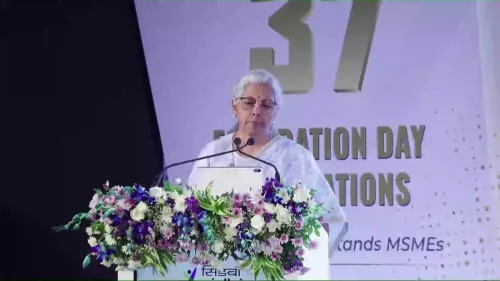
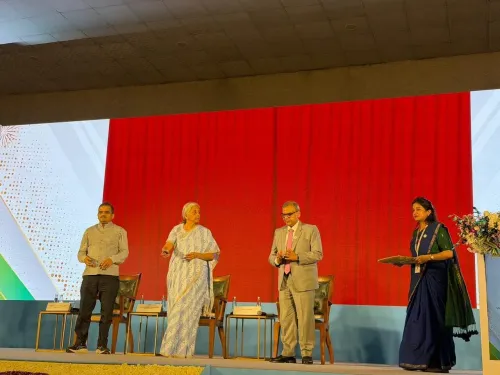
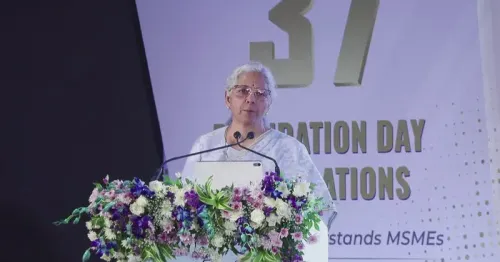
Union Finance Minister Nirmala Sitharaman on Monday, 25 May 2026 formally launched four key initiatives aimed at deepening credit access and modernising India's MSME ecosystem, spanning a co-lending platform with regional rural banks, a rural enterprise modernisation programme, a micro credit card scheme, and a machinery exchange portal — all anchored in SIDBI's institutional framework.
Context
The four initiatives were launched by Sitharaman as part of a coordinated push to extend formal financial services to micro and small enterprises in semi-urban and rural India. The announcements were shared via the official handle of the Department of Financial Services (DFS), which functions under the Ministry of Finance. Each initiative targets a distinct gap in the MSME credit and productivity chain.
The SIDBI-RRB Co-Lending Platform is designed to combine SIDBI's MSME expertise and digital capabilities with the grassroots reach of Regional Rural Banks (RRBs), enabling a digital joint lending model for seamless credit delivery to borrowers in semi-urban and rural areas. RRBs were established under the 1976 RRB Act specifically to serve underserved geographies, making them natural partners for last-mile credit disbursement.
Policy Backdrop
The launches build on a decade-long policy lineage. RBI co-lending guidelines issued in 2020 opened the door for banks and non-banking institutions to jointly finance priority-sector borrowers including MSMEs, and the Udyam Registration portal — launched in July 2020 — simplified formalisation and data integration with credit systems. The new Micro Credit Card Scheme directly leverages Udyam registration as its eligibility gateway.
Under the Micro Credit Card Scheme, Udyam-registered micro enterprises can access revolving credit of up to ₹5 lakh, backed by 75% guarantee coverage and without mandatory primary security. This structure echoes the collateral-free lending model pioneered by the Credit Guarantee Fund Trust for Micro and Small Enterprises (CGTMSE), set up in 2000 and expanded in successive phases. The scheme targets shopkeepers, small manufacturers, and micro entrepreneurs who need timely working capital.
The Modernization of Rural Enterprises (MoRE) Programme takes a cluster-based approach, providing credit and credit-plus support — covering technical assistance and market linkages — to non-farming rural units such as jaggery units, oil expellers, pottery units, flour mills, and brass artisans. Cluster-based interventions have been a recurring instrument in MSME policy, allowing shared infrastructure investment and quality upgrades across groups of similar enterprises.
Stakeholders and Impact
The SIDBI MSME Exchange – Machinery Portal rounds out the package as a digital public-oriented platform integrating machinery discovery with institutional financing. It connects Original Equipment Manufacturers (OEMs) directly with SIDBI's financing support, aiming to accelerate capital investment by MSMEs that have historically struggled to access equipment finance through formal channels.
Collectively, the four initiatives address working capital, long-term capital investment, rural enterprise modernisation, and last-mile credit delivery — the four principal bottlenecks identified repeatedly in MSME surveys. Micro entrepreneurs, rural artisans, and semi-urban small manufacturers stand to benefit most directly. The guarantee-backed, collateral-light design of the credit card scheme is particularly significant for first-time formal borrowers who lack immovable assets.
What's Next
Attention will now turn to disbursement ramp-up under each platform and potential integration with the Account Aggregator framework, which could further streamline credit underwriting for Udyam-registered borrowers. Parliamentary updates and ministry disclosures on loan volumes, guarantee invocations, and cluster coverage under the MoRE Programme will be key indicators of on-ground traction. Budget allocations for MSME credit guarantees in subsequent cycles may also reflect the scale of uptake from these newly launched schemes.
Point of View
Technology-enabled architecture rather than a single flagship programme. By routing credit through RRBs via a co-lending model, the government avoids building parallel infrastructure while leveraging existing rural bank networks — a fiscally conservative but operationally pragmatic choice. The guarantee-backed, collateral-free micro credit card directly addresses the most cited barrier among first-generation micro entrepreneurs, and its Udyam-registration gate reinforces the broader formalisation push. Taken together, these moves extend the policy arc that began with ECLGS and Udyam in 2020 into a more structural, productivity-oriented phase for the MSME sector.
NationPress
21 Oct 2026
Frequently Asked Questions
What is the SIDBI-RRB Co-Lending Platform?
The SIDBI-RRB Co-Lending Platform is a digital joint lending model that combines SIDBI's MSME expertise with the rural reach of Regional Rural Banks to deliver seamless credit to micro and small enterprises in semi-urban and rural areas.
Who is eligible for the Micro Credit Card Scheme for micro enterprises?
Micro enterprises registered on the Udyam portal are eligible for the Micro Credit Card Scheme, which offers revolving credit of up to ₹5 lakh with 75% guarantee coverage and no mandatory primary security requirement.
What is the MoRE Programme and who does it help?
The Modernization of Rural Enterprises (MoRE) Programme is a cluster-based initiative that provides credit and technical support to non-farming rural enterprises such as jaggery units, oil expellers, pottery units, flour mills, and brass artisans to modernise production and improve market access.
What is the SIDBI MSME Exchange Machinery Portal?
The SIDBI MSME Exchange Machinery Portal is a digital platform that integrates machinery discovery from OEMs with SIDBI's institutional financing, helping MSMEs access equipment finance within a single technology-driven ecosystem.
How do these MSME initiatives relate to Udyam Registration?
The Micro Credit Card Scheme uses Udyam Registration as its eligibility criterion, reinforcing the government's broader push to formalise micro enterprises through the Udyam portal launched in July 2020.