FM Sitharaman launches 4 SIDBI initiatives for MSMEs in Mumbai
Synopsis
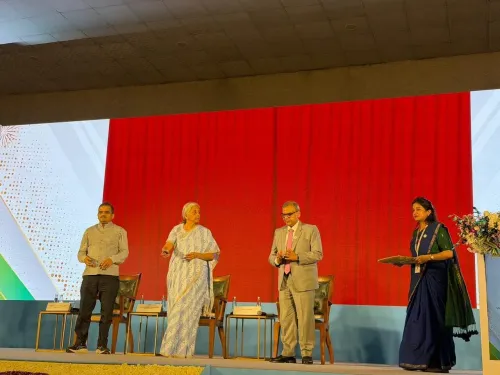
Union Finance Minister Nirmala Sitharaman attended SIDBI's Foundation Day in Mumbai on 25 May 2026, witnessing the launch of four initiatives: a co-lending platform with RRBs, a rural enterprise modernisation scheme, an MSME machinery portal, and a micro credit card for micro enterprises.
Key Takeaways
Four initiatives launched at SIDBI Foundation Day in Mumbai on 25 May 2026 : SIDBI-RRB Co-Lending Platform, MoRE, MSME Exchange (Machinery Portal), and Micro Credit Card Scheme.
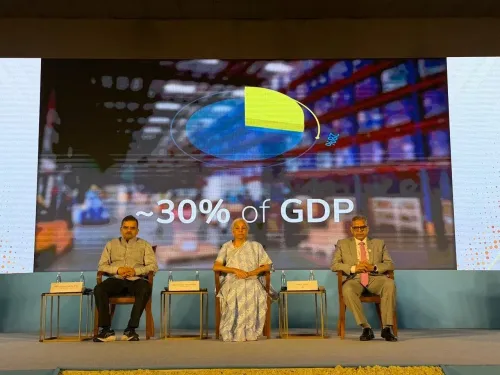
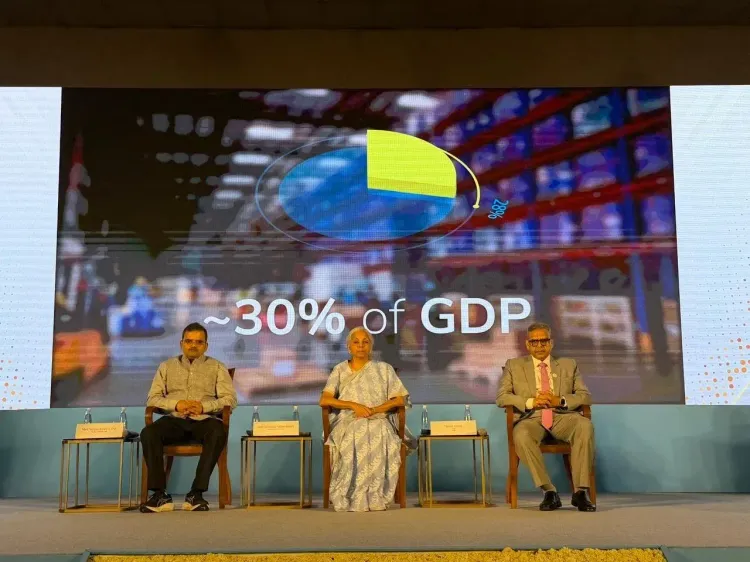
Finance Minister Nirmala Sitharaman attended alongside SIDBI CMD Manoj Mittal and DFS Special Secretary Sanjay Lohia .
The SIDBI-RRB Co-Lending Platform extends RBI's 2020 co-lending framework to Regional Rural Banks, widening formal credit reach in rural areas.
The Micro Credit Card Scheme targets micro enterprises historically excluded from revolving credit facilities.
The launches continue a policy arc from Mudra Yojana (2015) and the Atmanirbhar Bharat MSME package (2020) , deepening SIDBI's direct-platform role.
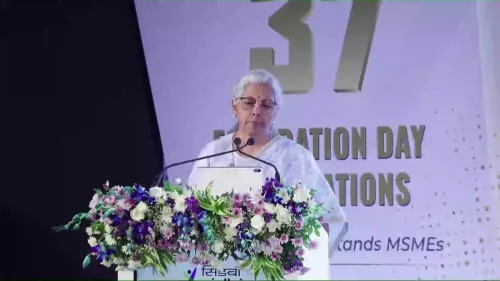
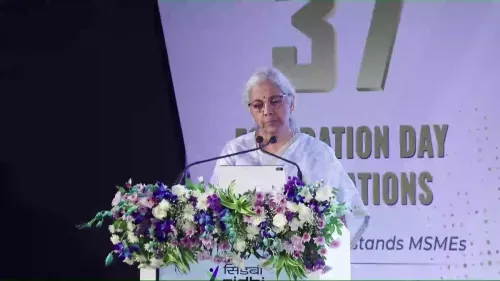
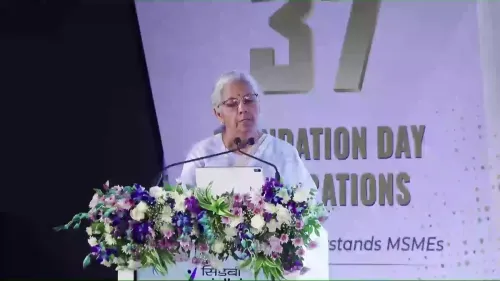
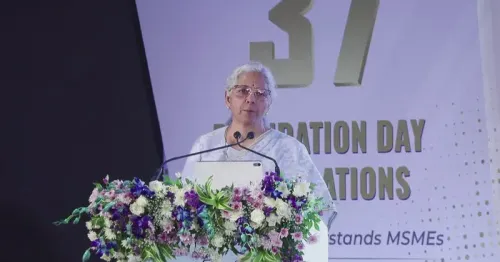
Union Finance Minister Nirmala Sitharaman attended the SIDBI Foundation Day Programme in Mumbai, Maharashtra, on Monday, 25 May 2026, where four key initiatives aimed at expanding credit access and modernising small enterprises were launched. The event was also attended by Sanjay Lohia, Special Secretary, Department of Financial Services, and Manoj Mittal, Chairman and Managing Director of SIDBI.
Context
The Small Industries Development Bank of India (SIDBI), established in 1990, serves as the apex institution for refinancing and developing India's micro and small enterprise sector. Its annual Foundation Day marks a moment for policy announcements and institutional stock-taking. This year's edition saw the simultaneous launch of four distinct programmes spanning credit delivery, rural enterprise support, machinery access, and micro-level financial inclusion.
The four initiatives launched are: the SIDBI-RRB Co-Lending Platform, Modernization of Rural Enterprises (MoRE), SIDBI MSME Exchange (Machinery Portal), and a Micro Credit Card Scheme for Micro Enterprises.
Policy Backdrop
The launches build on a policy lineage stretching back over a decade. The Mudra Yojana, introduced in 2015, extended collateral-free loans to micro enterprises through banks and non-banking financial companies. The Atmanirbhar Bharat MSME package of 2020 added Rs 3 lakh crore in collateral-free credit guarantees to cushion small businesses from pandemic-era disruption.
The RBI's co-lending guidelines of 2020 permitted banks and NBFCs to jointly originate loans to priority sectors — a framework the new SIDBI-RRB Co-Lending Platform now extends to Regional Rural Banks (RRBs), bringing formal credit pipelines closer to rural and semi-urban enterprises. SIDBI has progressively shifted from a pure refinancing role toward direct platform-based interventions that link institutional lenders with ground-level borrowers.
Stakeholders and Impact
The primary beneficiaries span several segments of India's vast informal and semi-formal economy. The Micro Credit Card Scheme targets micro enterprises — typically sole proprietorships and household units — that have historically struggled to access revolving credit facilities. The MoRE programme addresses rural enterprises seeking modernisation support, while the MSME Exchange (Machinery Portal) is designed to ease access to equipment financing and procurement for small manufacturers.
RRBs, which serve as the primary banking interface in rural districts, stand to gain a structured co-lending channel that could expand their loan books while sharing credit risk with SIDBI. Collectively, these measures signal a continued push toward the 'financialisation' of small business lending — embedding MSMEs more deeply into formal credit infrastructure.
What's Next
Analysts and industry bodies will watch how quickly the SIDBI-RRB Co-Lending Platform achieves operational scale and whether the Micro Credit Card Scheme reaches the last-mile micro enterprises it targets. The RBI's periodic review of co-lending performance data will be a key indicator of early traction. Any MSME-related regulatory tweaks or budgetary allocations in the next Union Budget could further shape the rollout of these platforms. With SIDBI deepening its direct-intervention role, the broader question is whether platform-based credit delivery can meaningfully reduce the financing gap that still constrains millions of small businesses across India.
Point of View
Demand-side (micro credit cards), sectoral (rural modernisation), and asset-access (machinery portal). Anchoring these launches to SIDBI's Foundation Day, with the Finance Minister present, lends political weight and signals that MSME formalisation remains central to the government's economic narrative ahead of the next budget cycle. The extension of co-lending norms to RRBs is particularly significant: it draws India's most rural-facing banks into a risk-sharing architecture that could unlock credit at scale without straining public-sector balance sheets. Whether these platforms translate into measurable credit disbursal or remain largely symbolic will be the real test over the next 12 to 18 months.
NationPress
16 Oct 2026
Frequently Asked Questions
What initiatives were launched at SIDBI Foundation Day 2026?
Four initiatives were launched: the SIDBI-RRB Co-Lending Platform, Modernization of Rural Enterprises (MoRE), SIDBI MSME Exchange (Machinery Portal), and the Micro Credit Card Scheme for Micro Enterprises.
What is the SIDBI-RRB Co-Lending Platform?
It is a platform enabling SIDBI and Regional Rural Banks to jointly originate loans to small and micro enterprises, building on RBI's co-lending guidelines introduced in 2020 to expand formal credit to priority sectors.
What is the Micro Credit Card Scheme for Micro Enterprises?
It is a new credit facility announced by SIDBI aimed at giving micro enterprises — typically very small or household-level businesses — access to revolving credit, a segment historically underserved by formal banking.
What is SIDBI and why does its Foundation Day matter?
SIDBI, the Small Industries Development Bank of India, was established in 1990 as the apex institution for financing and developing micro and small enterprises. Its annual Foundation Day is used to announce major policy and programme launches.
How does today's SIDBI announcement connect to earlier MSME schemes?
The launches extend a policy lineage that includes the Mudra Yojana of 2015 and the Atmanirbhar Bharat MSME package of 2020, which together introduced collateral-free lending and credit guarantees worth Rs 3 lakh crore for small businesses.