Sitharaman to MSMEs in Mumbai: Govt builds rails, SIDBI runs trains
Synopsis
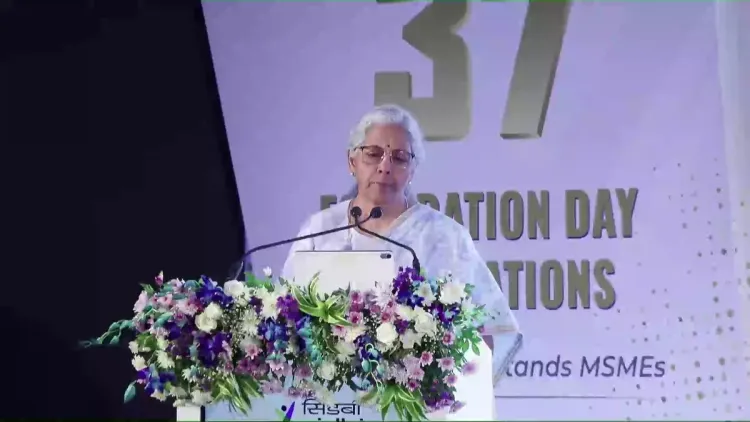
Union Finance Minister Nirmala Sitharaman, addressing MSME owners in Mumbai on 25 May 2026, outlined a three-layer credit architecture: government builds policy infrastructure, SIDBI designs lending products, and banks plus RRBs deliver credit to the last mile, urging MSMEs to focus on building, hiring, exporting, and innovating.
Key Takeaways
Finance Minister Nirmala Sitharaman addressed MSME owners in Mumbai on 25 May 2026 , outlining a layered credit delivery framework.
SIDBI has been asked to develop 'imaginative' financial products for MSMEs, building on its role under the OCEN digital lending framework launched in 2021 .
Regional Rural Banks (RRBs) are designated as the last-mile distributors of MSME credit under this architecture.
The government's role is framed as building enabling infrastructure — regulatory, financial, and digital — rather than direct lending.
MSMEs are urged to focus on building, hiring, exporting, and innovating, with the state acting as a support system.
Prior schemes including the ECLGS ( Rs 3 lakh crore ) and Pradhan Mantri Mudra Yojana form the policy lineage behind this framework.
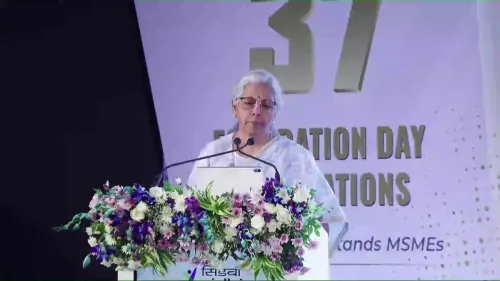
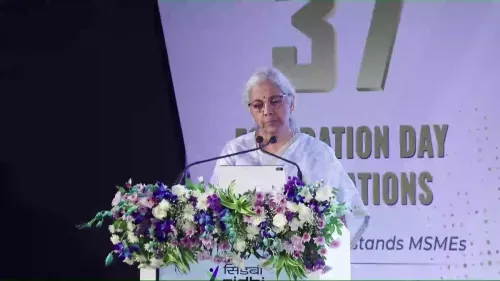
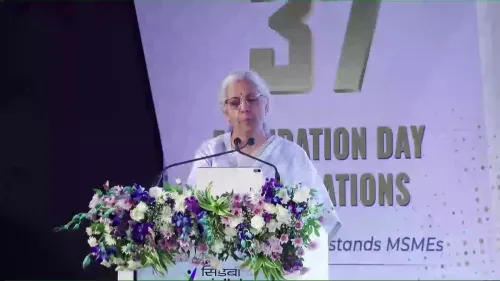
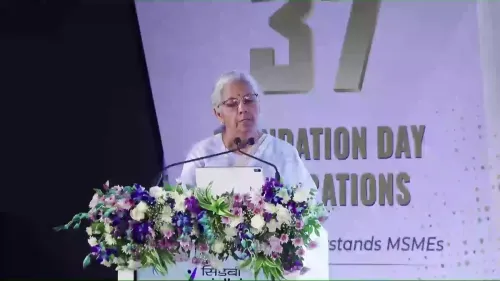
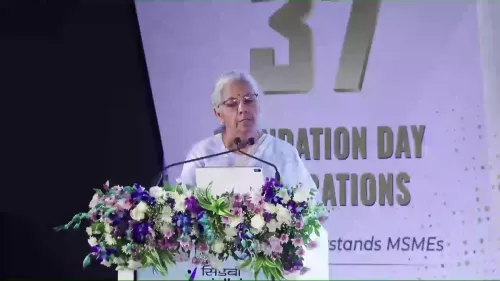
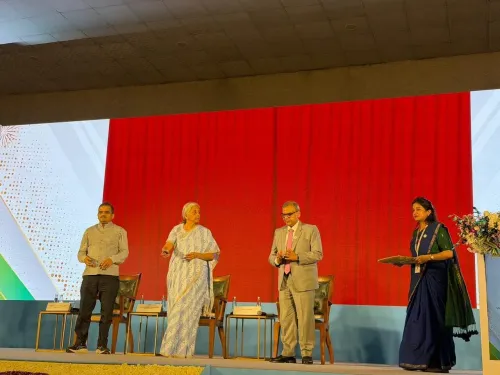
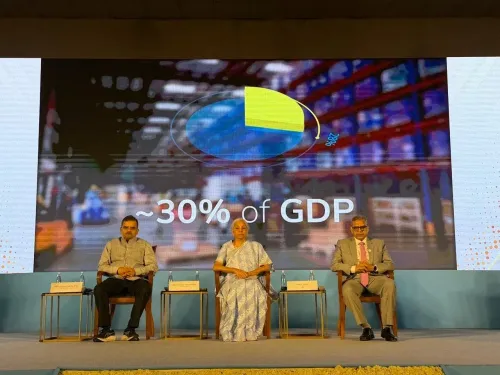
Union Finance Minister Nirmala Sitharaman addressed MSME owners in Mumbai on Monday, 25 May 2026, outlining a division of responsibilities between the government, SIDBI, banks, and enterprises to accelerate credit access and growth for the sector.
Context
Speaking at the event, Sitharaman used a railway metaphor to define the government's role: 'Government is building the rails. SIDBI is being asked to build the imaginative products that run on them. Our banks and our RRBs will carry them the last mile.' The message assigned the task of execution squarely to MSMEs themselves — 'to build, to hire, to export, to innovate.'
The remarks were shared as part of a thread from her official account, indicating they formed one of several points made during the Mumbai address. The venue, India's financial capital, has frequently hosted Finance Ministry outreach events for the MSME sector.
Policy Backdrop
SIDBI — the Small Industries Development Bank of India, established in 1990 — serves as the apex refinancing and development institution for micro, small and medium enterprises. The government's appeal for 'imaginative products' from SIDBI aligns with its positioning since the 2021 launch of the Open Credit Enablement Network (OCEN) framework, which made SIDBI central to digital lending innovation for MSMEs.
Regional Rural Banks (RRBs), created under the 1976 RRB Act, are the intended last-mile distributors in this architecture. Their integration into priority-sector lending for MSMEs has been a consistent policy thread. Earlier, the Atmanirbhar Bharat package of 2020 introduced the Emergency Credit Line Guarantee Scheme (ECLGS), providing Rs 3 lakh crore in collateral-free credit to the sector, while the Pradhan Mantri Mudra Yojana, launched in 2015, has channelled bank loans to micro enterprises through refinancing support routed via SIDBI.
Stakeholders and Impact
The three-layer model — policy infrastructure from the Centre, product design from SIDBI, distribution through commercial banks and RRBs — is intended to close the formal credit gap that has historically constrained MSME growth. MSME exporters stand to benefit directly if new lending products are calibrated to working-capital and trade-finance needs.
For RRBs, the framework reinforces their role as rural and semi-urban credit conduits, extending the reach of SIDBI-designed instruments beyond urban branches. The Finance Minister's assurance — 'We're here to support you' — signals continued political commitment to the sector ahead of the FY27 Union Budget cycle.
What's Next
Attention will now turn to whether SIDBI announces specific new lending products in the near term, and whether quarterly refinancing data for FY26 reflects an uptick in MSME credit offtake. MSME export figures and bank priority-sector lending achievement for FY26 will serve as early indicators of whether the framework is translating into ground-level impact.
If the government follows through on building the 'rails' — regulatory, digital, and financial infrastructure — the next test will be whether SIDBI's product innovation and RRB distribution networks can together convert that intent into measurable credit expansion for India's estimated 6 crore-plus MSMEs.
Point of View
Separating policy design from product innovation and distribution. By publicly tasking SIDBI with 'imaginative products,' she signals that the next phase of MSME support will be product-led rather than purely subsidy-led, a shift with implications for how formal credit reaches smaller enterprises. The inclusion of RRBs as last-mile carriers is a pointed acknowledgement that commercial bank branch networks alone cannot serve the breadth of India's MSME base. Taken together, the statement positions the government as an enabler rather than a direct lender — a framing that will be tested against actual credit disbursement data in the quarters ahead.
NationPress
19 Sept 2026
Frequently Asked Questions
What did Nirmala Sitharaman say about MSMEs in Mumbai?
She told MSME owners that the government is building the policy and financial infrastructure, SIDBI is being asked to design innovative lending products, and banks along with RRBs will deliver credit to the last mile, urging MSMEs to focus on building, hiring, exporting, and innovating.
What is SIDBI's role in MSME credit in India?
SIDBI, the Small Industries Development Bank of India established in 1990, is the apex refinancing and development institution for MSMEs. It provides refinancing to banks and is increasingly central to digital lending product design under frameworks like OCEN.
What is the ECLGS scheme for MSMEs?
The Emergency Credit Line Guarantee Scheme, launched under the Atmanirbhar Bharat package in 2020, provided Rs 3 lakh crore in collateral-free credit to MSMEs to help them survive the economic disruption of that period.
How do RRBs help MSMEs get loans?
Regional Rural Banks, created under the 1976 RRB Act, serve rural and semi-urban areas and are integrated into priority-sector lending mandates. They act as the last-mile distribution channel for MSME credit products developed by institutions like SIDBI.
What is the Pradhan Mantri Mudra Yojana?
Launched in 2015, the Pradhan Mantri Mudra Yojana channels collateral-free bank loans to micro enterprises. Refinancing support for the scheme is routed through SIDBI, making it a key instrument in the government's MSME credit architecture.