Sitharaman to SIDBI: Design Credit Around Business Cycles
Synopsis
Finance Minister Nirmala Sitharaman told SIDBI and bankers in Mumbai on 25 May 2026 that standard loan products cannot serve non-standard businesses. She cited farmers, resort owners, exporters, auto component suppliers, and women entrepreneurs to argue that credit must be designed around each enterprise's actual business cycle.
Key Takeaways
Finance Minister Nirmala Sitharaman addressed SIDBI and bankers in Mumbai on 25 May 2026 .
She argued that uniform repayment structures are unsuitable for businesses with irregular or seasonal cash flows.
Five borrower profiles were cited: farmer-linked enterprises, resorts, government exporters, auto component suppliers, and women entrepreneurs without property.
SIDBI , established in 1990 , was specifically tasked to lead the shift toward business-cycle-based credit design.
Policy precedents include the Pradhan Mantri Mudra Yojana (2015) and RBI circulars (2019–2020) permitting flexible MSME repayment schedules.
New SIDBI refinance windows or pilot products and references in the next Union Budget or RBI policy statements are the key developments to watch.
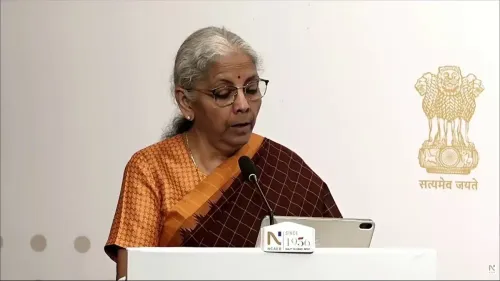
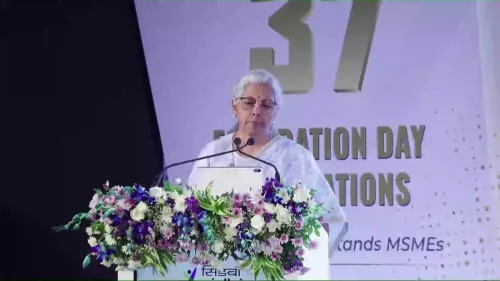
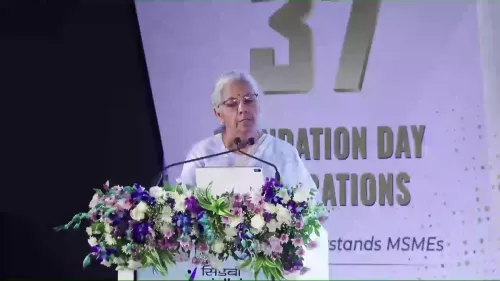
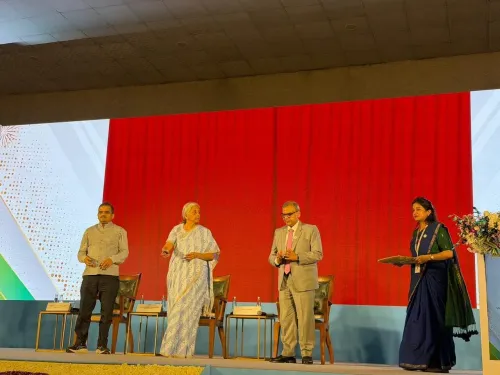
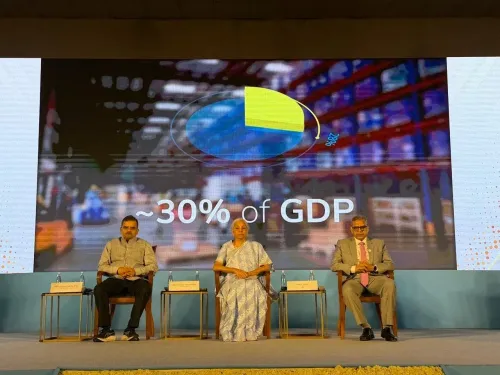
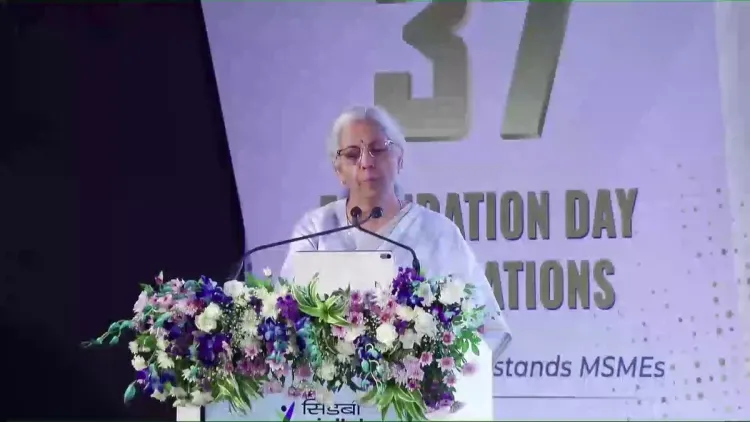
Union Finance Minister Nirmala Sitharaman, speaking in Mumbai on 25 May 2026, called on SIDBI and the broader banking community to move away from uniform repayment structures and design credit products around the actual cash-flow cycles of small businesses. Her remarks, delivered at an event attended by bankers, underscored a persistent mismatch between formal lending norms and the operating realities of micro and small enterprises across India.
Context
Sitharaman's message was direct: 'Standard products cannot serve non-standard businesses.' She listed five distinct borrower profiles to illustrate the point — a farmer-linked enterprise that does not earn every month, a resort whose income is uneven across the year, a government exporter waiting for payment after shipment, a small auto component supplier awaiting invoice clearance, and a woman entrepreneur with regular transactions but no property in her name. 'Then why should all of them be given the same repayment structure?' she asked.
The Finance Minister placed the responsibility squarely on SIDBI, saying the institution 'must lead' in ensuring that 'credit is designed around the business cycle of the enterprise.'
Policy Backdrop
SIDBI — the Small Industries Development Bank of India — was established in 1990 as the principal financial institution for the promotion, financing, and development of micro, small, and medium enterprises. Over the decades it has been tasked with developing sector-specific refinance windows and building lending capacity among banks that serve the MSME segment.
The call for flexible credit is not new in Indian policy. The Pradhan Mantri Mudra Yojana, launched in 2015, introduced collateral-free loans to micro enterprises with repayment linked to business cycles. Reserve Bank of India circulars in 2019–2020 further permitted banks to offer flexible repayment schedules for MSMEs facing seasonal or irregular cash flows. Yet the gap between formal banking norms and ground-level enterprise realities has persisted, particularly for women entrepreneurs and informal-sector borrowers who lack traditional collateral.
Sitharaman's intervention signals that the government views the structural problem as unresolved and expects SIDBI to take an active product-design role rather than function purely as a refinancing conduit.
Stakeholders and Impact
The borrower profiles cited by the Finance Minister collectively represent a large share of India's employment base. Seasonal businesses such as resorts and farm-linked enterprises account for a significant portion of rural and semi-urban livelihoods, while small auto component suppliers are embedded in formal manufacturing supply chains yet often operate on stretched payment cycles. Exporters waiting for post-shipment receivables face a particular liquidity mismatch that standard equated monthly instalments do not accommodate.
The explicit mention of women entrepreneurs who hold no property in their name highlights a structural barrier in collateral-based lending. Without property to pledge, such borrowers are either excluded from formal credit or pushed toward high-cost informal sources, even when their transaction histories demonstrate creditworthiness. A cash-flow-based assessment model, as implied by Sitharaman's remarks, would address this gap directly.
What's Next
Attention will now turn to whether SIDBI announces new refinance windows or pilot credit products tailored to seasonal and invoice-cycle borrowers in the weeks following the Mumbai event. Any such announcements would represent a concrete institutional response to the Finance Minister's directive.
Observers will also watch for references to cash-flow-based lending in the next Union Budget or in forthcoming RBI monetary policy statements, which could provide regulatory backing for the structural shift Sitharaman has called for. If SIDBI moves to formalise differentiated repayment frameworks, it could set a template that commercial banks and non-banking finance companies are expected to follow across the MSME lending ecosystem.
Point of View
She is effectively setting a policy benchmark against which SIDBI's next moves will be measured. The emphasis on women entrepreneurs without property is particularly significant: it signals that the government wants cash-flow assessment, not collateral, to become the primary lending lens for underserved segments. Taken together with the Mudra Yojana legacy and existing RBI flexibility norms, this intervention suggests the next phase of MSME credit reform will focus on institutional architecture rather than just credit guarantee schemes.
NationPress
20 Sept 2026
Frequently Asked Questions
What did Nirmala Sitharaman say about SIDBI and MSME loans?
Sitharaman told SIDBI and bankers in Mumbai on 25 May 2026 that standard loan products cannot serve non-standard businesses, and that credit must be designed around the actual business cycle of each enterprise rather than a uniform repayment structure.
What is SIDBI and what is its role in MSME lending?
SIDBI — the Small Industries Development Bank of India — was set up in 1990 as the principal financial institution for promoting, financing, and developing micro, small, and medium enterprises. It provides refinance to banks and develops sector-specific credit products for the MSME segment.
Why do small businesses need flexible loan repayment schedules?
Many small businesses — such as seasonal resorts, farm-linked enterprises, and exporters awaiting post-shipment payments — do not earn income evenly every month. Forcing them into fixed monthly instalments creates cash-flow stress and increases default risk.
How does the Pradhan Mantri Mudra Yojana relate to flexible MSME credit?
Launched in 2015, the Pradhan Mantri Mudra Yojana introduced collateral-free loans to micro enterprises with repayment linked to business cycles, establishing an early policy precedent for the cash-flow-based lending approach Sitharaman is now urging SIDBI to lead.
What challenge do women entrepreneurs face in getting business loans in India?
Many women entrepreneurs have regular business transactions but no property registered in their name, which disqualifies them under collateral-based lending norms. Sitharaman highlighted this as a structural barrier that differentiated, cash-flow-based credit design could overcome.