Sitharaman in Mumbai: Every MSME tool targets cost of capital
Synopsis
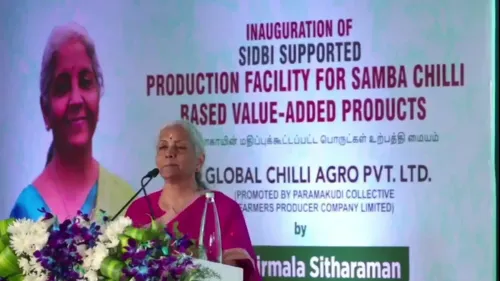
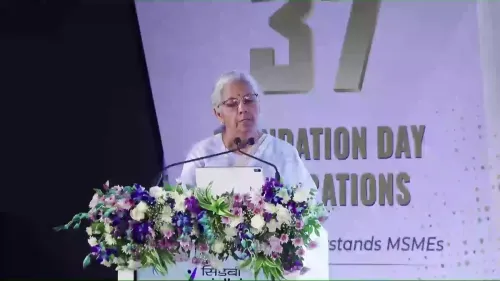
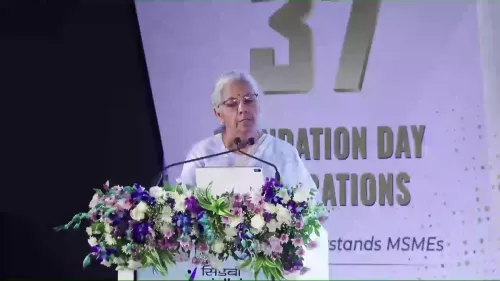
Finance Minister Nirmala Sitharaman, in Mumbai on 25 May 2026, linked every government MSME instrument — equity infusion, doubled guarantees, TReDS, Stand-Up India, SME Growth Fund — to a single goal: removing barriers of capital cost, compliance, and market access for India's small enterprise owners.
Key Takeaways
Finance Minister Nirmala Sitharaman spoke in Mumbai on 25 May 2026 , framing all MSME schemes as one unified policy response.
She cited equity infusion, doubled guarantee cover, the SME Growth Fund , TReDS reforms, MSME classification reform, Corporate Mitras , MSME credit cards, and Stand-Up India as instruments addressing a single question.
The three structural barriers she identified are: cost of capital, compliance burden, and the gap between MSME owners and their customers.
Stand-Up India (2016) provides loans of Rs 10 lakh to Rs 1 crore to SC/ST and women entrepreneurs for greenfield enterprises.
The Atmanirbhar Bharat package (May 2020) included a Rs 20,000 crore equity infusion facility and collateral-free guarantees via CGTMSE .
MSME classification thresholds were revised from 1 July 2020 , broadening eligibility for scheme benefits.
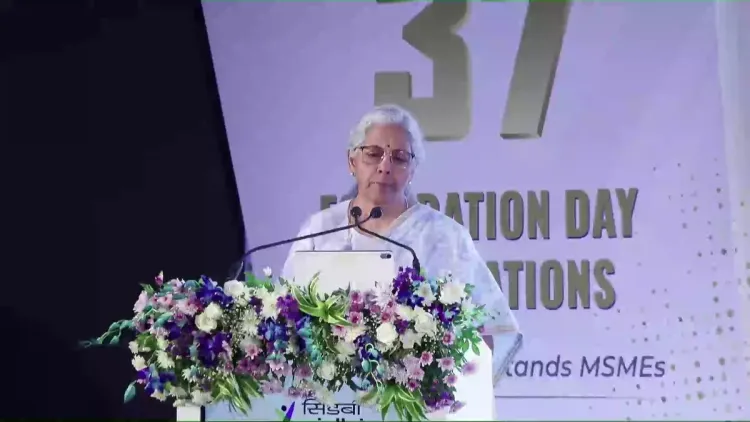
Union Finance Minister Nirmala Sitharaman, speaking in Mumbai on Monday, 25 May 2026, framed the government's entire suite of MSME interventions — from equity infusion and guarantee cover to digital platforms and the Stand-Up India scheme — as a unified answer to one question: how does an MSME owner grow without being held back by the cost of capital, compliance burden, or distance from customers.
Context
Sitharaman's remarks, shared on X as the first in a thread, drew together every major instrument the government has deployed for the MSME sector. She listed equity infusion, a doubled guarantee cover, the SME Growth Fund, reforms to the Trade Receivables Discounting System (TReDS), the MSME classification reform, Corporate Mitras, MSME credit cards, and the Stand-Up India scheme as instruments serving a single policy objective.
Her framing is notable for its explicit identification of three structural barriers — cost of capital, compliance weight, and market access — rather than presenting each scheme as a standalone initiative.
Policy Backdrop
The instruments Sitharaman cited have been introduced across multiple budget cycles and policy packages. Stand-Up India, launched in April 2016, provides bank loans between Rs 10 lakh and Rs 1 crore to SC/ST and women entrepreneurs for greenfield enterprises. The TReDS platform, an RBI-regulated invoice-discounting system operational since 2014, has been progressively expanded to improve MSME liquidity by allowing firms to receive early payments against invoices.
In May 2020, under the Atmanirbhar Bharat package, the government announced a Rs 20,000 crore equity infusion facility and collateral-free loan guarantees through the Credit Guarantee Fund Trust for Micro and Small Enterprises (CGTMSE). MSME classification criteria were also revised with effect from 1 July 2020, raising investment and turnover thresholds and removing the earlier manufacturing-services distinction — enabling more firms to qualify for MSME-specific benefits.
The SME Growth Fund, Corporate Mitras programme, the specific doubling of guarantee cover, and the MSME credit-card scheme referenced in the post are more recent additions to this architecture whose full operational details are still being tracked.
Stakeholders and Impact
India's MSME sector is among the largest in the world by enterprise count and is a significant contributor to employment and exports. The recurring challenge for small and micro enterprises has been access to formal credit at affordable rates, compounded by high compliance costs and limited integration into larger supply chains.
The TReDS reforms and Corporate Mitras programme are aimed specifically at reducing the gap between MSME suppliers and their larger buyers, while the guarantee enhancements under CGTMSE are designed to lower the collateral barrier that prevents banks from lending to smaller firms. The Stand-Up scheme targets women and marginalised-community entrepreneurs who face additional access constraints.
What's Next
Sitharaman's post is marked '1/n', signalling a longer thread of remarks from her Mumbai engagement. Observers will watch for further details on implementation timelines and disbursement targets for the newer instruments she referenced. At the policy level, uptake data and bank-level disbursement figures for the guarantee and equity facilities are expected to feature in forthcoming RBI quarterly reports. Any amendments to the MSMED Act to codify the newer schemes would likely come during a future session of Parliament.
Point of View
Purposive architecture rather than an accumulation of budget announcements. By anchoring every instrument to a single question about the woman entrepreneur, she signals that the government's political messaging on MSMEs is shifting from scheme enumeration to outcome ownership. This matters ahead of any budget cycle: it raises the bar for the Finance Ministry to demonstrate measurable improvements in credit access and compliance costs, not just programme launches. The explicit mention of 'cost of capital' and 'compliance weight' also suggests the government is preparing ground for further regulatory simplification in the MSMED space.
NationPress
9 Oct 2026
Frequently Asked Questions
What did Nirmala Sitharaman say about MSMEs in Mumbai?
Sitharaman said every government instrument for MSMEs — including equity infusion, guarantee cover, TReDS reforms, Stand-Up India, and the SME Growth Fund — is designed to help MSME owners grow without being held back by the cost of capital, compliance burden, or lack of market access.
What is the Stand-Up India scheme?
Stand-Up India, launched in April 2016, provides bank loans between Rs 10 lakh and Rs 1 crore to SC/ST and women entrepreneurs for setting up greenfield enterprises.
What is TReDS and how does it help MSMEs?
TReDS (Trade Receivables Discounting System) is an RBI-regulated online platform that allows MSMEs to discount their invoices and receive early payments from financiers, improving cash flow and reducing dependence on informal credit.
What was the MSME classification reform of 2020?
Effective 1 July 2020, the government revised MSME classification criteria by raising investment and turnover thresholds and removing the earlier distinction between manufacturing and services sectors, allowing more businesses to qualify for MSME benefits.
What is CGTMSE and how does it support small businesses?
The Credit Guarantee Fund Trust for Micro and Small Enterprises (CGTMSE) provides collateral-free credit guarantees to banks lending to micro and small enterprises, reducing the risk for lenders and making formal credit more accessible to smaller firms.