FM Sitharaman Backs SIDBI Capital Boost for MSME Credit
Synopsis
Union Finance Minister Nirmala Sitharaman, speaking in Mumbai on 25 May 2026, said boosting SIDBI's capital will enable the institution to raise cheaper funds and pass the benefit to small entrepreneurs through wider and more accessible credit, citing PM Modi's clear institutional vision.
Key Takeaways
Finance Minister Nirmala Sitharaman spoke in Mumbai on 25 May 2026 about strengthening SIDBI 's capital base.
Improved capitalisation is intended to lower SIDBI's cost of borrowing, with savings passed on to small and micro entrepreneurs .
Sitharaman said the SIDBI team now has 'a target, the money and the government's vision' — signalling a structured mandate.
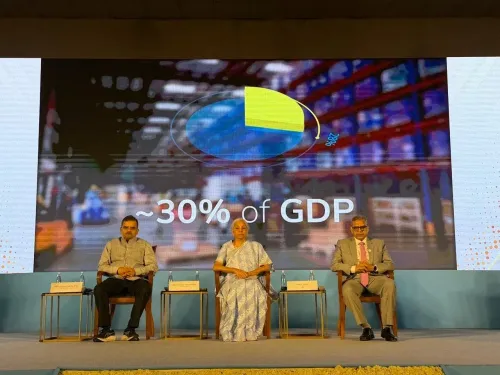
SIDBI , set up in 1990 , serves the MSME sector, which contributes roughly 30 percent of GDP and employs over 110 million people .
The move continues a policy lineage that includes the ₹20,000 crore Atmanirbhar Bharat subordinate debt facility routed through SIDBI in 2020 .
Observers will watch for SIDBI's next bond or equity raise and any Union Budget 2026-27 announcements on MSME credit targets.
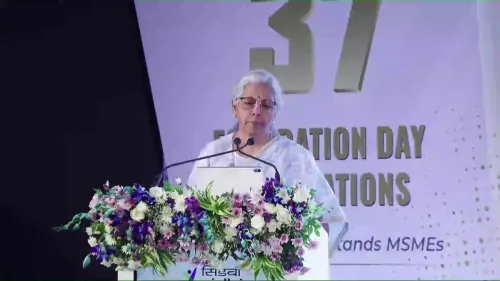
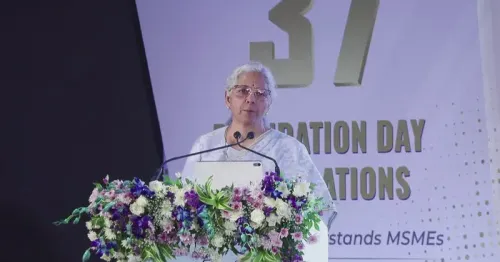
Union Finance Minister Nirmala Sitharaman on Monday, 25 May 2026, speaking in Mumbai, reaffirmed the government's commitment to strengthening SIDBI — the Small Industries Development Bank of India — by improving its capital base so the institution can raise lower-cost funds and extend cheaper, wider credit to small entrepreneurs across the country.
Context
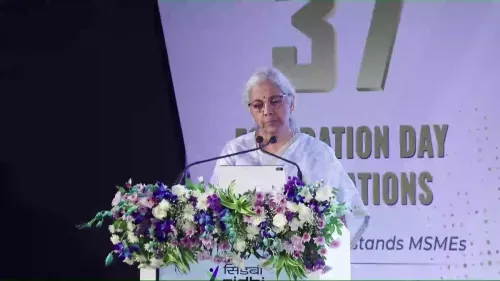
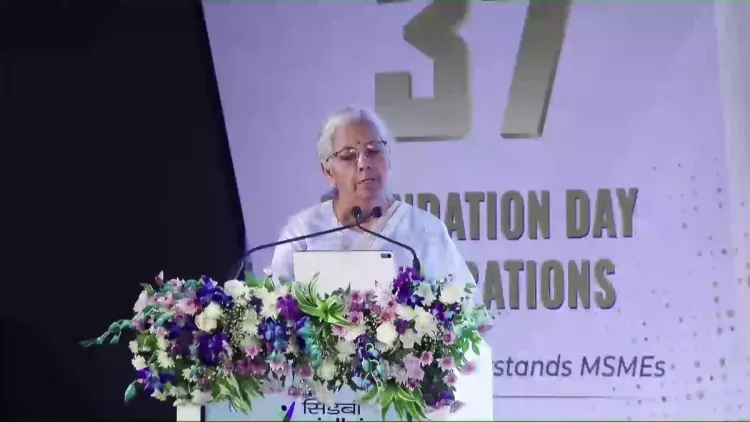
Addressing the SIDBI team in Mumbai, Sitharaman said the capital improvement would allow the institution to 'raise lower-cost funds and pass that benefit on to small entrepreneurs through wider, cheaper and more accessible credit.' She credited Prime Minister Narendra Modi's guidance for giving institutions 'a very clear vision for the future,' adding that the government has placed its full confidence in SIDBI's ability to deliver on that mandate.
The Finance Minister underlined that the clarity of purpose extended to the institution's own team: 'They're getting a target, they're getting the money and they're getting the government's vision put forth because all of us have confidence in SIDBI.'
Policy Backdrop
SIDBI was established in 1990 as India's principal financial institution for the micro, small and medium enterprise sector. Over successive years, the central government has used capital infusions and guarantee enhancements to lower the cost of funds flowing to MSMEs, which account for roughly 30 percent of India's GDP and employ over 110 million people.
The approach has a clear lineage: the 2020 Atmanirbhar Bharat package channelled a ₹20,000 crore subordinate debt facility through SIDBI to support stressed MSMEs, and the Union Budget 2021-22 authorised SIDBI to raise additional long-term resources while expanding the Credit Guarantee Fund Trust for Micro and Small Enterprises corpus. Sitharaman's latest remarks signal that this institutional strengthening continues into the 2026-27 fiscal cycle.
Stakeholders and Impact
The primary beneficiaries of a better-capitalised SIDBI are small and micro entrepreneurs who depend on formal credit channels but are often priced out by high borrowing costs. A lower cost of funds at the apex institution level is designed to cascade down through refinancing lines to regional lenders, microfinance institutions and direct SIDBI loan windows.
The move also aligns with the government's broader push to formalise credit delivery and deepen the reach of schemes under Make in India and Production-Linked Incentive programmes, where MSME suppliers form a critical part of the manufacturing value chain.
What's Next
Attention will now turn to SIDBI's next bond issuance or equity raise, which would give concrete shape to the capital improvement Sitharaman referenced. Any follow-up announcements in the Union Budget 2026-27 — particularly around MSME credit targets or a top-up to the Credit Guarantee Fund — will be closely watched by lenders, industry bodies and small-business owners alike. A stronger SIDBI balance sheet could also enable the institution to expand its direct lending and refinancing operations in underserved districts, bringing formal credit to entrepreneurs who currently rely on informal and costlier sources.
Point of View
Target and money,' she is setting a performance-accountability tone for SIDBI ahead of what could be a significant balance-sheet event. This fits a broader arc in which the Modi administration has systematically re-capitalised and re-mandated public financial institutions — from NaBFID to NHB — to crowd in private capital rather than substitute for it. The political subtext is also clear: with MSME employment and formalisation remaining key metrics ahead of state election cycles, keeping credit flowing cheaply to small businesses is both economic policy and electoral messaging.
NationPress
11 Oct 2026
Frequently Asked Questions
What did Nirmala Sitharaman say about SIDBI in Mumbai?
Sitharaman said improving SIDBI's capital will allow it to raise lower-cost funds and pass that benefit to small entrepreneurs through wider, cheaper and more accessible credit, and that the SIDBI team now has a clear target, funding and the government's vision.
What is SIDBI and why does its capitalisation matter?
SIDBI — the Small Industries Development Bank of India — was set up in 1990 as the apex institution for MSME finance. A stronger capital base lowers its borrowing cost, which it can then pass on as cheaper loans to small businesses.
How has the government supported SIDBI in recent years?
The government channelled a ₹20,000 crore subordinate debt facility through SIDBI under the 2020 Atmanirbhar Bharat package and authorised additional long-term resource-raising in the Union Budget 2021-22, among other measures.
How big is India's MSME sector?
India's MSME sector contributes roughly 30 percent of GDP and employs over 110 million people, making it a critical pillar of the economy.
What should we watch for after Sitharaman's SIDBI announcement?
Key developments to track include SIDBI's next bond issuance or equity raise, and any Union Budget 2026-27 announcements on MSME credit targets or a top-up to the Credit Guarantee Fund Trust for Micro and Small Enterprises.