Sitharaman Launches 4 SIDBI Schemes to Boost MSME Credit
Synopsis
Union Finance Minister Nirmala Sitharaman formally launched four SIDBI-led initiatives on 25 May 2026 to expand MSME credit access — including a co-lending platform with Regional Rural Banks, a rural enterprise modernisation programme, a ₹5 lakh micro credit card, and a machinery financing portal.
Key Takeaways
Finance Minister Nirmala Sitharaman launched four MSME credit and modernisation initiatives on 25 May 2026 .
The SIDBI-RRB Co-Lending Platform uses a digital joint lending model to improve credit penetration in semi-urban and rural areas.
The MoRE Programme supports cluster-based modernisation for rural non-farming enterprises such as jaggery units, pottery units, and brass artisans.
The Micro Credit Card Scheme provides Udyam-registered micro enterprises revolving credit up to ₹5 lakh with 75 percent guarantee coverage and no mandatory primary security.
The SIDBI MSME Exchange – Machinery Portal integrates OEM access with institutional financing to accelerate MSME capital investment.
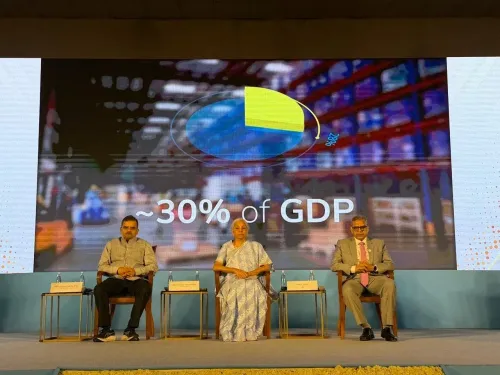
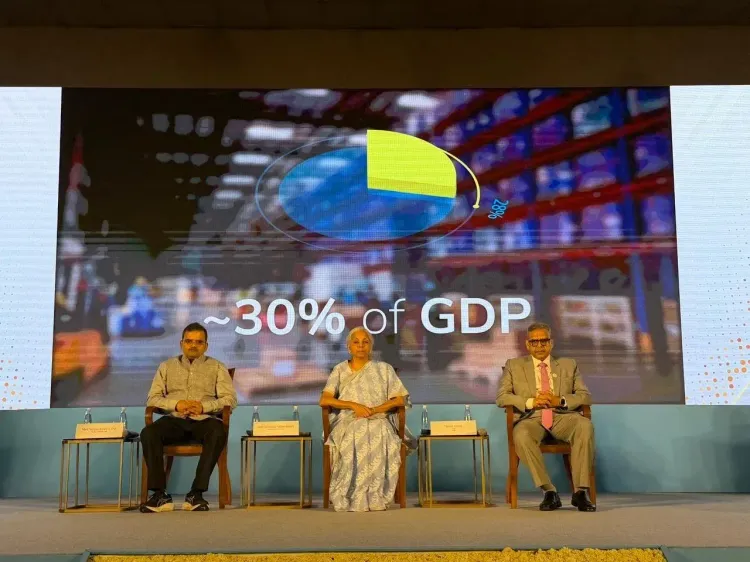
India's MSME sector contributes roughly 30 percent of GDP and employs over 110 million people .
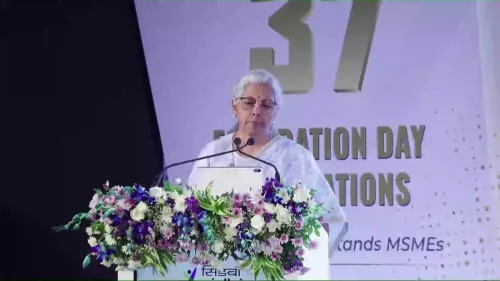
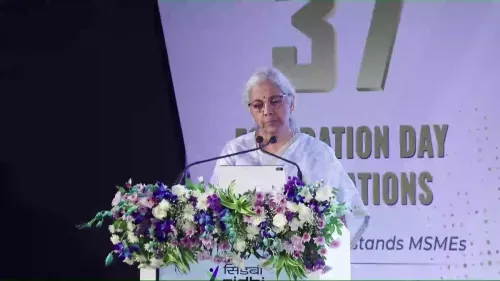
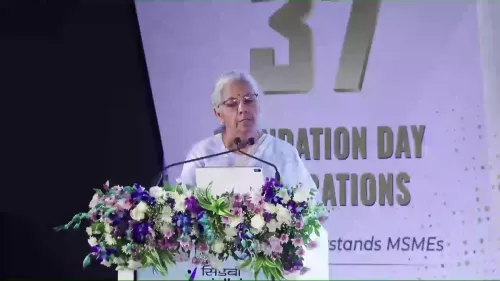
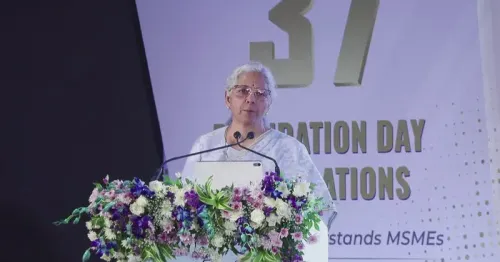
Union Finance Minister Nirmala Sitharaman on Monday, 25 May 2026 formally launched four initiatives aimed at deepening credit access and modernising India's micro, small and medium enterprise ecosystem, with a focus on rural and semi-urban areas.
Context
The four initiatives — announced via the Finance Minister's official social media handle — span co-lending infrastructure, rural enterprise modernisation, working-capital credit cards, and a machinery financing portal. Together they target a persistent gap in formal credit delivery to micro and small enterprises, particularly those operating outside major urban centres.
The announcements come as India's MSME sector, which contributes roughly 30 percent of GDP and employs over 110 million people, continues to face structural challenges in accessing affordable, collateral-free finance from formal institutions.
Policy Backdrop
The SIDBI-RRB Co-Lending Platform builds on an established co-lending model that pairs a development finance institution's underwriting expertise with the last-mile reach of Regional Rural Banks (RRBs), created under the Regional Rural Banks Act 1975 to serve rural and semi-urban borrowers. SIDBI, the apex refinancing body for MSMEs established in 1990, brings digital capabilities to a joint lending structure that aims to reduce turnaround time and improve credit penetration.
The Modernization of Rural Enterprises (MoRE) Programme adopts a cluster-based approach to support non-farming rural enterprises — including jaggery units, oil expellers, pottery units, flour mills, and brass artisans — by providing both credit and credit-plus support to upgrade processing, quality standards, and market linkages.
The Micro Credit Card Scheme offers Udyam-registered micro enterprises revolving credit of up to ₹5 lakh, backed by a 75 percent guarantee coverage and without mandatory primary security. Udyam Registration, launched in July 2020, replaced the earlier Udyog Aadhaar system and has served as the gateway for MSMEs to access government schemes. This credit card is intended to benefit shopkeepers, small manufacturers, and micro entrepreneurs requiring timely working capital. It extends the logic of earlier instruments such as the Credit Guarantee Fund Trust for Micro and Small Enterprises (CGTMSE), operational since 2000, which pioneered collateral-free guarantee coverage.
The SIDBI MSME Exchange – Machinery Portal is a digital platform integrating machinery discovery with institutional financing, connecting original equipment manufacturers (OEMs) with SIDBI's financing support to accelerate capital investment by MSMEs.
Stakeholders and Impact
The primary beneficiaries are micro entrepreneurs, rural non-farm enterprises, and RRB borrowers who have historically been underserved by commercial banks. The co-lending platform and MoRE programme specifically address the semi-urban and rural credit gap, while the machinery portal targets enterprises seeking to upgrade equipment through formal finance channels.
The guarantee-backed, collateral-free structure of the Micro Credit Card Scheme lowers the entry barrier for the smallest businesses — shopkeepers and micro manufacturers — who often rely on informal moneylenders for short-term working capital. The 75 percent guarantee is designed to give lenders adequate risk cover to extend credit without demanding immovable property as security.
What's Next
Quarterly data releases from SIDBI and the Reserve Bank of India on MSME credit disbursements and guarantee utilisation will be the earliest indicators of uptake across all four platforms. Parliamentary standing committees overseeing finance and MSME affairs are likely to seek progress reports in upcoming sessions. Analysts will also watch whether these schemes receive explicit allocation or mention in the next Union Budget speech, which would signal sustained fiscal commitment beyond the launch phase.
Point of View
Cluster modernisation, working-capital cards, and machinery finance — signals a deliberate effort to address the MSME credit gap across multiple dimensions rather than through a single flagship scheme. The 75 percent guarantee cover on the Micro Credit Card, combined with the collateral-free structure, is a direct response to the longstanding reluctance of formal lenders to extend unsecured credit to micro enterprises. Anchoring all four initiatives within SIDBI's institutional framework consolidates the apex lender's role as the primary channel for government-backed MSME finance, a pattern consistent with the broader Make in India and financial-inclusion agenda pursued since 2014. Whether these platforms translate into measurable credit disbursement gains will depend on RRB capacity, OEM participation, and the speed of Udyam-linked onboarding.
NationPress
19 Sept 2026
Frequently Asked Questions
What is the SIDBI-RRB Co-Lending Platform?
The SIDBI-RRB Co-Lending Platform is a digital joint lending model that combines SIDBI's MSME underwriting expertise with the grassroots reach of Regional Rural Banks to deliver seamless credit to micro and small enterprises in semi-urban and rural areas.
Who is eligible for the Micro Credit Card Scheme for micro enterprises?
Udyam-registered micro enterprises are eligible for the Micro Credit Card Scheme, which provides revolving credit of up to ₹5 lakh with 75 percent guarantee coverage and without mandatory primary security, benefiting shopkeepers, small manufacturers, and micro entrepreneurs.
What is the MoRE Programme launched by Nirmala Sitharaman?
The Modernization of Rural Enterprises (MoRE) Programme is a cluster-based initiative that provides credit and credit-plus support to rural non-farming enterprises — such as jaggery units, oil expellers, pottery units, flour mills, and brass artisans — to modernise processing, improve quality, and enhance market access.
What is the SIDBI MSME Exchange Machinery Portal?
The SIDBI MSME Exchange – Machinery Portal is a digital platform that integrates machinery discovery with institutional financing, connecting original equipment manufacturers with SIDBI's lending support to help MSMEs invest in capital equipment.
How does Udyam Registration relate to the new MSME credit card scheme?
Udyam Registration, the government's online MSME formalisation portal launched in July 2020, is the eligibility gateway for the new Micro Credit Card Scheme — only Udyam-registered micro enterprises can access the revolving credit facility of up to ₹5 lakh.