SIDBI directed to scale up MSME lending via RRB network in rural India

Synopsis
The Centre has told SIDBI to push MSME credit deeper into rural India by scaling a digital co-lending platform across Regional Rural Banks — a move that could unlock formal finance for micro enterprises that mainstream banks have long bypassed. With a pilot at three RRBs already showing results, the expansion targets one of the economy's most persistent structural gaps.
Key Takeaways
The Centre has directed SIDBI to scale up MSME lending in rural and semi-urban areas through the Regional Rural Bank (RRB) network.
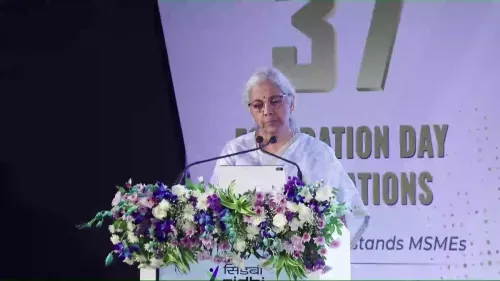
Sanjay Lohiya , Secretary, Department of Financial Services , chaired the meeting with SIDBI and RRB officials on 26 August .
SIDBI's Co-Lending Origination Platform offers fully digital, paperless loan processing with direct disbursement to borrower accounts.
The platform has been successfully piloted at three RRBs ; expansion to more RRBs is now planned.
RRBs are expected to use MSME co-lending to diversify loan portfolios and improve asset quality via rule engine-based underwriting .
RRBs were also asked to participate in state-government-run Rozgar Melas to spread financial awareness among MSMEs.
The Centre has directed the Small Industries Development Bank of India (SIDBI) to significantly expand credit access for micro, small, and medium enterprises (MSMEs) in rural and semi-urban areas across India, leveraging the grassroots reach of Regional Rural Banks (RRBs), according to an official statement issued on Wednesday, 26 August. The directive came at a high-level meeting attended by senior officials from SIDBI and RRBs.
What the Government Said
Sanjay Lohiya, Secretary of the Department of Financial Services (DFS), chaired the meeting and stressed the need to combine SIDBI's deep expertise in MSME credit assessment with the extensive branch presence that RRBs maintain in smaller towns and villages. He argued that this synergy could unlock credit for a large segment of enterprises currently underserved by mainstream banking.
Lohiya also flagged the strategic value of MSME cluster data, urging a focused, data-driven outreach to micro and small units concentrated in specific geographic zones. RRBs were additionally called upon to participate in Rozgar Melas — employment and financial awareness drives conducted by state governments — to improve financial literacy among MSME operators.
How the Co-Lending Platform Works
At the centre of this push is SIDBI's Co-Lending Origination Platform, a fully digital, end-to-end credit delivery system designed to eliminate paperwork and branch visits. Loan applicants receive an in-principle sanction within a short turnaround time once they submit details through the online portal. Disbursements are credited directly to borrower accounts, removing the need for any in-person interaction at any stage.
The platform has already been piloted at three RRBs, with results described as encouraging. The proposed expansion to a larger number of RRBs is expected to meaningfully address the credit gap for micro and small borrowers in underserved regions, according to the official statement.
Why RRBs Stand to Gain
Beyond the government's rural credit agenda, the arrangement offers RRBs a structural benefit: portfolio diversification. Officials noted that a deliberate shift toward MSME lending would help RRBs move beyond their traditional agricultural loan concentration. Rule engine-based underwriting — built into the Co-Lending platform — is expected to support asset quality by applying consistent, automated credit filters.
The Chairman and Managing Director of SIDBI also urged RRB leadership to treat MSME co-lending targets as a priority for branch-level operations, signalling that this is not a passive directive but an active expansion programme.
Broader Context
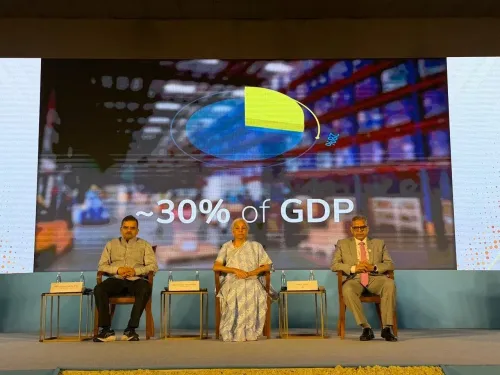
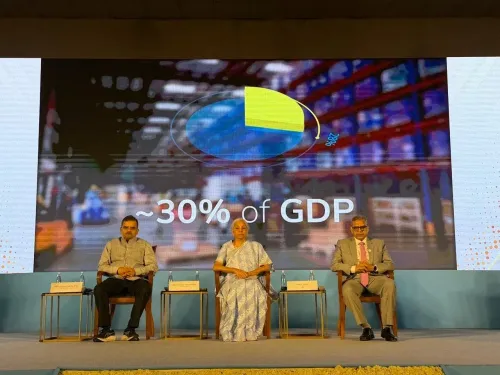
This push comes amid sustained policy emphasis on positioning India as a next-generation manufacturing hub, a goal that depends heavily on the health and scale of the MSME sector, which employs an estimated 11 crore people and contributes roughly 30% of GDP. Access to affordable formal credit remains one of the sector's most persistent structural challenges, particularly for enterprises in non-urban areas where bank penetration is limited. The co-lending model, which pools SIDBI's capital and underwriting capability with RRBs' last-mile reach, represents one of the more operationally grounded responses to this gap.
The expansion of the programme to more RRBs is expected to be rolled out in phases, with branch-level MSME lending targets likely to be formalised in the coming weeks.
Point of View
And RRBs have historically struggled with non-agricultural credit underwriting. The rule engine-based model addresses the underwriting risk, but only if RRB staff are trained to use it and borrowers are equipped to navigate digital portals. The pilot-to-scale gap is where most such programmes stall, and the government has not yet detailed the monitoring framework that will hold RRBs accountable for lending outcomes rather than just platform adoption.
NationPress
10 Oct 2026
Frequently Asked Questions
What has the government directed SIDBI to do?
The Centre has asked SIDBI to scale up lending to MSMEs in rural and semi-urban areas by expanding its Co-Lending Origination Platform across Regional Rural Banks. The directive aims to bridge the formal credit gap for micro and small enterprises outside major urban centres.
What is SIDBI's Co-Lending Origination Platform?
It is a fully digital, end-to-end credit platform developed by SIDBI that enables paperless loan processing, fast in-principle sanctions, and direct disbursement to borrower accounts without requiring branch visits. The platform has already been piloted at three RRBs with encouraging results.
Why are Regional Rural Banks central to this plan?
RRBs have an extensive branch network in smaller towns and villages that SIDBI does not directly operate. By partnering with RRBs under a co-lending arrangement, SIDBI can extend MSME credit to geographies that are otherwise underserved by mainstream banks.
How does this benefit RRBs?
The co-lending arrangement allows RRBs to diversify their loan portfolios beyond traditional agricultural lending. Rule engine-based underwriting built into the platform is also expected to help RRBs maintain better asset quality in their MSME books.
What role does MSME cluster data play in this initiative?
Officials highlighted MSME cluster data as a tool for focused, targeted outreach — allowing banks to identify concentrations of micro and small units in specific areas and deploy credit resources more efficiently rather than through a generic, dispersed approach.