VP Radhakrishnan: Quality healthcare access vital for Viksit Bharat 2047
Synopsis
At AIIMS Deoghar's second convocation, Vice President C.P. Radhakrishnan tied universal healthcare access directly to India's Viksit Bharat 2047 ambition — and pointed to a doubling of medical colleges since 2014 as proof of momentum. With over 76% of the graduating batch being women, the ceremony also doubled as a marker of how far medical education's gender balance has shifted.
Key Takeaways
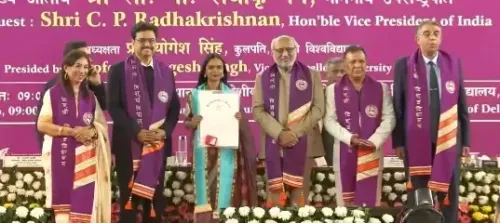
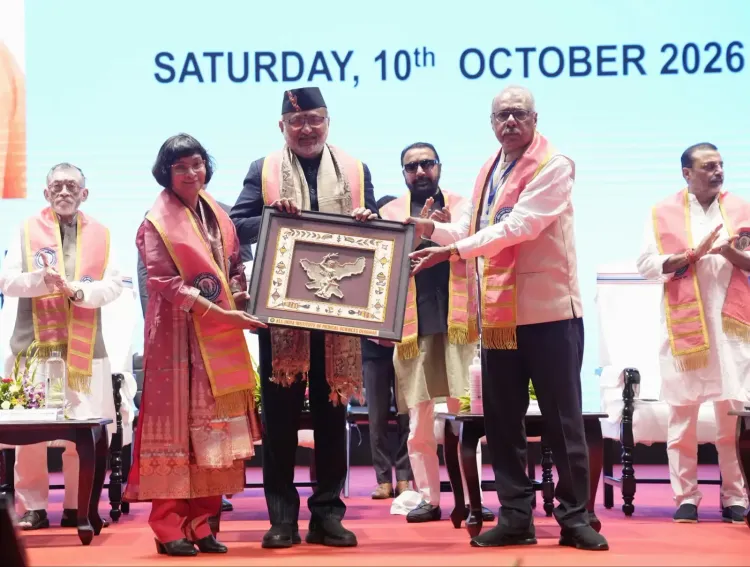
Radhakrishnan addressed the Second Convocation of AIIMS Deoghar on 10 October in Jharkhand .
He stated that access to quality healthcare in every state, district and village is essential to the Viksit Bharat 2047 vision.
India's medical colleges have grown from 387 before 2014 to 846 — more than doubling under the Modi government .
132 of the 173 graduates (over 76%) were women, reflecting progress in women-led development through education.
Graduates were urged to serve rural, tribal and underserved communities, invoking the legacy of Bhagwan Birsa Munda and other Jharkhand icons.
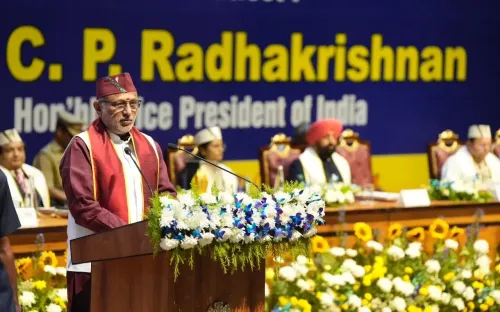
Vice President C.P. Radhakrishnan on Saturday, 10 October declared that universal access to quality healthcare and medical education is indispensable to achieving the Viksit Bharat vision by 2047, speaking at the Second Convocation of AIIMS Deoghar in Jharkhand. Addressing 173 graduating students, he called on the new doctors to place competence, compassion and character at the centre of their professional lives.
Key Message to Graduates
Radhakrishnan urged the newly conferred doctors to carry their expertise beyond institutional walls and into villages, tribal belts and the most remote corners of the country. He invoked the legacy of Bhagwan Birsa Munda, Sido-Kanhu and Tilka Manjhi — tribal icons of Jharkhand — to underscore that a medical degree is not merely an individual achievement but a social obligation.
'Access to quality healthcare and higher education in every State, district and village is essential to realising the vision of Viksit Bharat by 2047,' he said. He stressed that the highest meaning of medical knowledge lies in service to the underserved and vulnerable, calling for integrity, empathy and ethical conduct as non-negotiable standards.
Medical Education Expansion Under Modi Government
Highlighting the growth of healthcare infrastructure, the Vice President noted that the number of medical colleges in India has risen from 387 before 2014 to 846 — more than doubling in just over a decade — under the leadership of Prime Minister Narendra Modi. He described institutions such as AIIMS Deoghar as concrete expressions of the government's commitment to balanced and inclusive development across states and districts.
Women Lead the Graduating Batch
Radhakrishnan noted with evident satisfaction that 132 of the 173 graduating students — more than 76% of the batch — were women. He said this statistic reflected a national shift from mere women's empowerment rhetoric towards tangible women-led development, and underscored the transformative power of education in enabling women to realise their full potential.
Who Attended the Convocation
The ceremony was attended by Jharkhand Governor Santosh Kumar Gangwar; Union Minister of State for Health and Family Welfare Prataprao Jadhav; Jharkhand Health Minister Irfan Ansari; Lok Sabha MP Nishikant Dubey; Rajya Sabha MP Pradip Kumar Varma; Deoghar MLA Suresh Paswan; and AIIMS Deoghar President Professor M.V. Padma Srivastava. The high-profile attendance signals the political and institutional importance attached to AIIMS Deoghar as a regional healthcare anchor.
With India's rural healthcare deficit still significant, the Vice President's address sets a clear expectation: that the country's expanding pool of medical graduates must translate into measurable improvements in health outcomes for communities that have historically lacked access.
Point of View
The distribution of healthcare quality remains deeply uneven. Citing tribal icons of Jharkhand to motivate urban-trained doctors is an admission that institutional expansion alone does not close the rural health gap. The 76% female graduation figure is genuinely striking, but retention of women doctors in rural postings — a chronic policy failure — was not addressed. The Viksit Bharat framing risks becoming a rhetorical umbrella unless it is backed by rural service incentives, infrastructure and a credible accountability mechanism for graduate deployment.
NationPress
10 Oct 2026
Frequently Asked Questions
What did Vice President C.P. Radhakrishnan say at AIIMS Deoghar?
Vice President C.P. Radhakrishnan said that access to quality healthcare and medical education in every state, district and village is essential to realising the Viksit Bharat vision by 2047. Speaking at the Second Convocation of AIIMS Deoghar on 10 October, he urged graduates to serve rural and tribal communities with competence, compassion and ethical conduct.
How many medical colleges are there in India now compared to 2014?
According to the Vice President, India's medical colleges have increased from 387 before 2014 to 846 — more than doubling in a decade under Prime Minister Narendra Modi's government. The expansion is cited as evidence of the Centre's push for inclusive healthcare infrastructure.
What is the significance of the AIIMS Deoghar convocation?
AIIMS Deoghar is one of the newer All India Institutes of Medical Sciences established to extend premium healthcare and medical education to underserved regions. Its second convocation graduated 173 students, with over 76% being women, highlighting both institutional growth and a shift in the gender profile of medical education.
Why did the Vice President invoke Bhagwan Birsa Munda and other tribal icons?
Radhakrishnan referenced Bhagwan Birsa Munda, Sido-Kanhu and Tilka Manjhi — revered figures in Jharkhand's tribal history — to inspire graduates to serve marginalised and remote communities. The invocation was a call to align professional medical careers with the social justice legacy of the region.
Who else attended the AIIMS Deoghar convocation?
The convocation was attended by Jharkhand Governor Santosh Kumar Gangwar, Union Minister of State for Health Prataprao Jadhav, Jharkhand Health Minister Irfan Ansari, Lok Sabha MP Nishikant Dubey, Rajya Sabha MP Pradip Kumar Varma, Deoghar MLA Suresh Paswan, and AIIMS Deoghar President Professor M.V. Padma Srivastava.