Ebola outbreak in DRC: 25 survivors discharged, WHO warns spread continues
Synopsis
WHO chief Tedros reports genuine gains in the DRC Ebola response — 25 survivors discharged, 9,000-plus workers vaccinated, treatment capacity doubled to 50 beds — but issues a stark warning: the Bundibugyo virus outbreak is still spreading in parts of the country, making an accelerated, geographically wider response non-negotiable.
Key Takeaways
25 survivors (13 women, 12 men) were discharged from the WHO-supported Ebola Treatment Centre in Isiro on Friday, 9 October 2026 .
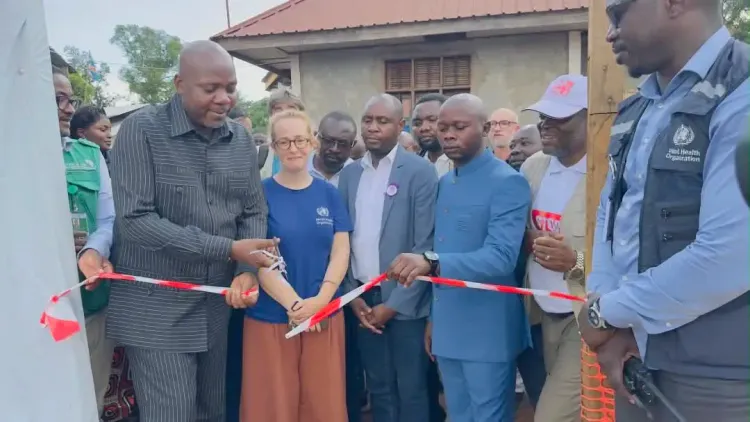
A 10-bed extension backed by WHO and MSF has raised the Isiro centre's capacity to 50 beds .
More than 9,000 frontline workers have received the ERVEBO vaccine under the DRC government programme; 100 more were vaccinated in Haut-Uele on Friday.
MSF has vaccinated at least 870 frontline workers under the 'BRAVO' study on BVD vaccine efficacy.
WHO has trained 211 health workers in Bunia and will soon open a new training hub in North Kivu .
WHO chief Tedros warned the outbreak is still growing in some areas even as it slows in others.
World Health Organisation (WHO) Director-General Tedros Adhanom Ghebreyesus on Saturday, 10 October 2026, reported meaningful progress in the Ebola response in the Democratic Republic of the Congo (DRC), with 25 survivors discharged from a treatment centre in Isiro. However, Tedros cautioned that while the epidemic is slowing in some areas, it continues to grow in others, underscoring the need for an accelerated and geographically wider response.
Survivors Discharged, Treatment Capacity Expanded
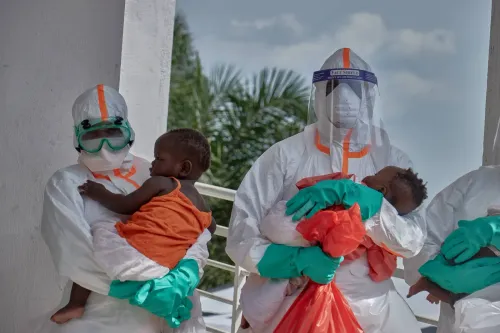
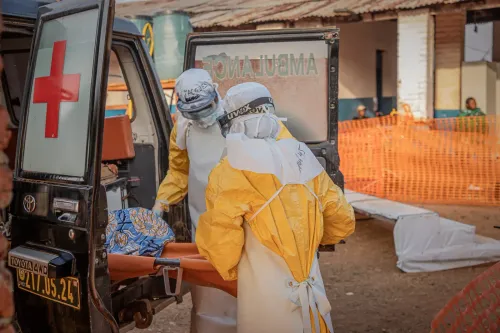
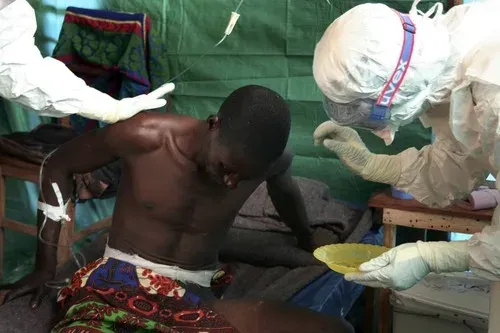
The 25 survivors — 13 women and 12 men — were discharged on Friday after receiving treatment at a WHO-supported Ebola Treatment Centre in Isiro, the capital of Haut-Uele province. They were diagnosed with Bundibugyo virus disease (BVD), the strain driving the current outbreak. A 10-bed extension to the centre, inaugurated with WHO support in collaboration with Médecins Sans Frontières (MSF), has expanded its total capacity to 50 beds. Tedros noted that the expanded centre 'strengthens patient care while allowing the Isiro General Referral Hospital to keep delivering other essential health services.'
Medical Supplies and Health Worker Training
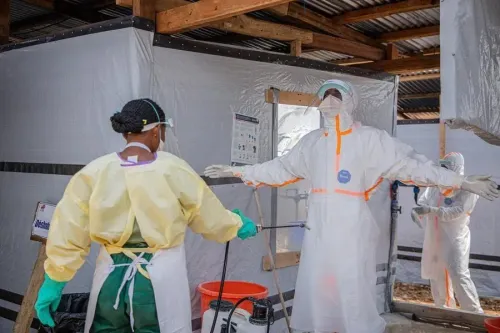
The WHO has also delivered over one tonne of medical supplies to the Isiro hospital, covering oxygen equipment, gloves, masks, beds, and mattresses for frontline health workers. As of Saturday, WHO had trained 211 health workers at its clinical training hub in Bunia, the capital of Ituri province. A new training centre is set to open shortly in North Kivu, expanding the response footprint further west.
Vaccination Drive Gathers Pace
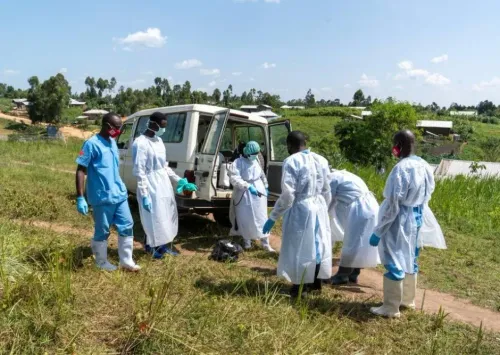
On the same day, the first 100 frontline health workers in Haut-Uele Province received the ERVEBO vaccine as part of the DRC government-led vaccination programme. ERVEBO is proven effective against the Ebola Zaire strain, and is currently being studied to determine its efficacy against the Bundibugyo virus disease driving this outbreak. Cumulatively, more than 9,000 frontline workers have so far been vaccinated with ERVEBO under the programme. Separately, MSF and its partners have vaccinated at least 870 frontline workers with ERVEBO as part of the 'BRAVO' study, which is assessing the vaccine's capacity to prevent serious disease and death from Bundibugyo. A dedicated vaccine efficacy platform trial covering both ERVEBO and BVD-specific vaccines is expected to launch in the coming weeks.
Uneven Progress Across Regions
Despite these gains, the overall outbreak trajectory remains mixed. 'While there are clear signs that the epidemic is slowing down in some areas, it is still growing in others,' Tedros said. 'It is therefore critical that the response continue to scale up and reach where the outbreak already is and where it might be going.' This assessment points to a persistent geographic spread risk — a pattern consistent with earlier multi-province DRC Ebola episodes, where containment in one hotspot was frequently offset by emergence in adjacent areas. Notably, this is the first BVD-driven outbreak to receive such a large-scale international vaccine-trial response, marking a shift in how the global health community approaches non-Zaire Ebola strains.
The Road Ahead
WHO has stated it is working with the DRC government and all partners to bring the outbreak under control 'as rapidly as possible', while simultaneously investing in long-term health system strengthening across the region to reduce vulnerability to future outbreaks. The pace of the vaccine efficacy trial launch and the expansion of the North Kivu training hub will be key indicators of whether the response can outrun the spread over the coming weeks.
Point of View
But Tedros's own language — 'still growing in others' — is the more consequential signal. DRC has a well-documented history of Ebola outbreaks that appear contained in one province only to ignite in adjacent ones; the current multi-province geography fits that pattern closely. The use of ERVEBO, a Zaire-strain vaccine, against a Bundibugyo strain is an epidemiological gamble being run in real time through the BRAVO study and the upcoming efficacy trial — the outcome will have implications far beyond this outbreak. What is missing from the response narrative is transparent case-count data broken down by province, without which it is impossible to independently verify whether the 'slowing' areas meaningfully outnumber the 'growing' ones.
NationPress
10 Oct 2026
Frequently Asked Questions
What is Bundibugyo virus disease (BVD) and how does it differ from Ebola Zaire?
Bundibugyo virus disease (BVD) is caused by a distinct species within the Ebolavirus genus, separate from the more commonly known Ebola Zaire strain. While both cause severe haemorrhagic fever, the ERVEBO vaccine currently deployed in the DRC was originally developed and proven effective against Ebola Zaire — its efficacy against BVD is still being evaluated through ongoing studies.
How many people have been discharged and vaccinated in the DRC Ebola response so far?
As of 10 October 2026, 25 survivors have been discharged from the treatment centre in Isiro, and more than 9,000 frontline health workers have received the ERVEBO vaccine under the DRC government programme. MSF has separately vaccinated at least 870 frontline workers under the BRAVO efficacy study.
Why is WHO warning about the outbreak 'still growing in some areas'?
WHO Director-General Tedros Adhanom Ghebreyesus cautioned that while clear signs of slowing exist in parts of the DRC, the Bundibugyo outbreak continues to expand in other regions, signalling uneven containment. This mirrors patterns seen in previous DRC outbreaks, where suppression in one hotspot was often offset by fresh transmission in adjacent provinces.
What is the current treatment capacity in Isiro, and what support has WHO provided?
The WHO-supported Ebola Treatment Centre in Isiro now has a capacity of 50 beds following a 10-bed extension inaugurated with MSF. WHO has also supplied over one tonne of medical equipment — including oxygen materials, gloves, masks, beds, and mattresses — to the Isiro General Referral Hospital.
What vaccine trials are planned or underway in the DRC for this outbreak?
A vaccine efficacy platform trial covering both the ERVEBO vaccine and BVD-specific vaccines is expected to launch in the coming weeks. Separately, the BRAVO study, run by MSF and partners, is already assessing ERVEBO's ability to prevent serious disease and death from Bundibugyo, with at least 870 frontline workers enrolled so far.