VP Radhakrishnan at AIIMS Rishikesh: Healthcare Must Reach Last Mile
Synopsis
VP C.P. Radhakrishnan chaired the 6th convocation of AIIMS Rishikesh on April 23, urging graduates to prioritise rural healthcare and research. He highlighted India's free vaccination of 140 crore citizens and the Vaccine Maitri initiative that reached 100-plus countries, framing doctors as frontline nation-builders.
Key Takeaways
Radhakrishnan presided over the sixth convocation of AIIMS Rishikesh on April 23, 2025 , in Uttarakhand.
He called healthcare a public trust and urged graduates to prioritise rural outreach, preventive care, and medical research .
India administered free COVID-19 vaccines to more than 140 crore citizens , one of the world's largest equitable vaccination drives.
The Vaccine Maitri initiative saw India supply vaccines to over 100 countries , reflecting the principle of Vasudhaiva Kutumbakam .
Senior attendees included CM Pushkar Singh Dhami , Governor Lt.
Gurmit Singh , and Union MoS Anupriya Patel .
The event underscores India's push to position new AIIMS campuses as engines of equitable healthcare access across underserved regions.
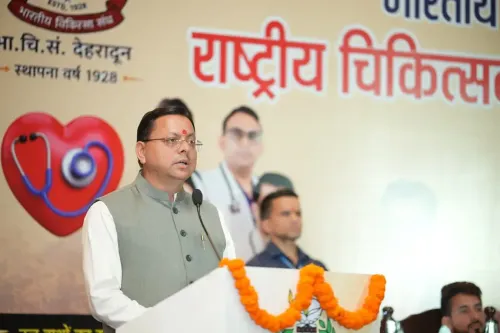
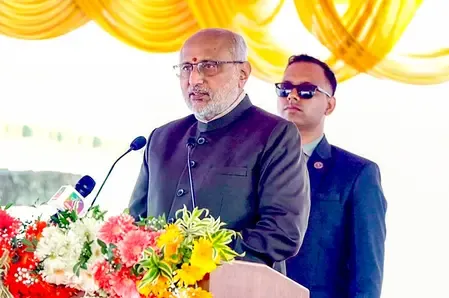
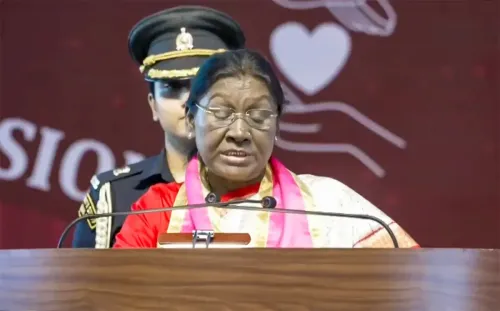
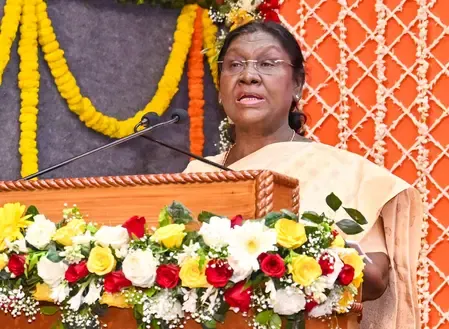
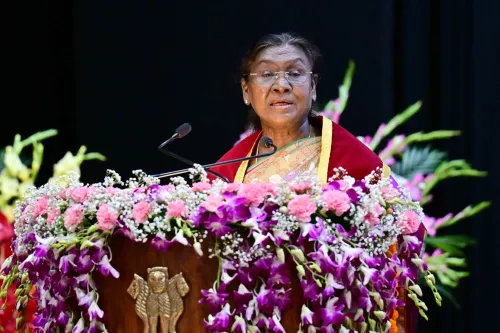
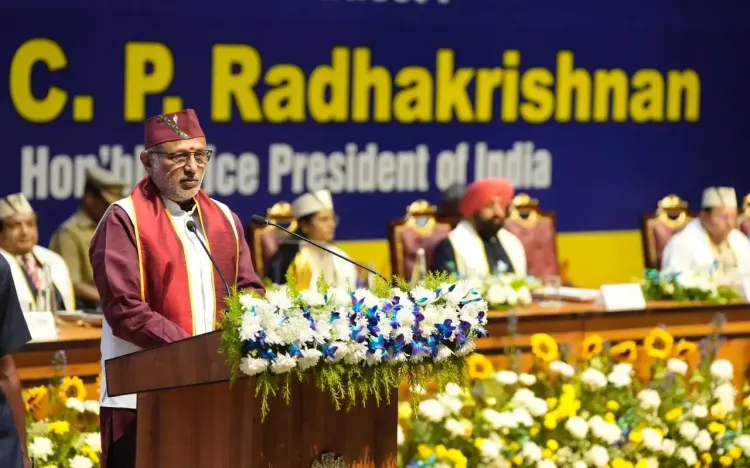
Vice-President C.P. Radhakrishnan presided over the sixth convocation ceremony of AIIMS Rishikesh in Uttarakhand on Thursday, April 23, calling healthcare a public trust and urging newly minted medical professionals to carry quality treatment to the remotest corners of India. The ceremony, held in the spiritually significant city of Rishikesh, brought together top constitutional and political figures to celebrate the institution's growing role in India's healthcare landscape.
AIIMS Expansion and Last-Mile Healthcare Delivery
Addressing the graduating batch, VP Radhakrishnan underscored that the new AIIMS institutions established over the past decade have dramatically improved access to both medical education and quality healthcare across India. He stressed that good governance fundamentally means understanding and fulfilling the needs of the people, particularly those in underserved and remote regions.
He called on graduates to channel their expertise into preventive care, rural outreach, research, and medical innovation, reminding them that a convocation is not merely the end of academic rigour but the beginning of a lifelong responsibility towards society and the nation.
The Vice-President urged the young doctors to remain anchored in the values of empathy, integrity, and service, qualities he described as indispensable to the medical profession and to nation-building at large.
India's COVID Response and Vaccine Maitri Initiative
Reflecting on India's pandemic response, the Vice-President highlighted the country's extraordinary resilience and administrative agility under the leadership of Prime Minister Narendra Modi. He pointed out that more than 140 crore citizens received free COVID-19 vaccines, making it one of the largest and most equitable immunisation drives in human history.
He noted that Indian scientists developed vaccines driven not by commercial profit but by a commitment to human welfare, a distinction that set India apart on the global stage. This spirit, he argued, was the foundation of India's broader humanitarian identity.
The Vaccine Maitri initiative, under which India supplied vaccines to more than 100 countries, was cited as a powerful expression of the ancient Indian philosophy of Vasudhaiva Kutumbakam, meaning the World is One Family. The Vice-President said this initiative cemented India's standing as a compassionate and responsible global partner in times of crisis.
Rishikesh as a Symbol of Healing and Reflection
The Vice-President drew attention to the unique setting of Rishikesh, a globally recognised centre of spiritual reflection, wellness, and healing, and a gateway to the Himalayas. He observed that holding a medical convocation in such a location adds a layer of deeper meaning and solemnity to the occasion, reinforcing the connection between the healing arts and the human spirit.
He remarked that graduating doctors from such an institution carry with them not just clinical knowledge but also the ethos of a place long associated with transformation and service.
Dignitaries and Institutional Significance
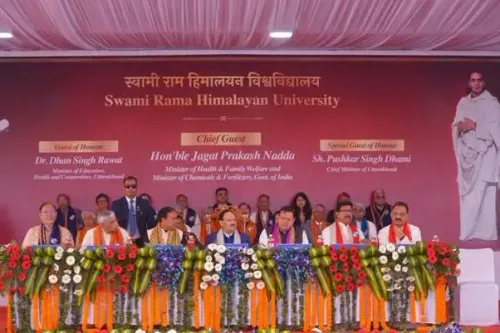
The convocation was attended by several senior officials, including Uttarakhand Governor Lieutenant General Gurmit Singh (retired), Uttarakhand Chief Minister Pushkar Singh Dhami, Union Minister of State for Health and Family Welfare Anupriya Patel, and AIIMS Rishikesh President Raj Bahadur, among other dignitaries.
The presence of such high-level representation underscores the growing national importance of AIIMS Rishikesh as a premier medical institution in northern India, particularly for the hill states of the region.
Broader Implications for India's Healthcare Policy
This convocation comes at a time when India is aggressively scaling its healthcare infrastructure. The central government has established multiple new AIIMS campuses across states including Bhopal, Jodhpur, Patna, Raipur, Bhubaneswar, and Rishikesh under the Pradhan Mantri Swasthya Suraksha Yojana, aiming to decentralise elite medical education and tertiary care beyond metro cities.
Critics note that while infrastructure expansion is commendable, persistent challenges around rural doctor shortages, inadequate primary health centres, and overburdened district hospitals mean that last-mile healthcare delivery remains an unfinished agenda. The Vice-President's call to graduates to prioritise rural outreach directly addresses this structural gap.
With India's National Health Policy targeting increased public health expenditure and the Ayushman Bharat scheme continuing to expand coverage, the graduating class of AIIMS Rishikesh steps into a healthcare ecosystem that is transforming rapidly but unevenly. As more AIIMS convocations are scheduled across campuses in the coming months, the government's messaging around medical professionals as nation-builders is likely to intensify ahead of key policy announcements in the health sector.
Point of View
Not just individual professionals. While the expansion of AIIMS campuses is a genuine achievement, the harder truth is that India's rural healthcare crisis persists, with PHCs understaffed and specialist care still largely urban. Urging graduates toward rural service is commendable, but without structural incentives such as better pay, infrastructure, and career pathways in rural postings, the appeal risks remaining rhetorical. The real test of last-mile healthcare is not in convocation speeches but in retention rates of doctors in Tier-3 districts.
NationPress
26 Sept 2026
Frequently Asked Questions
What happened at the AIIMS Rishikesh 6th convocation ceremony?
Vice-President C.P. Radhakrishnan presided over the sixth convocation of AIIMS Rishikesh on April 23, 2025, in Uttarakhand. He urged graduating doctors to focus on rural outreach, preventive care, and research, calling healthcare a public trust and a cornerstone of nation-building.
What did VP Radhakrishnan say about India's COVID-19 vaccination drive?
VP Radhakrishnan highlighted that more than 140 crore Indian citizens received free COVID-19 vaccines, describing it as one of the world's largest equitable immunisation efforts. He emphasised that Indian scientists developed vaccines for human welfare, not commercial profit.
What is the Vaccine Maitri initiative mentioned by the Vice-President?
Vaccine Maitri is India's initiative under which COVID-19 vaccines were supplied to more than 100 countries during the pandemic. VP Radhakrishnan cited it as a reflection of India's commitment to the philosophy of Vasudhaiva Kutumbakam, meaning the world as one family.
Which dignitaries attended the AIIMS Rishikesh convocation 2025?
The ceremony was attended by Uttarakhand Governor Lt. Gen. Gurmit Singh (retd.), Chief Minister Pushkar Singh Dhami, Union MoS for Health Anupriya Patel, and AIIMS Rishikesh President Raj Bahadur, among others.
How has India expanded AIIMS institutions over the last decade?
Under the Pradhan Mantri Swasthya Suraksha Yojana, India established multiple new AIIMS campuses across states including Rishikesh, Bhopal, Patna, Jodhpur, Raipur, and Bhubaneswar to decentralise elite medical education and tertiary healthcare beyond major cities.