CM Fadnavis Chairs Water Conservation Meet With Paani Foundation
Synopsis
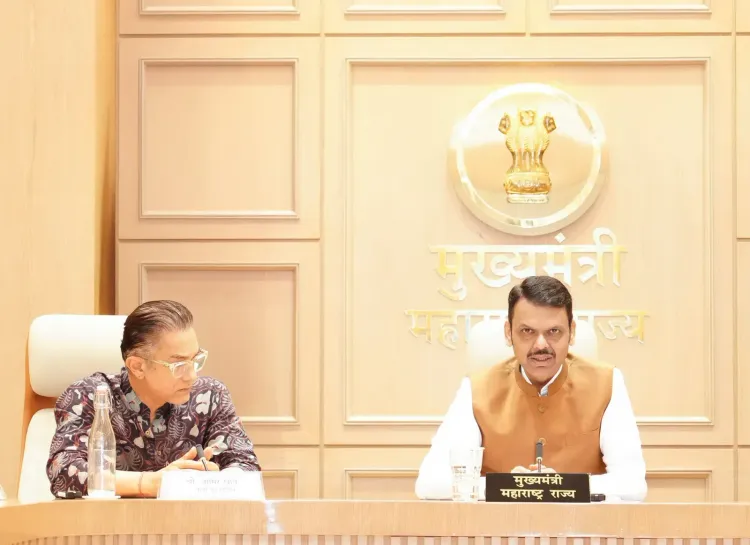
Maharashtra CM Devendra Fadnavis chaired a water conservation meeting with Paani Foundation in Mumbai on October 10, 2026, directing all departments to accelerate 'Pani Adva, Pani Jirva' works, prepare an integrated action plan, and deploy a technology-enabled monitoring system to tackle the state's chronic drought challenges.
Key Takeaways
CM Devendra Fadnavis chaired a water conservation meeting with Paani Foundation in Mumbai on October 10, 2026 .
The 'Pani Adva, Pani Jirva' ('Stop Water, Absorb Water') approach was formally emphasised as the state's guiding framework for rainwater conservation.
District Collectors, CEOs of Zilla Parishads , and field officers were directed to work in close coordination with voluntary organisations including Paani Foundation.
An integrated action plan is to be prepared based on strategies finalised at the meeting, backed by a technology-enabled monitoring system .
Attendees included MoS Madhuritai Misal , Paani Foundation Founder Aamir Khan , CEO Satyajit Bhatkal , and A.T.E.
Chandra Foundation Co-Founder Amit Chandra .
Strict timelines were mandated to prevent delays in the execution of water conservation works across Maharashtra.
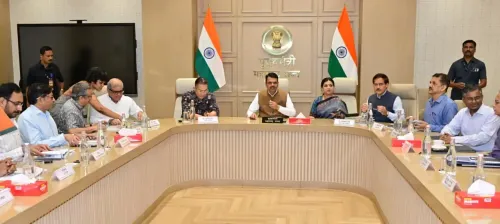
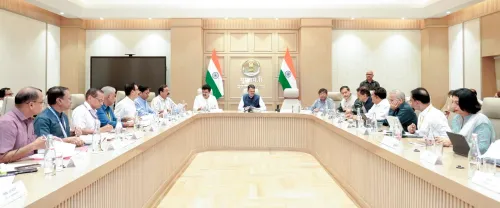
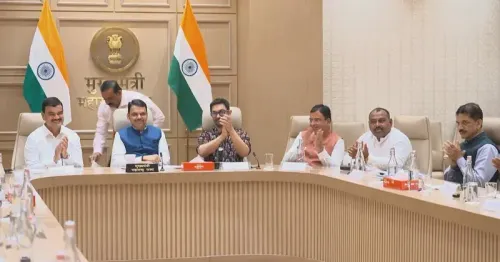
Every drop of Maharashtra's monsoon rain is now a policy priority. Maharashtra Chief Minister Devendra Fadnavis chaired a high-level meeting on water conservation with the Paani Foundation in Mumbai on Saturday, October 10, 2026, directing the full machinery of the state government to accelerate drought solutions before the next dry season bites.
The 'Pani Adva, Pani Jirva' push gets official muscle
At the heart of the meeting was the 'Pani Adva, Pani Jirva' — 'Stop Water, Absorb Water' — approach, a watershed-management philosophy that focuses on capturing every possible drop of rainwater through bunding, trenching, and community-led conservation works. Fadnavis placed explicit emphasis on this framework, signalling that the state intends to move beyond intent and into measurable, time-bound execution. The directive was unambiguous: no delays, strict timelines, and active participation at every administrative level.
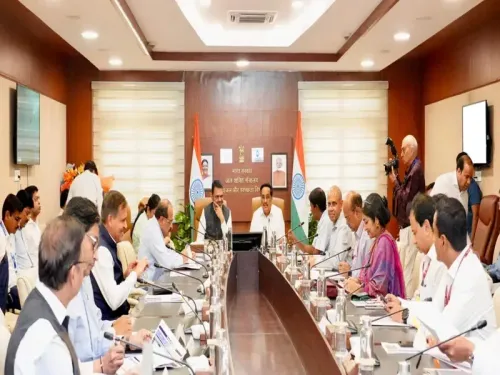
The CM instructed all departments to work in close coordination, with District Collectors, Chief Executive Officers of Zilla Parishads, and field officers forming the operational spine of the mission. An integrated action plan, built on strategies finalised during the meeting, is to be prepared immediately. A technology-enabled monitoring system will track progress on the ground — a notable signal that the state wants accountability baked into the rollout, not bolted on later.
Aamir Khan, Amit Chandra, and the civil-society coalition in the room
The meeting brought together an unusually broad coalition. Minister of State Madhuritai Misal, Paani Foundation Founder Aamir Khan, CEO Satyajit Bhatkal, and A.T.E. Chandra Foundation Co-Founder Amit Chandra were all present alongside senior officials. That combination — a sitting CM, a film-industry-led NGO with deep rural reach, and a philanthropic foundation — reflects a deliberate bet on public-private convergence as the fastest route to scale.
Paani Foundation, launched in 2016, has built a significant track record in Maharashtra's drought-prone Marathwada and Vidarbha regions through its annual Satyamev Jayate Water Cup competition, which mobilises villages to undertake water conservation works in a compressed sprint. The government's formal endorsement of the Foundation's model — and its instruction to administrative machinery to 'actively support' voluntary organisations — effectively extends that grassroots energy into the state's official drought-mitigation architecture.
Why Maharashtra's drought challenge demands urgency now
Maharashtra is chronically vulnerable to erratic rainfall. Large swathes of Marathwada and parts of Vidarbha have faced recurring drought declarations, with agricultural distress translating directly into farmer debt and migration. The state's existing water conservation infrastructure — check dams, farm ponds, contour trenches — has expanded over years, but fragmented departmental execution and monitoring gaps have blunted impact.
By mandating a robust administrative mechanism and a technology-enabled monitoring system, Fadnavis is signalling a shift from project-by-project approvals toward a unified, trackable command structure. Whether that structure delivers before the next monsoon cycle will be the real test.
Maharashtra's water future is being drafted in meeting rooms today — but it will be measured in filled reservoirs and stable harvests tomorrow.
Point of View
Mass-trusted civil-society brand while giving the BJP-led government visible ownership of a long-standing rural pain point. The insistence on a technology-enabled monitoring system suggests the administration is aware that past water conservation drives have stalled at the implementation stage, and is attempting to build accountability into the architecture from the start. The presence of Amit Chandra's A.T.E. Chandra Foundation alongside Paani Foundation also hints at a broader philanthropic coalition being assembled to co-finance or co-execute works, reducing the burden on the state exchequer. For Fadnavis, delivering measurable results in drought-prone Marathwada and Vidarbha before the next election cycle is both a governance imperative and a political one.
NationPress
10 Oct 2026
Frequently Asked Questions
What is the 'Pani Adva, Pani Jirva' approach in Maharashtra?
'Pani Adva, Pani Jirva' — meaning 'Stop Water, Absorb Water' — is a watershed-management approach that focuses on capturing rainwater through bunding, trenching, farm ponds, and check dams to recharge groundwater and reduce drought vulnerability in Maharashtra.
What is Paani Foundation and who founded it?
Paani Foundation is a Maharashtra-based NGO founded by actor Aamir Khan in 2016 . It runs the annual Satyamev Jayate Water Cup, mobilising villages in drought-prone regions to undertake water conservation works competitively.
What decisions were taken at the CM Fadnavis water conservation meeting on October 10, 2026?
CM Fadnavis directed all departments to coordinate closely with Paani Foundation and other voluntary organisations, prepare an integrated action plan, establish a robust administrative mechanism, and deploy a technology-enabled monitoring system — all under strict timelines.
Who attended the Paani Foundation meeting with CM Fadnavis in Mumbai?
The meeting was attended by MoS Madhuritai Misal , Paani Foundation Founder Aamir Khan , CEO Satyajit Bhatkal , A.T.E. Chandra Foundation Co-Founder Amit Chandra , and senior government officials.
Which regions of Maharashtra are most affected by drought?
The Marathwada and Vidarbha regions of Maharashtra are chronically drought-prone, frequently receiving below-average rainfall and facing acute agricultural distress, farmer debt, and migration.