CM Fadnavis Reaffirms Maharashtra's Drought-Free Mission
Synopsis
The Chief Minister's Office of Maharashtra declared on 28 May 2026 the state's commitment to becoming drought-free, tagging CM Devendra Fadnavis and spotlighting water resources as a core governance priority amid recurring drought cycles in Marathwada and Vidarbha.
Key Takeaways
The CMO Maharashtra posted on 28 May 2026 reaffirming the state's commitment to becoming drought-free.
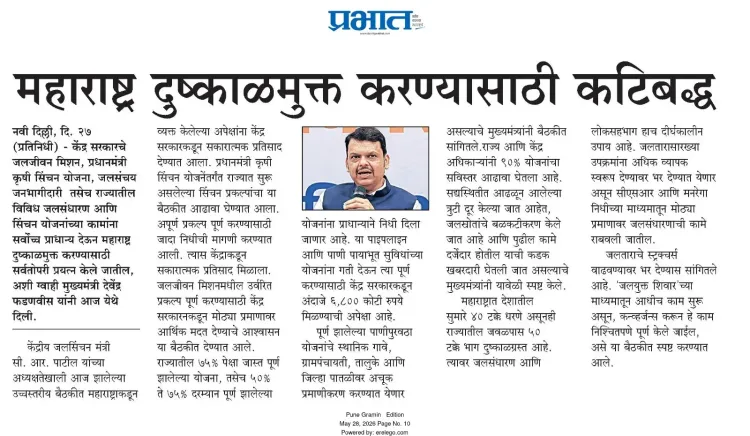
The Marathi phrase 'महाराष्ट्र दुष्काळमुक्त करण्यासाठी कटिबद्ध' translates to 'Committed to making Maharashtra drought-free.' Chief Minister Devendra Fadnavis was directly tagged, signalling personal ownership of the water agenda.
The Jalyukt Shivar Abhiyan , launched in 2015 , remains the most prominent state-level drought-mitigation programme in Maharashtra's policy history.
Regions including Marathwada and Vidarbha are the primary drought-affected zones the policy targets.
Budget allocations for irrigation and new water conservation works in the next fiscal cycle are the key metrics to watch.
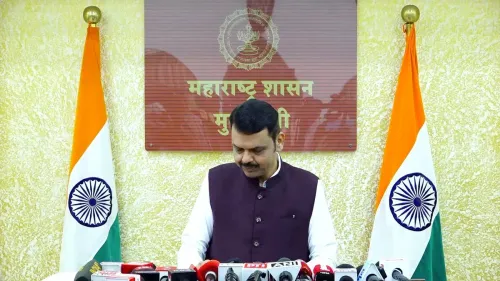
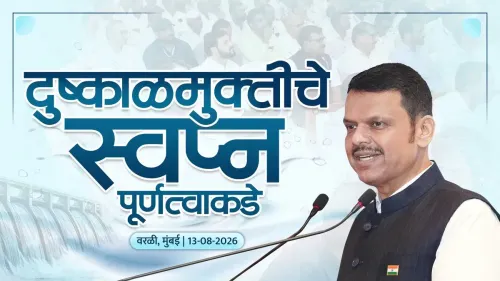
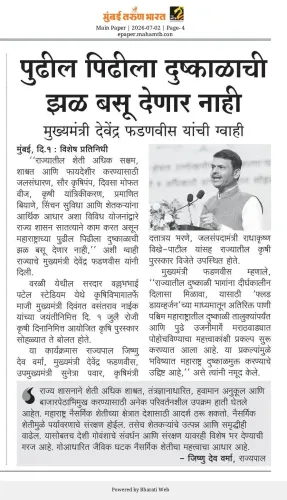
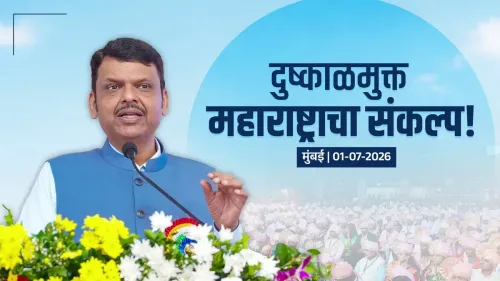
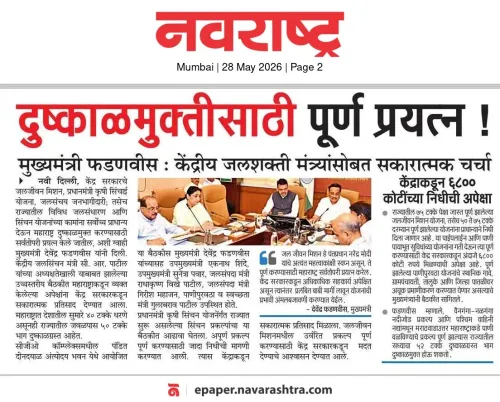
The Chief Minister's Office of Maharashtra reaffirmed on Thursday, 28 May 2026 the state government's commitment to making Maharashtra drought-free, tagging Chief Minister Devendra Fadnavis in a post that underscores water resources as a priority agenda for the state.
Context
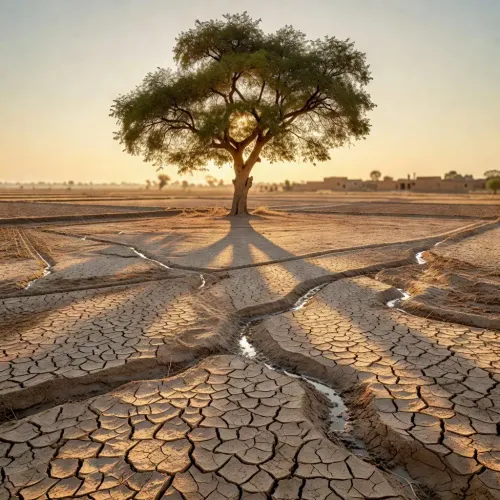
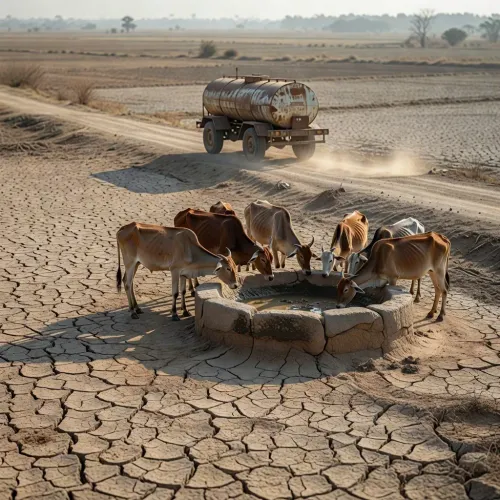
The post, shared from the official CMO Maharashtra handle, carried the Marathi declaration 'महाराष्ट्र दुष्काळमुक्त करण्यासाठी कटिबद्ध' — meaning 'Committed to making Maharashtra drought-free.' The message was accompanied by an image and tagged under #Maharashtra, #DevendraFadnavis, and #WaterResources, signalling a deliberate push to foreground the drought agenda in public communication.
Devendra Fadnavis, a senior BJP leader, has consistently positioned water management and infrastructure as central planks of his administration. The renewed emphasis comes as the state prepares for the monsoon season, a period that historically determines the severity of water stress in drought-prone districts.
Policy Backdrop
Maharashtra's battle against drought has deep policy roots. In 2015, the state government launched the Jalyukt Shivar Abhiyan, a flagship programme aimed at creating drought-free villages through village-level water conservation structures, desilting of streams, and watershed development works. The scheme sought to address the chronic water scarcity that afflicts rain-shadow regions including Marathwada and Vidarbha.
These state-level interventions have run in parallel with national programmes on micro-irrigation and watershed management, reflecting a layered approach to agricultural water security. Budget allocations for irrigation and water conservation have remained a closely watched line item in successive state budgets.
Stakeholders and Impact
The districts most directly affected by Maharashtra's drought cycles are in Marathwada and Vidarbha, where erratic monsoons and thin groundwater cover leave farming communities acutely vulnerable. Drought-affected farmers and rural households stand to gain most from any sustained push on water infrastructure.
Agricultural output, rural incomes, and drinking-water availability in these regions are all tied to the effectiveness of conservation works. A credible drought-free programme would also reduce the state's recurring expenditure on drought relief, freeing resources for longer-term investment.
What's Next
Observers will watch for concrete follow-through in the form of new water conservation project announcements, budget provisions for irrigation in the next state fiscal cycle, and district-level targets for water storage capacity. The government's ability to translate the stated commitment into measurable outcomes — particularly ahead of and during the 2026 monsoon — will be the key test of this renewed pledge.
Point of View
Where agrarian distress in Marathwada and Vidarbha has fuelled electoral discontent. By anchoring the message to the Chief Minister's handle, the government is projecting personal accountability on an issue that directly affects millions of farmers. Whether this translates into new policy action or primarily serves as a messaging exercise will become clearer as the budget cycle and monsoon unfold.
NationPress
11 Oct 2026
Frequently Asked Questions
What does 'Maharashtra drought-free' mean?
It refers to the state government's stated goal of eliminating drought conditions across Maharashtra through water conservation, irrigation expansion, and watershed management, particularly in chronically affected regions like Marathwada and Vidarbha.
What is the Jalyukt Shivar Abhiyan?
Jalyukt Shivar Abhiyan is a Maharashtra government programme launched in 2015 to create drought-free villages by building water conservation structures, desilting streams, and undertaking watershed development at the village level.
Which regions of Maharashtra are most affected by drought?
Marathwada and Vidarbha are the most drought-prone regions of Maharashtra, where erratic monsoons and limited groundwater make farming communities especially vulnerable to water scarcity.
What is Devendra Fadnavis's role in Maharashtra's water policy?
Devendra Fadnavis, as Chief Minister of Maharashtra, has positioned water management and infrastructure as central priorities of his administration, with the CMO directly tagging him in water-resource policy communications.
What should I watch for next on Maharashtra's drought policy?
Key developments to follow include new water conservation project announcements, irrigation budget allocations in the next state fiscal cycle, and district-level water storage targets ahead of and during the 2026 monsoon season.