CM Fadnavis Chairs Soil and Water Conservation Meet in Mumbai

Synopsis
Chief Minister Devendra Fadnavis chaired a Soil and Water Conservation Department review at Varsha Bungalow on 19 August 2026, with Minister Sanjay Rathod present. Talks covered watershed development, farm productivity, and inter-departmental coordination to secure water access across Maharashtra's drought-prone regions.
Key Takeaways
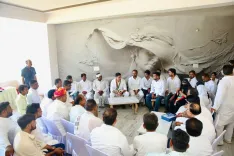
CM Devendra Fadnavis chaired the Soil and Water Conservation Department review on 19 August 2026 at Varsha Bungalow, Mumbai .
Minister Sanjay Rathod and senior officials attended the meeting alongside the Chief Minister.
Discussions covered water conservation, watershed development, and boosting agricultural productivity.
Inter-departmental coordination to ensure water security was a key agenda item.
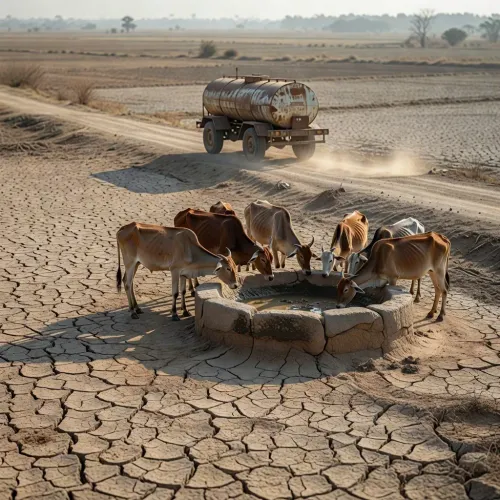
Maharashtra's Marathwada and Vidarbha regions face chronic drought, making watershed policy a persistent governance priority.
The Jalyukt Shivar Abhiyan , launched in 2015 , remains a landmark watershed initiative in the state's policy lineage.
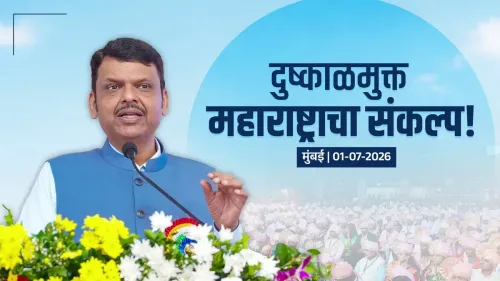
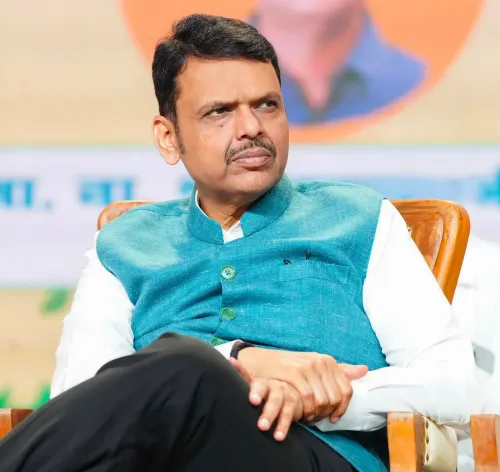
Water security for Maharashtra's drought-prone heartland moved to the top of the agenda on Wednesday, 19 August 2026, as Chief Minister Devendra Fadnavis chaired a high-level review of the Soil and Water Conservation Department at Varsha Bungalow, Mumbai — signalling that the state's perennial battle against water scarcity is far from over.
The meeting, attended by Minister Sanjay Rathod and senior departmental officials, centred on four interlocking priorities: water conservation, watershed development, lifting agricultural productivity, and building a coordination bridge across government departments to ensure jalsuraksha — water security — reaches the last village.
What the meeting put on the table
The Chief Minister's Office confirmed that discussions spanned the full arc of Maharashtra's rural water challenge — from desilting and percolation works at the watershed level to the downstream question of whether farmers in Marathwada and Vidarbha actually see more water in their fields. Inter-departmental silos have historically blunted the impact of individually well-designed schemes, and the explicit focus on 'coordination among various departments' suggests the Fadnavis administration is treating that gap as a live problem, not a solved one.
Minister Rathod, who holds the soil and water conservation portfolio, was present alongside senior bureaucrats — a combination that typically signals the meeting was meant to convert policy intent into executable departmental direction, not merely to review dashboards.
Maharashtra's long fight against drought — and the watershed playbook
Maharashtra has run some of India's most ambitious watershed programmes for decades. The Jalyukt Shivar Abhiyan, launched in 2015, became a flagship effort to create village-level water security through desilting, check dams, and percolation tanks — targeting the chronically drought-hit districts of Marathwada and Vidarbha. Successive state governments have kept watershed development at the core of rural policy, recognising that soil conservation and farm productivity are two sides of the same coin: degraded land holds less water, and less water means lower yields.
The broader pattern — inter-departmental review meetings ahead of or during the monsoon cycle — reflects how Maharashtra governments have learned to use coordination mechanisms as an early-warning and course-correction tool. Whether this meeting translates into fresh budget allocations or revised targets for ongoing watershed projects will be the real measure of its impact.
For the millions of farmers in Maharashtra's water-stressed districts, the question is not whether the state holds meetings — it is whether the next monsoon leaves more water in the ground than the last one did.
Point of View
The real test will be whether this review produces binding coordination mandates or remains a high-visibility consultation. For the BJP-led government, visible action on agrarian water stress ahead of the next crop cycle also carries clear political logic in the districts it cannot afford to lose.
NationPress
5 Oct 2026
Frequently Asked Questions
What was discussed at CM Devendra Fadnavis's Soil and Water Conservation meeting?
The meeting on 19 August 2026 focused on water conservation, watershed development, increasing agricultural productivity, and improving inter-departmental coordination to ensure water security across Maharashtra.
Where was the Soil and Water Conservation Department meeting held?
The meeting was held at Varsha Bungalow , the official residence of the Chief Minister of Maharashtra, in Mumbai .
Who attended the water conservation meeting chaired by CM Fadnavis?
Minister Sanjay Rathod , who holds the soil and water conservation portfolio, and senior departmental officials attended the meeting alongside Chief Minister Devendra Fadnavis .
What is Jalyukt Shivar Abhiyan and how does it relate to this meeting?
Jalyukt Shivar Abhiyan was a flagship Maharashtra scheme launched in 2015 to create village-level water security through desilting, percolation tanks and watershed works — the same policy domain reviewed at the 19 August meeting.
Which Maharashtra regions face the most acute water stress?
The Marathwada and Vidarbha regions of Maharashtra experience the most severe and recurrent drought conditions, making watershed development and soil conservation central to state rural policy.