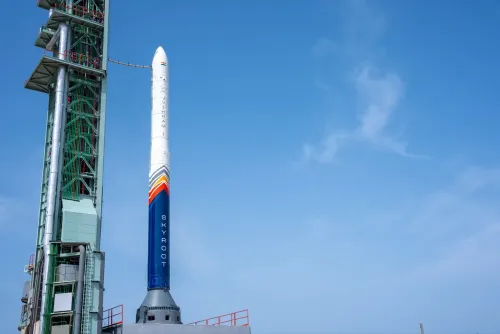
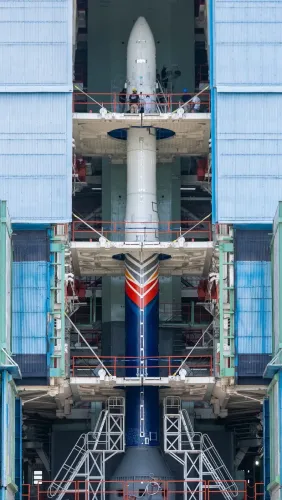
Goyal hails Skyroot's Vikram-1 orbital launch under Mission Aagaman
Synopsis
Commerce Minister Piyush Goyal hailed the successful orbital launch of Skyroot Aerospace's Vikram-1 rocket under Mission Aagaman on 18 July 2026, calling it a milestone for India's private space sector and citing the Modi government's space reforms, Make in India, and the GMR Aerospace SEZ in Hyderabad.
Key Takeaways
Union Commerce Minister Piyush Goyal congratulated Skyroot Aerospace on the successful launch of Vikram-1 under Mission Aagaman on 18 July 2026 .
Vikram-1 is described as India's first privately developed launch vehicle to complete a maiden orbital flight.
The achievement is linked to India's space sector liberalisation initiated in 2020 through IN-SPACe , which opened the sector to private players.
Skyroot Aerospace is based at the GMR Aerospace and Industrial Park SEZ in Hyderabad , which Goyal cited as evidence of a growing high-tech SEZ ecosystem.
The launch is also presented as a success of the Make in India (2014) and Aatmanirbhar Bharat (2020) policy frameworks.
India's private space industry is now eyeing commercial small-satellite launch contracts following the orbital milestone.
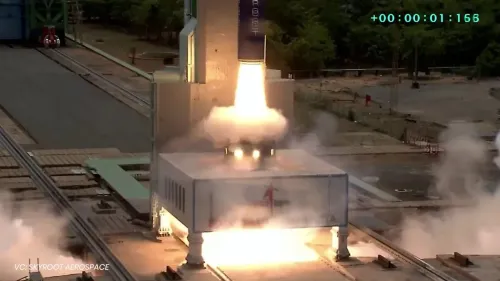
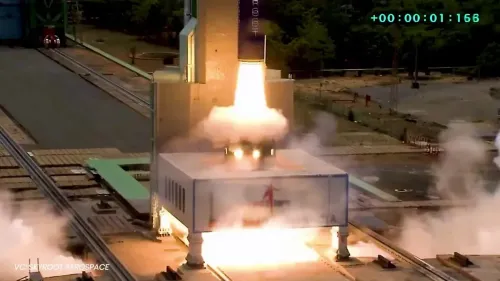
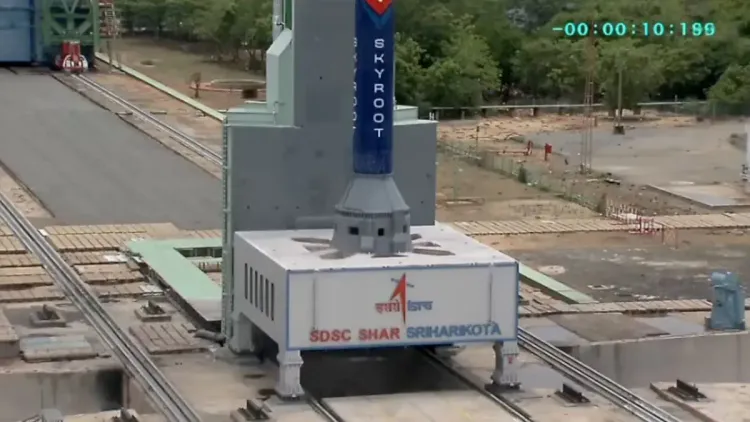
Union Commerce and Industry Minister Piyush Goyal on Saturday, 18 July 2026, congratulated Skyroot Aerospace on the successful launch of Vikram-1 under Mission Aagaman, calling it the maiden orbital flight of India's first privately developed launch vehicle and a 'remarkable milestone' in the country's space journey.
Context
Goyal's post described the launch as 'historic,' noting that it reflects 'the transformative space sector reforms under the leadership of PM Narendra Modi, unleashing innovation, nurturing talent and strengthening India's entrepreneurial spirit.' The minister also linked the achievement to the Make in India initiative and the government's push for an Aatmanirbhar Bharat — a self-reliant India.
Vikram-1 is part of the Vikram series of launch vehicles developed by Skyroot Aerospace, a Hyderabad-based private aerospace firm. Mission Aagaman marks the rocket's transition from sub-orbital tests to a full orbital mission, a significant technical step for any launch vehicle programme.
Policy Backdrop
The launch is a direct product of India's space sector liberalisation, which began in earnest in 2020 when the government opened satellite building, launch services, and related activities to private entities through the Indian National Space Promotion and Authorisation Centre (IN-SPACe). Before this, the sector was almost exclusively the domain of the state-run Indian Space Research Organisation (ISRO).
The Make in India programme, launched in 2014, and the Aatmanirbhar Bharat framework announced in 2020 together created the policy scaffolding that encouraged private capital and engineering talent to enter strategic industries including space. Skyroot Aerospace emerged as one of the earliest and most prominent beneficiaries of this opening.
Stakeholders and Impact
Goyal specifically highlighted that Skyroot Aerospace operates out of the GMR Aerospace and Industrial Park SEZ in Hyderabad, calling it evidence of 'the growing strength of India's SEZ ecosystem in fostering world-class manufacturing, innovation and high-tech enterprises.' The Special Economic Zone model, long associated with textiles and electronics, is now being positioned as infrastructure for deep-technology and aerospace ventures.
For India's nascent private space industry, a successful orbital flight by a domestically built rocket opens the door to commercial small-satellite launch contracts — a fast-growing global market. Aerospace manufacturers, space startups, and SEZ investors are among those with a direct stake in the mission's outcome.
What's Next
Attention will now turn to Skyroot Aerospace's commercial launch pipeline and any follow-on contracts that Mission Aagaman's success may attract. Observers will also watch for updates to IN-SPACe licensing norms and potential new incentives for space-sector units operating within SEZs. The government's broader ambition is to position Indian private firms as competitive players in the global small-satellite launch market, and a proven orbital vehicle is a prerequisite for that goal.
India's space privatisation arc is still in its early chapters; how quickly Skyroot Aerospace can move from a maiden orbital flight to a regular commercial launch cadence will be a key test of whether the policy reforms have created durable industrial capacity or a one-off demonstration.
Point of View
Traditionally associated with labour-intensive exports, as anchors for deep-technology and defence-adjacent manufacturing. For the BJP, a privately built Indian rocket reaching orbit is a powerful symbol ahead of any electoral cycle, neatly tying together self-reliance, entrepreneurship, and national prestige. The real policy test, however, will be whether Skyroot Aerospace can sustain a commercial launch cadence that justifies the regulatory architecture built around it.
NationPress
16 Oct 2026
Frequently Asked Questions
What is Mission Aagaman and Vikram-1?
Mission Aagaman is the orbital launch mission of Vikram-1, a rocket developed by Hyderabad-based private aerospace company Skyroot Aerospace. Vikram-1 is described as India's first privately developed launch vehicle to complete a maiden orbital flight, marking a significant step for India's commercial space industry.
Who is Skyroot Aerospace?
Skyroot Aerospace is a Hyderabad-based private aerospace startup that develops the Vikram series of launch vehicles. It operates from the GMR Aerospace and Industrial Park Special Economic Zone in Hyderabad and is one of the earliest private companies to emerge from India's post-2020 space sector liberalisation.
What space reforms did the Modi government introduce?
In 2020, the Government of India opened the space sector to private entities through the Indian National Space Promotion and Authorisation Centre (IN-SPACe), allowing private companies to build satellites, offer launch services, and undertake related activities — a domain previously exclusive to ISRO.
What is the GMR Aerospace and Industrial Park SEZ?
The GMR Aerospace and Industrial Park SEZ is a Special Economic Zone in Hyderabad designed to host aerospace and advanced manufacturing units. Skyroot Aerospace operates from this SEZ, which Commerce Minister Piyush Goyal cited as an example of India's growing high-tech industrial ecosystem.
Why does Vikram-1's launch matter for India's space ambitions?
A successful orbital flight by a domestically and privately built rocket validates India's space liberalisation policy and positions Indian firms to compete for commercial small-satellite launch contracts globally. It also demonstrates that the Make in India and Aatmanirbhar Bharat frameworks can produce outcomes in high-technology strategic sectors.