Amit Shah Hails Vikram-1 as Leap in India's Private Space Era
Synopsis
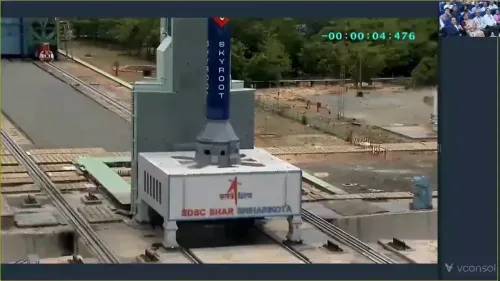
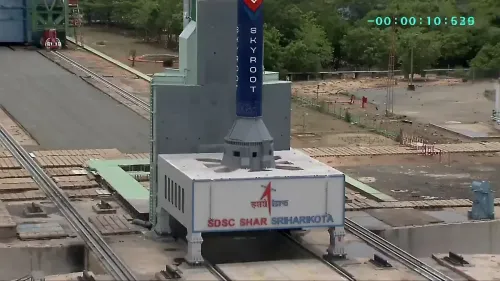
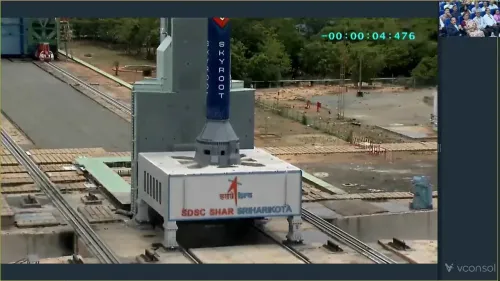
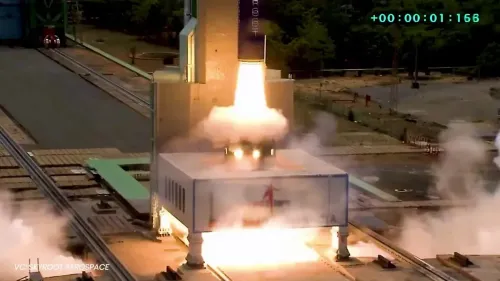
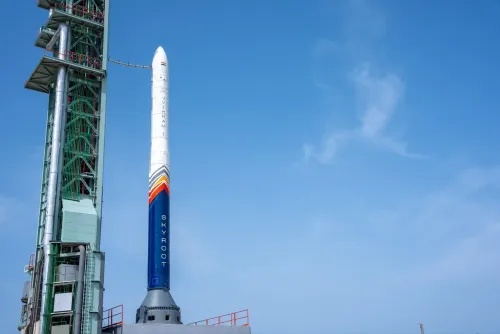
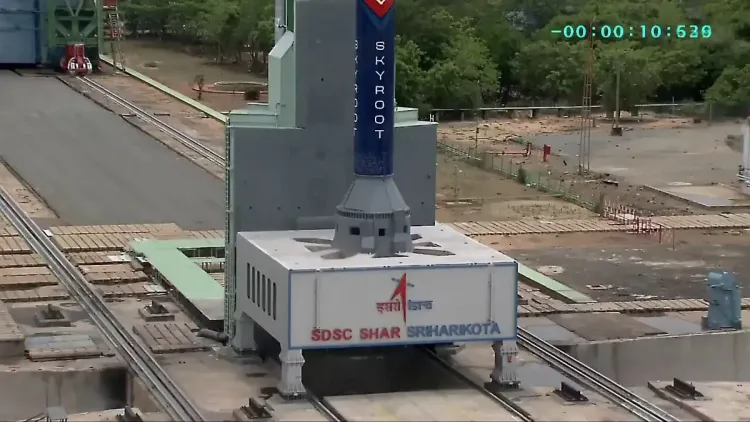
Union Home Minister Amit Shah on 18 July 2026 hailed Skyroot Aerospace's launch of Vikram-1 — India's first privately built rocket — as a milestone in PM Modi's vision of opening India's space sector to private enterprise and cementing the country's global space standing.
Key Takeaways
Amit Shah congratulated Skyroot Aerospace on the launch of Vikram-1 on 18 July 2026 .
Vikram-1 is described as India's first privately developed launch vehicle.
The launch is framed as advancing PM Modi 's vision of making space more accessible.
India liberalised its space sector in 2020 , establishing IN-SPACe as the nodal regulator for private launch activities.
Skyroot Aerospace is a Hyderabad -based startup developing the Vikram series of small satellite launch vehicles.
The development positions India to compete for global small-satellite launch contracts alongside private players in the US and Europe .
Union Home Minister Amit Shah on Saturday, 18 July 2026, congratulated Skyroot Aerospace on the successful launch of Vikram-1, describing it as India's first privately developed launch vehicle and a milestone in the country's space journey.
Context
Posting on X, Shah wrote: 'India's space ambition reaches new horizon. Heartiest congratulations to Skyroot Aerospace on the successful launch of Vikram-1, India's first privately developed launch vehicle.' He framed the achievement as 'a firm step towards realizing Modi Ji's vision of making space more accessible.'
The post, tagged #IndiaWithVikram1, comes as India's private space ecosystem has been gaining momentum following a landmark policy shift in 2020 that opened end-to-end launch activities to non-governmental players.
Policy Backdrop
The Government of India liberalised the space sector in 2020, permitting private entities to design, build, and launch rockets and satellites. As part of this reform, IN-SPACe (Indian National Space Promotion and Authorisation Centre) was established as the nodal regulatory body to facilitate and oversee private participation.
Skyroot Aerospace, headquartered in Hyderabad, is among the first cohort of startups licensed under this framework. The company's Vikram series of small satellite launch vehicles is designed to serve the growing global market for dedicated small-satellite missions at competitive cost. The Indian Space Research Organisation (ISRO) has played a supporting role in this ecosystem, partnering with private firms on infrastructure and testing.
Prime Minister Narendra Modi has repeatedly cited private-sector participation in space as central to India's ambition of significantly raising its share of the global space economy, which is projected to be worth hundreds of billions of dollars in the coming decade.
Stakeholders and Impact
The successful qualification of a privately built Indian launch vehicle has direct implications for domestic satellite operators, international launch customers seeking cost-effective alternatives, and the broader ecosystem of aerospace startups now operating under IN-SPACe licences.
A proven private launch capability reduces dependence on a single national launch provider and increases the cadence of launches from Indian soil — a key metric for commercial competitiveness. Analysts have noted that India's approach mirrors earlier liberalisation in the United States and Europe, where private launch companies now routinely conduct dedicated small-satellite missions.
For Skyroot Aerospace specifically, a successful orbital mission would validate years of private investment and engineering work, potentially opening the door to commercial launch contracts from domestic and foreign customers.
What's Next
Attention will now turn to subsequent qualification flights by Skyroot and other IN-SPACe-licensed startups seeking to demonstrate launch reliability. Parliamentary and budgetary measures to expand IN-SPACe's licensing and support powers are also being watched by the industry.
If India's private launch sector sustains this momentum, the country could position itself as a preferred destination for small-satellite launch services globally — directly advancing the government's stated goal of elevating India's stature as a space leader.
Point of View
Shah ties the achievement to the government's broader 'New India' narrative of technological self-reliance and global ambition. The timing also matters: as global competition for the small-satellite launch market intensifies, the government has an incentive to amplify every private-sector success to attract further investment and talent into IN-SPACe's pipeline. If Skyroot can demonstrate launch reliability across successive missions, it would give India a credible commercial alternative to established international providers — a goal that successive administrations have pursued but the current one has moved most decisively to realise.
NationPress
17 Oct 2026
Frequently Asked Questions
What is Vikram-1 and who made it?
Vikram-1 is India's first privately developed satellite launch vehicle, built by Skyroot Aerospace , a Hyderabad-based aerospace startup. It is part of the company's Vikram series designed to carry small satellites into orbit.
Why is the Vikram-1 launch significant for India?
The launch marks the first time a privately built Indian rocket has been used for an orbital mission, validating the government's 2020 decision to open the space sector to private enterprise and boosting India's credentials as a commercial launch destination.
What is IN-SPACe and what role does it play?
IN-SPACe (Indian National Space Promotion and Authorisation Centre) is the government body established in 2020 to regulate and promote private participation in India's space sector, including licensing private launch vehicle operators like Skyroot Aerospace.
What did Amit Shah say about the Vikram-1 launch?
Amit Shah called the launch 'a firm step towards realizing Modi Ji's vision of making space more accessible' and said it would 'strengthen India's space sector, elevating its stature as a global leader.'
How does India's private space sector compare globally?
India's approach mirrors liberalisation seen earlier in the United States and Europe , where private launch companies now conduct dedicated small-satellite missions. India aims to capture a larger share of the global space economy through competitive private launch services.