Dr. Jitendra Singh Addresses Nation After Vikram-1 Launch
Synopsis
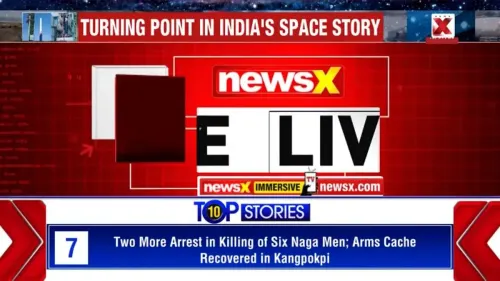
Union Minister Dr. Jitendra Singh addressed the nation after the successful orbital launch of Vikram-1 by Skyroot Aerospace from Sriharikota on 18 July 2026, marking India's first private orbital rocket mission and a milestone for the country's liberalised space sector.
Key Takeaways
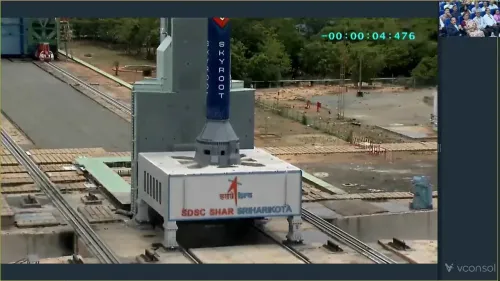
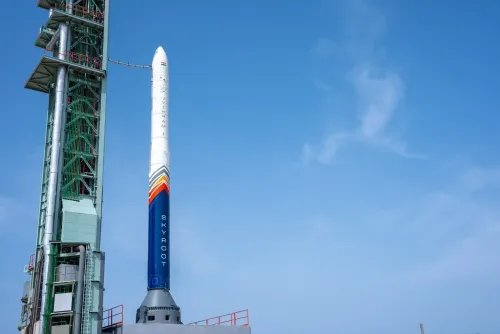
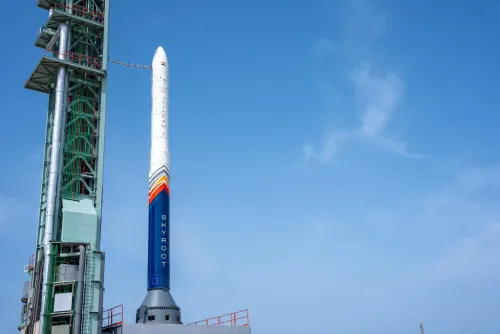
Vikram-1 by Skyroot Aerospace became India's first privately developed rocket to reach orbit, launching from Sriharikota on 18 July 2026 .
Jitendra Singh delivered a public address after the launch, pinning it on his official X account.
The mission is the direct result of space-sector reforms begun in June 2020 and codified in the Indian Space Policy 2023 .
IN-SPACe served as the single-window regulator enabling Skyroot to use ISRO 's Sriharikota infrastructure.
India's space economy target stands at $10 billion by 2030 , and this launch is a key validation of that roadmap.
Further legislative momentum for a dedicated Space Activities Bill is expected following this milestone.
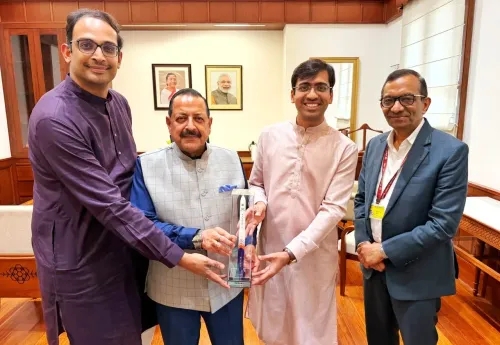
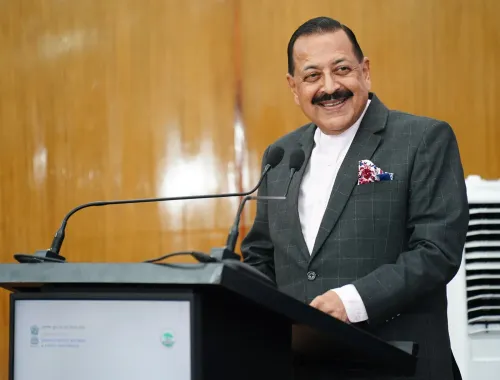
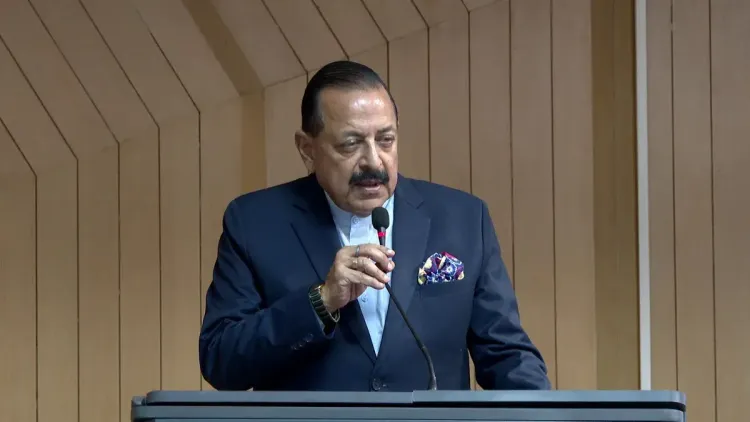
Union Science and Technology Minister Dr. Jitendra Singh addressed the nation on Saturday, 18 July 2026, following the successful launch of India's first private orbital rocket, Vikram-1, developed by Hyderabad-based Skyroot Aerospace, from the Satish Dhawan Space Centre in Sriharikota, Andhra Pradesh. The minister pinned his post-launch address on his official X account, marking the milestone as a landmark moment for India's private space sector.
Context
The Vikram-1 rocket, developed by Skyroot Aerospace — founded in 2018 — is a small-lift launch vehicle named in honour of Dr. Vikram Sarabhai, the father of India's space programme. Its successful orbital launch from Sriharikota marks the first time a privately built Indian rocket has reached orbit, a feat that places India among a select group of nations where private companies operate orbital-class launch vehicles.
Dr. Jitendra Singh, who holds independent charge of the Ministry of Science and Technology and the Ministry of Earth Sciences, as well as a portfolio in the Prime Minister's Office, has been a consistent advocate for the liberalisation of India's space sector under the current government.
Policy Backdrop
The launch is the direct outcome of a series of structural reforms initiated in June 2020, when the Government of India opened end-to-end launch activities to private entities and established IN-SPACe (Indian National Space Promotion and Authorisation Centre) as a single-window regulator. The Indian Space Policy 2023 further codified the roles of private players, the New Space India Limited (NSIL), and ISRO in building a national space economy.
The government has set a target of growing India's space economy to $10 billion by 2030. Skyroot's orbital success is seen as a significant validation of this policy architecture, demonstrating that private capital and domestic engineering talent can deliver results alongside ISRO's established programmes.
Stakeholders and Impact
The successful mission directly benefits the growing ecosystem of Indian private space startups, which includes firms working on satellite manufacturing, launch services, and space-based data services. Skyroot's achievement is expected to attract further private investment and signal to global customers that India offers competitive, commercially operated launch options.
The use of Sriharikota's infrastructure under ISRO coordination exemplifies the public-private partnership model that underpins India's NewSpace strategy. Other startups such as Agnikul Cosmos and Pixxel are watching the outcome closely as they advance their own launch and satellite programmes.
What's Next
The industry and policymakers will now focus on follow-on missions by Skyroot and other private launch providers to demonstrate reliability and commercial viability at scale. Parliamentary debate on a dedicated Space Activities Bill — long discussed as the next legislative step for India's space sector — is expected to gain fresh momentum in the wake of this milestone.
Dr. Jitendra Singh's public address signals that the government intends to leverage this achievement as a marker of India's ambitions in the global commercial space race, with Sriharikota potentially emerging as a hub for private orbital launches in the years ahead.
Point of View
Translating regulatory reform into a tangible orbital achievement within six years. For the ruling government, the optics are powerful: a private Indian rocket lifting off from national soil under a minister's direct portfolio is a ready emblem of 'Atmanirbhar Bharat' in a high-technology domain. Dr. Jitendra Singh's decision to pin his address signals a deliberate effort to anchor political credit at the ministerial level, ahead of what will likely be intensified parliamentary scrutiny of the upcoming Space Activities Bill. The milestone also sharpens competitive pressure on other regional space powers, positioning India as a credible, low-cost destination for commercial small-satellite launches.
NationPress
17 Oct 2026
Frequently Asked Questions
What is Vikram-1 and who made it?
Vikram-1 is India's first privately developed orbital rocket, built by Skyroot Aerospace , a Hyderabad-based startup founded in 2018. It is named after Dr. Vikram Sarabhai, the father of India's space programme.
Where was Vikram-1 launched from?
Vikram-1 was launched from the Satish Dhawan Space Centre in Sriharikota , Andhra Pradesh — ISRO's primary orbital launch facility on India's eastern coast.
What did Dr. Jitendra Singh say after the Vikram-1 launch?
Dr. Jitendra Singh delivered a public address following the successful launch and pinned it on his official X account, calling it a milestone for India's private space sector under the hashtags #IndiaWithVikram1 and #Sriharikota .
How did India allow private companies to launch rockets?
In June 2020 , the Indian government opened end-to-end launch activities to private firms and created IN-SPACe as a single-window regulator. The Indian Space Policy 2023 further formalised private participation alongside ISRO and NSIL.
What is India's space economy target?
India has set a target of growing its space economy to $10 billion by 2030 , with private sector participation — exemplified by Skyroot's Vikram-1 launch — central to achieving that goal.