Gadkari hails Skyroot's Vikram-1 launch as space milestone
Synopsis
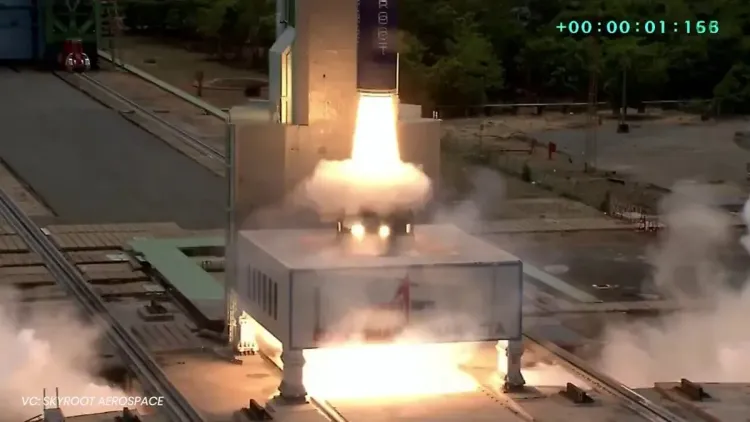
Union Minister Nitin Gadkari congratulated Hyderabad-based Skyroot Aerospace on the successful launch of Vikram-1 on 18 July 2026, calling it a landmark for India's private space ecosystem and urging young Indians to pursue space careers as the country eyes a larger share of the global launch market.
Key Takeaways
Nitin Gadkari congratulated Skyroot Aerospace on 18 July 2026 for the successful launch of Vikram-1 , an orbital-class private launch vehicle.
Skyroot Aerospace is a Hyderabad -based startup founded in 2018 , developing the Vikram series of rockets for small satellite missions.
The Vikram-1 rocket is named after Vikram Sarabhai , the father of India's space programme.
India's space sector reforms of June 2020 and the creation of IN-SPACe enabled private companies to enter the launch vehicle market.
The launch aligns with the Atmanirbhar Bharat goal of expanding India's share of the global commercial space economy.
Gadkari urged young Indians to 'dream bigger' and contribute to India becoming 'a global space powerhouse.'
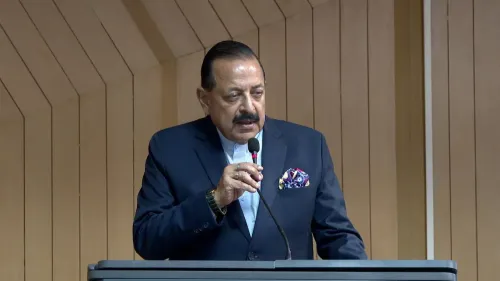
Union Road Transport and Highways Minister Nitin Gadkari on Saturday, 18 July 2026, congratulated Skyroot Aerospace on the successful launch of its Vikram-1 rocket, calling it 'a landmark achievement for India's space sector' and expressing hope that the feat would inspire young Indians to pursue careers in space technology.
Context
Skyroot Aerospace, a Hyderabad-based private space startup founded in 2018, has been developing the Vikram series of orbital-class launch vehicles for small satellite missions. The rocket is named after Vikram Sarabhai, widely regarded as the father of India's space programme. Gadkari, posting on X, wrote: 'This milestone reflects the growing strength of India's private space ecosystem and its spirit of innovation.'
While Gadkari's portfolio covers road infrastructure rather than space policy, senior cabinet ministers routinely acknowledge breakthroughs that align with the government's broader technology and self-reliance agenda. His message underscores cross-ministerial enthusiasm for India's emerging commercial space sector.
Policy Backdrop
The Vikram-1 launch is a product of sweeping space sector reforms the Government of India approved in June 2020, which opened satellite launches, ground stations, and space data services to private companies for the first time. The government simultaneously established IN-SPACe — the Indian National Space Promotion and Authorisation Centre — as a single-window regulator to supervise and promote non-governmental space activities.
These reforms were designed to reduce ISRO's monopoly and attract private capital, mirroring the global rise of commercial launch providers. The policy shift is closely tied to the Atmanirbhar Bharat initiative, which seeks to expand India's share of the fast-growing global space economy. Private startups such as Skyroot have since attracted venture funding and technical talent, accelerating India's commercial launch ambitions.
Stakeholders and Impact
A successful orbital mission by a privately built Indian rocket would mark a significant inflection point for the country's space industry, validating years of investment by startups, engineers, and regulators. IN-SPACe has been central to licensing and supervising these ventures, and a Skyroot success strengthens the case for further liberalisation and public funding of private launch infrastructure.
Beyond the immediate technical achievement, Gadkari's message specifically called on 'countless young minds to dream bigger, push boundaries, and contribute to the nation's journey towards becoming a global space powerhouse.' This framing positions the launch not merely as a corporate milestone but as a national inspiration, particularly for students and early-career engineers eyeing the space sector.
What's Next
Attention will now turn to Skyroot Aerospace's subsequent Vikram-series commercial flights and the pipeline of small satellite payloads the company aims to carry for domestic and international customers. Analysts and industry watchers will also track whether the government announces new IN-SPACe licensing rules or dedicated funding for private launch infrastructure in the months ahead.
India's stated ambition is to capture a significantly larger slice of the global commercial launch market, and a proven privately operated orbital rocket would substantially bolster that case on the world stage.
Point of View
While outside his transport portfolio, signals the breadth of political capital the ruling establishment is investing in India's commercial space narrative. The Vikram-1 launch, if it represents a successful orbital mission by a privately built Indian rocket, would be a genuine inflection point — validating the 2020 space liberalisation reforms that dismantled ISRO's monopoly. Senior ministers amplifying such milestones serves a dual purpose: reinforcing the Atmanirbhar Bharat brand domestically and projecting India as a credible commercial launch destination to global satellite operators. The pattern of cross-portfolio ministerial endorsements suggests the government views the private space sector as a prestige pillar, not merely a niche industrial policy.
NationPress
18 Jul 2026
Frequently Asked Questions
What is Vikram-1 and who built it?
Vikram-1 is an orbital-class launch vehicle developed by Skyroot Aerospace , a Hyderabad-based private space startup founded in 2018. It is named after Vikram Sarabhai , the father of India's space programme, and is designed to carry small satellites to orbit.
Why did Nitin Gadkari comment on a space launch?
Nitin Gadkari is a senior cabinet minister and BJP leader who regularly acknowledges national achievements beyond his road transport portfolio. His post reflects the government's broader push to promote India's private space sector under the Atmanirbhar Bharat initiative.
What is IN-SPACe and what role does it play?
IN-SPACe — the Indian National Space Promotion and Authorisation Centre — was created in 2020 as a single-window regulator to authorise and supervise private sector space activities in India, enabling companies like Skyroot Aerospace to build and launch rockets.
When did India open its space sector to private companies?
The Government of India approved space sector reforms in June 2020 , allowing private firms to participate in satellite launches, ground stations, and space data services for the first time, breaking ISRO's long-standing monopoly.
What does the Vikram-1 launch mean for India's space ambitions?
A successful Vikram-1 mission would mark India's entry into the commercial private orbital launch market, strengthening the country's bid to capture a larger share of the global space economy and validating the government's 2020 liberalisation reforms.