Assam CM Office unveils Tea & Golf Trail in Budget 2026
Synopsis
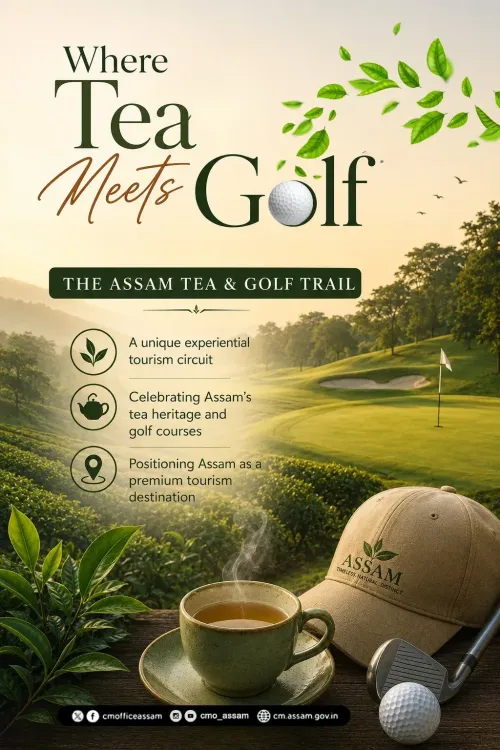
The Chief Minister's Office of Assam announced the Assam Tea & Golf Trail on 18 July 2026, a new tourism circuit envisioned in AssamBudget2026 that pairs the state's iconic tea gardens with world-class golf courses to attract high-value domestic and international travellers.
Key Takeaways
The Assam Tea & Golf Trail was announced by the Chief Minister's Office of Assam on 18 July 2026 .
The circuit is envisioned in AssamBudget2026 and combines Assam's tea garden landscape with golf course experiences.
Assam produces over half of India 's tea, giving the trail a globally recognised heritage anchor.
The initiative targets high-value leisure travellers, including international golf tourists from markets such as Japan , South Korea , and Europe .
Tea estate owners, tourism operators, and local communities are the primary expected beneficiaries.
Implementation will hinge on budget execution, land-use approvals, and partnerships with national tourism bodies or private hospitality chains.
The Chief Minister's Office of Assam on Saturday, 18 July 2026 announced the Assam Tea & Golf Trail, a new integrated tourism circuit envisioned in #AssamBudget2026, aimed at positioning the northeastern state as a premier destination for high-value leisure travel by combining its iconic tea gardens with world-class golf courses.
Context
The CMO's post described the initiative as the beginning of 'a new chapter in the state's tourism sector,' with the circuit designed to 'present Assam's rich tea heritage to the world in a new light.' The trail brings together two distinct but geographically intertwined assets — the scenic expanse of Assam's tea estates and golf courses that have historically been embedded within those estates — into a single, curated tourism product.
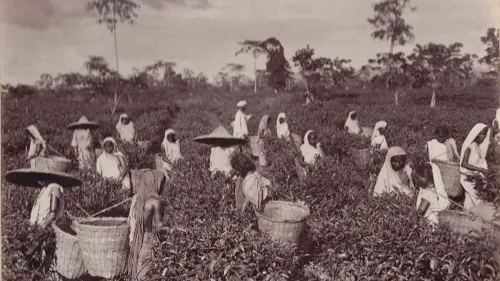
Assam produces over half of India's total tea output, making its garden landscape one of the most recognisable agricultural vistas in the country. Several of these estates have maintained golf courses since the colonial era, creating a natural overlap between heritage tourism and leisure sport that the new trail seeks to formalise and promote internationally.
Policy Backdrop
The announcement is rooted in a policy direction that Assam governments have pursued since the early 2000s, when estate bungalows began to be converted into heritage hotels and garden tours were opened to visitors. Previous state budgets had already allocated funds for golf course upgrades and for linking tea heritage with leisure infrastructure through dedicated tourism circuits.
The Assam Tea & Golf Trail represents a consolidation and formal branding of those incremental efforts. It aligns with a broader national push, encouraged by central tourism policy, toward niche experiential circuits — including golf tourism, eco-tourism, and heritage experiences — that attract higher-spending domestic and international visitors. Chief Minister Himanta Biswa Sarma, who has helmed the state since May 2021, has made tourism infrastructure diversification a stated priority alongside agriculture and energy.
Stakeholders and Impact
The primary beneficiaries of the trail are expected to be tea estate owners, hospitality and tourism operators, and local communities whose livelihoods are tied to the garden economy. By attracting high-value travellers, the circuit could generate supplementary income streams for estates that face cyclical pressures from commodity price fluctuations.
Golf tourism, while niche, draws an affluent segment of domestic and international travellers who typically spend significantly more per trip than standard leisure tourists. For Assam, which is competing with better-known leisure destinations, a distinctive dual-identity circuit — tea heritage plus sport — offers a differentiated pitch to premium travel markets in India, Japan, South Korea, and Europe, all of which have strong golfing cultures and established interest in tea provenance.
What's Next
The trail's realisation will depend on budget implementation details, land-use clearances for any new or upgraded golf facilities, and the forging of partnerships with national tourism bodies or private resort and hospitality chains. Observers will watch whether the state translates the budgetary vision into on-ground infrastructure — including signage, transport connectivity, and standardised guest experiences — within the fiscal year.
If executed effectively, the Assam Tea & Golf Trail could serve as a template for other Northeast India states seeking to monetise distinctive natural and cultural assets through premium tourism products, reinforcing the region's emergence as a high-value travel frontier.
Point of View
The Sarma government is signalling that Assam's competitive edge in national tourism lies in uniqueness, not volume. The move fits a recognisable pattern across Northeast India, where states are pivoting from subsistence-linked tourism to experience-led, high-yield products. The real test, as with most budget announcements, will be whether capital allocation translates into the ground-level infrastructure — connectivity, hospitality standards, and international marketing — that can convert the concept into bookings.
NationPress
18 Jul 2026
Frequently Asked Questions
What is the Assam Tea and Golf Trail?
The Assam Tea & Golf Trail is a new integrated tourism circuit announced in AssamBudget2026 that combines visits to Assam's iconic tea gardens with experiences at golf courses located within or near those estates, aimed at attracting high-value domestic and international travellers.
When was the Assam Tea and Golf Trail announced?
The Chief Minister's Office of Assam announced the trail on 18 July 2026 via an official post on X, describing it as envisioned in AssamBudget2026 .
Who is the Chief Minister of Assam in 2026?
Himanta Biswa Sarma has been the Chief Minister of Assam since May 2021 and is the political head under whose administration the Assam Tea & Golf Trail initiative has been announced.
Why is Assam good for tea tourism?
Assam produces over half of India's total tea output, and its vast garden landscape — much of it dating to the 19th century — includes heritage bungalows, colonial-era golf courses, and biodiversity-rich ecosystems that together form a compelling experiential tourism offering.
How will the Assam Tea and Golf Trail benefit local communities?
By attracting higher-spending tourists, the trail is expected to generate supplementary income for tea estate workers and local hospitality businesses, reducing dependence on commodity tea prices alone and broadening economic participation in the garden economy.