Assam CM launches free transport for tea garden school students

Synopsis
Assam has launched a free transport facility for school students in tea garden areas, addressing the last-mile access barrier that has long kept tea tribe children from attending school consistently. The move extends the state government's ongoing welfare push for plantation communities.
Key Takeaways
The Chief Minister's Office of Assam announced a free school transport scheme on June 11, 2026 .
The scheme targets students living in tea garden areas , among the most geographically isolated communities in the state.
Tea tribe families have historically faced low school attendance rates due to remote plantation locations and limited transport options.
The initiative aligns with obligations under the Right to Education Act, 2009 to remove access barriers for marginalised groups.
Chief Minister Himanta Biswa Sarma has pursued multiple education and welfare interventions for tea communities since taking office in 2021 .
Rollout details including district coverage and fleet deployment are awaited in subsequent government communications.
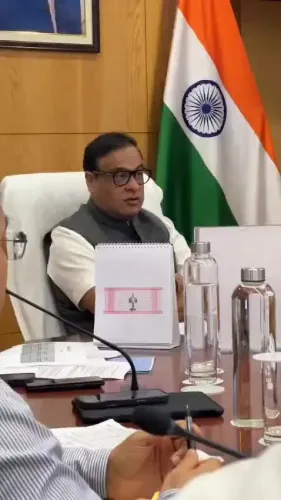
The Chief Minister's Office of Assam announced on Thursday, June 11, 2026, that the state government has launched a free transport facility for school students residing in tea garden areas, extending a key welfare measure to one of the state's most underserved communities.
Context
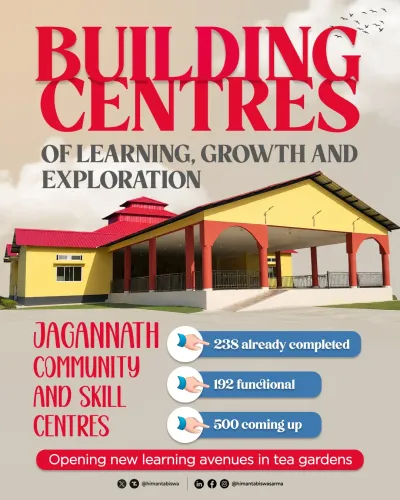
Assam's tea garden belts are home to lakhs of tea tribe families whose children face significant barriers to regular school attendance. The plantation zones are often remote, with dispersed habitation and limited road connectivity, making daily commutes to the nearest school a practical obstacle for many families.
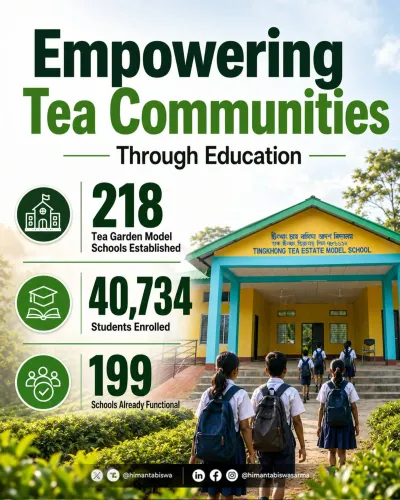
Chief Minister Himanta Biswa Sarma, who has led the state since 2021, has pursued a series of targeted education and welfare interventions for tea tribe communities, positioning improved school access as a cornerstone of the government's social equity agenda in the northeast.
Policy Backdrop
The Right to Education Act, 2009 placed a constitutional obligation on states to remove access barriers for marginalised groups, including the provision of supporting facilities such as transport. Assam has over the years introduced successive schemes covering school infrastructure, student incentives, and community outreach in plantation areas.
Tea tribe communities have historically recorded lower human development indicators compared to the state average, with geographic isolation and the nature of plantation employment cited as structural factors. Free transport schemes directly address the 'last-mile' gap that often keeps enrolled children from attending school consistently.
Stakeholders and Impact
The primary beneficiaries are school-going children of tea garden workers across Assam's plantation districts. For tea tribe families, whose income is tied to daily wage labour on estates, the cost and logistics of school transport have historically been a quiet but significant deterrent to sustained enrolment.
Education administrators and district officials in tea-belt regions are expected to oversee the rollout, coordinating vehicle deployment with school schedules. The scheme also carries indirect benefits for families, easing the economic pressure that sometimes drives child labour or early school dropout in plantation households.
What's Next
Observers will watch for district-level rollout details, the number of schools and students covered, and whether the initiative produces measurable improvements in attendance and retention figures in tea garden schools. The government is expected to provide further operational specifics, including fleet size and route coverage, in subsequent official communications.
If sustained and scaled, the free transport facility could set a template for other states with dispersed plantation or rural populations seeking to close the access gap in school education for marginalised occupational communities.
Point of View
Recurring service rather than a one-time benefit, making it harder to walk back and easier to measure. For Chief Minister Himanta Biswa Sarma, it reinforces his administration's positioning on social equity in the northeast ahead of future electoral cycles. The broader policy arc points to a growing recognition across Indian states that enrolment numbers alone do not capture educational access — attendance, retention, and the daily logistics of getting to school matter just as much.
NationPress
19 Sept 2026
Frequently Asked Questions
What is the free transport scheme launched for tea garden students in Assam?
The Assam government has launched a free transport facility to ferry school students living in tea garden areas to their schools, removing the daily commute barrier that has historically kept many tea tribe children from attending regularly.
Who will benefit from Assam's free school transport for tea garden areas?
School-going children of tea garden workers across Assam's plantation districts are the primary beneficiaries, particularly from tea tribe families who face geographic isolation and limited public transport options.
Why do tea garden children in Assam need special transport support?
Tea garden areas in Assam are remote plantation zones with dispersed habitation and poor road connectivity, making daily travel to the nearest school difficult and costly for low-income tea tribe families.
What has Assam done for tea tribe education under Himanta Biswa Sarma?
Since becoming Chief Minister in 2021, Himanta Biswa Sarma has introduced multiple welfare and education schemes for tea tribe communities, including school infrastructure support, student incentives, and now free transport in plantation areas.
Does the Right to Education Act cover transport for school students?
The Right to Education Act 2009 requires states to remove barriers to school access for marginalised groups, which includes providing supporting facilities such as transport, forming the legal foundation for schemes like this one in Assam.