Assam Launches Free School Transport for Tea Garden Students
Synopsis
Assam has launched a free school transport service for students from tea garden communities, the Chief Minister's Office announced on June 11, 2026. The move targets historically low school attendance among Adivasi plantation families and extends the state's long-running Tea Tribes Development welfare framework under CM Himanta Biswa Sarma.
Key Takeaways
The Chief Minister's Office of Assam announced a free school transport service for tea garden students on June 11, 2026 .
The scheme targets children from Adivasi tea tribe communities , one of Assam's most historically underserved groups in education.
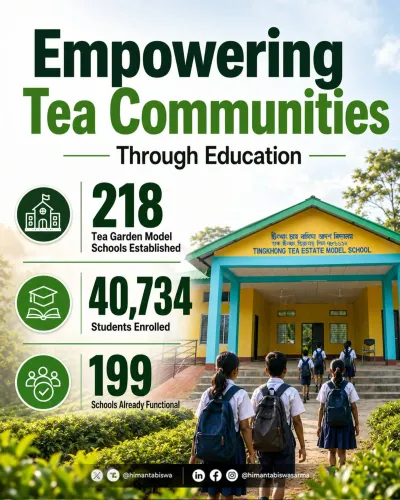
The initiative extends the state's broader Tea Tribes Development framework, which has included scholarships, hostels, and mid-day meals since the early 2000s.
Assam hosts India's largest tea industry , with plantation belts spread across multiple districts where school access has long been constrained by distance and poor connectivity.
Rollout metrics — including routes operationalised and student uptake in the 2026–27 academic session — will be critical indicators of the scheme's effectiveness.
A successful implementation could serve as a policy model for other plantation-heavy and tribal regions across Northeast India .
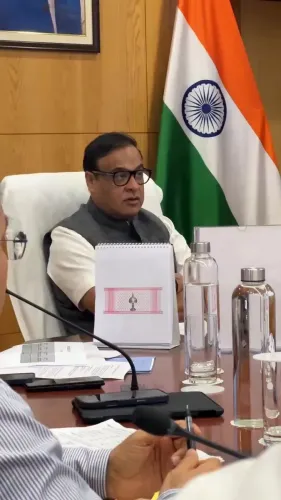
The Chief Minister's Office of Assam announced on Thursday, June 11, 2026 that the state has launched a free school transport service specifically for students from tea garden communities, a move aimed at improving educational access for one of the state's most historically underserved populations.
Context
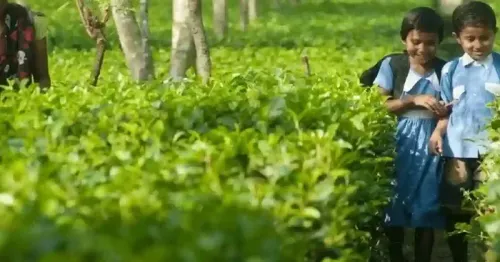
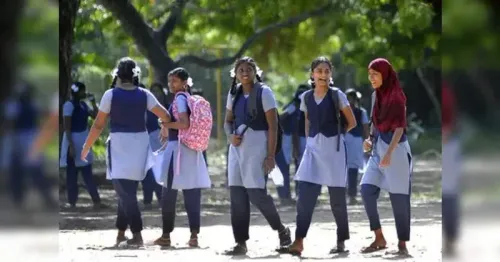
Assam is home to India's largest tea industry, with hundreds of plantation estates spread across districts including Dibrugarh, Jorhat, Sonitpur and Cachar. Children of tea garden workers — predominantly from Adivasi communities — have long faced significant barriers to schooling, including long distances between plantation quarters and the nearest government schools, poor road connectivity, and economic pressures that push families toward early child labour over education.
The new free transport service is designed to directly address the physical distance barrier, ensuring that students from plantation belts can reach school regularly without the burden of commuting costs falling on low-income tea worker households.
Policy Backdrop
The initiative fits within the broader Tea Tribes Development framework that successive Assam governments have maintained since the early 2000s. That framework has historically included scholarships, residential schools, and mid-day meal programmes targeting Adivasi children in plantation areas. The current administration under Chief Minister Himanta Biswa Sarma, in office since 2021, has progressively expanded basic service delivery — transport, hostels, and nutrition support — into plantation belts as part of a wider strategy linking labour welfare with human development outcomes in the tea sector.
Free-transport pilots for rural and tribal school students have also appeared in other districts across the Northeast, suggesting a regional policy pattern that Assam is now formalising for its tea garden population specifically.
Stakeholders and Impact
The primary beneficiaries are students from tea tribe families — communities that have faced decades of social and economic marginalisation despite being the backbone of Assam's multi-billion-rupee tea export economy. For these families, the removal of daily transport costs can be the difference between a child attending school consistently and dropping out.
Plantation management bodies and local panchayats are likely to be involved in operationalising routes, while the state's education and transport departments will bear the administrative and financial load. The scheme also has implications for Assam's school attendance and dropout metrics, particularly among girls in plantation areas, where gender-based barriers to commuting are an additional concern.
What's Next
Key indicators to watch in the coming months include the number of routes operationalised, student uptake figures for the 2026–27 academic session, and whether supplementary budget allocations are tabled in the next Assam Legislative Assembly session to sustain and expand the programme. The government's ability to maintain consistent service across remote plantation zones — where road infrastructure can be uneven — will be a practical test of the scheme's long-term viability.
If rollout metrics are strong, the free transport model could become a template for other plantation-heavy states and serve as a benchmark for tribal education policy in the broader Northeast India region.
Point of View
Non-controversial barriers to education in Assam's plantation belts — physical distance — rather than a structural reform of the tea industry's labour conditions. For the Sarma administration, it reinforces a pattern of high-visibility, low-friction welfare delivery to tea tribe communities ahead of future electoral cycles, a demographic that has historically been courted by multiple political formations in the state. The real test will be operational: sustaining consistent bus routes across remote estates is administratively harder than announcing the scheme. If uptake data is published transparently, this could also become a useful evidence point in national debates about last-mile education access for tribal and plantation communities.
NationPress
26 Oct 2026
Frequently Asked Questions
What is the free school transport scheme launched by Assam for tea garden students?
The Assam government has launched a free school transport service to ferry students from tea garden communities to school, removing the cost and logistical burden of daily commuting for children of plantation workers.
Who are tea tribe or tea garden students in Assam?
Tea tribe students are children of Adivasi workers employed in Assam's tea plantations. These communities have historically faced low school enrolment and high dropout rates due to poverty, distance from schools, and social marginalisation.
What other education schemes does Assam have for tea garden children?
Under the Tea Tribes Development framework, Assam has run scholarships, residential schools, and mid-day meal programmes for plantation community children since the early 2000s under successive state governments.
Who is the Chief Minister of Assam in 2026?
Himanta Biswa Sarma has been the Chief Minister of Assam since 2021 and has overseen multiple welfare and education initiatives targeting marginalised communities including tea tribe families.
How will the success of Assam's free school transport for tea garden students be measured?
Key indicators include the number of routes operationalised, student attendance and dropout data for the 2026–27 academic session, and budget allocations in the Assam Legislative Assembly to sustain the programme.