CM Himanta Reviews Assam Education Overhaul Plan
Synopsis
Assam Chief Minister Himanta Biswa Sarma on 18 June 2026 chaired a key education review meeting, directing officials to exceed national averages on dropout and enrolment ratios while pushing flagship schemes like Nijut Moina, Nijut Babu, Tea Garden Model Schools and Government Model Colleges.
Key Takeaways
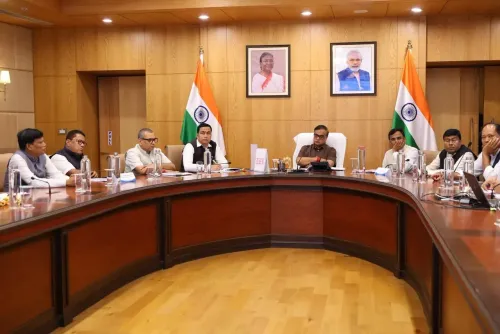
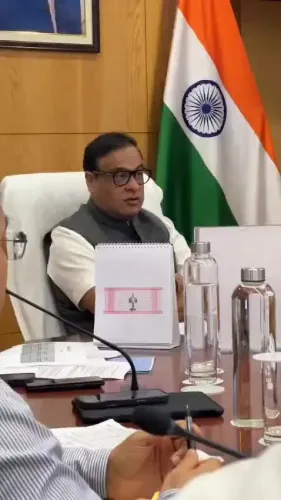
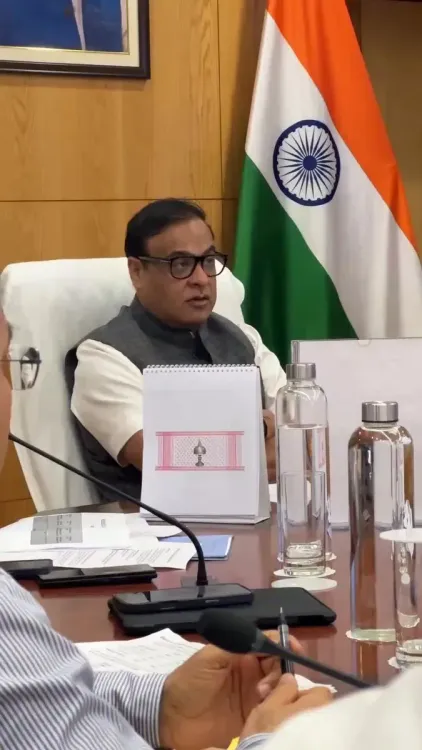
CM Himanta Biswa Sarma chaired an education stakeholder review meeting on 18 June 2026 with Education Minister Ranoj Pegu .
The government's three-pillar focus is quality improvement , ending regional disparity , and enhanced student access .
Officials were directed to ensure key metrics — including dropout ratio , teacher-student ratio , and GER — exceed the national average.
Flagship schemes Nijut Moina (girl students) and Nijut Babu (economically weaker boy students) are being tracked for implementation progress.
Construction of Government Model Colleges and Tea Garden Model Schools was reviewed, targeting under-served districts and tea-tribe communities.
Every school is to meet standardised infrastructure benchmarks: electricity, toilets, drinking water , and functional classrooms .
Assam Chief Minister Himanta Biswa Sarma on Thursday, 18 June 2026, chaired a high-level review meeting with stakeholders from the state's Education Department, outlining a three-pillar vision to transform Assam's education ecosystem and improve teaching quality for students across the state.
Context
The meeting, which included Education Minister Ranoj Pegu, centred on a comprehensive roadmap for the sector built around three priorities: improving quality, ending regional disparity, and enhancing access. Chief Minister Sarma stated that his government's goal is to 'holistically transform the state's education ecosystem and deliver the best quality of teaching for the student community.'
Sarma directed officials to ensure that key performance indicators — including dropout ratio, teacher-student ratio, geographical parity, and Gross Enrolment Ratio (GER) — exceed the national average. He also instructed that every school maintain standardised infrastructure including electricity access, toilets, drinking water, and functional classrooms.
Policy Backdrop
The review covered progress on two flagship state schemes: Nijut Moina, which provides financial assistance and incentives to girl students, and Nijut Babu, a companion programme supporting boy students from economically weaker sections. Officials also discussed the rollout of fee-waiver schemes and free textbook distribution — initiatives that Assam has pursued since 2017 to reduce dropout rates at the undergraduate level.
Construction progress on Government Model Colleges — aimed at expanding degree-college access in under-served districts — and Tea Garden Model Schools, a targeted infrastructure initiative for Assam's tea-tribe communities, also featured prominently in the discussions. Both programmes were accelerated after the 2021 assembly elections to address persistent gaps between plains, hill districts, and tea-estate areas.
Since 2021, Assam has been aligning its state curriculum and infrastructure standards with the objectives of the National Education Policy (NEP) 2020, making the current review part of a broader, ongoing integration effort.
Stakeholders and Impact
The communities most directly affected include school and college students across Assam, particularly those in tea garden belts and border and hill areas that have historically recorded lower enrolment and higher dropout rates than the state average. The twin schemes Nijut Moina and Nijut Babu are specifically designed to retain students from economically marginal households.
For tea-tribe communities — a significant demographic in Assam — the dedicated model-school construction programme represents a long-standing demand for parity in educational infrastructure. Improved teacher-student ratios and basic amenities in these schools are central to the government's stated targets.
What's Next
The government's immediate focus will be on executing the implementation roadmap discussed in the meeting. Progress will be tracked against measurable national benchmarks, with the next academic year's enrolment and infrastructure audit reports expected to serve as the first major checkpoint. Any supplementary budget allocations for model colleges and tea-garden schools will signal the pace of the state's commitment to these targets.
With Assam's education metrics historically lagging national averages in several parameters, Chief Minister Sarma's directive to officials to 'exceed' those averages sets a clear and publicly accountable bar for the department heading into the next academic cycle.
Point of View
It would mark a meaningful consolidation of the post-NEP 2020 reform push in the northeast.
NationPress
19 Sept 2026
Frequently Asked Questions
What is the Nijut Moina scheme in Assam?
Nijut Moina is an Assam government flagship programme that provides financial assistance and incentives to girl students to encourage enrolment and reduce dropout rates.
What is the Nijut Babu scheme?
Nijut Babu is a companion scheme to Nijut Moina focused on supporting boy students from economically weaker sections in Assam to continue their education.
What are Tea Garden Model Schools in Assam?
Tea Garden Model Schools are a targeted infrastructure initiative by the Assam government to build quality schools in tea-estate areas to improve educational access for tea-tribe communities.
What did CM Himanta Biswa Sarma say about education in Assam?
CM Himanta Biswa Sarma directed officials on 18 June 2026 to ensure that key indicators like dropout ratio, teacher-student ratio, and Gross Enrolment Ratio exceed the national average, and that every school has electricity, toilets, drinking water and functional classrooms.
What is the Gross Enrolment Ratio target for Assam schools?
The Assam government has directed officials to push the state's Gross Enrolment Ratio beyond the national average, though a specific numerical target was not stated in the 18 June 2026 review meeting.