CM Himanta's 'One District, Three Institutions' to make Assam education hub
Synopsis
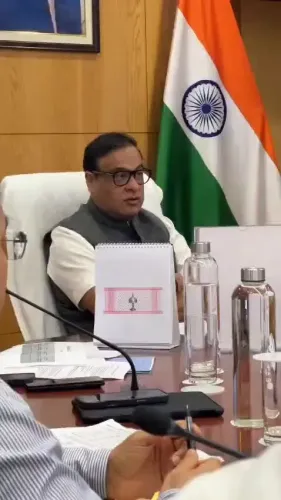
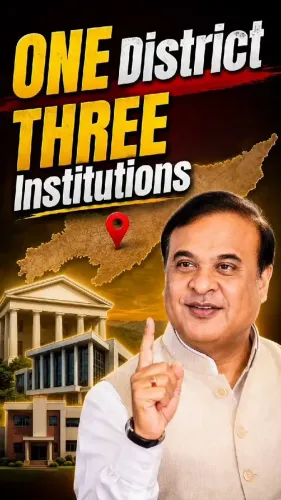
The Chief Minister's Office of Assam unveiled CM Himanta Biswa Sarma's 'One District, Three Institutions' scheme on 28 October 2026, aiming to place a higher education, medical, and technical institution in every district to make Assam the education hub of Eastern India.
Key Takeaways
'One District, Three Institutions' is CM Dr Himanta Biswa Sarma's flagship scheme to expand educational infrastructure across all districts of Assam.
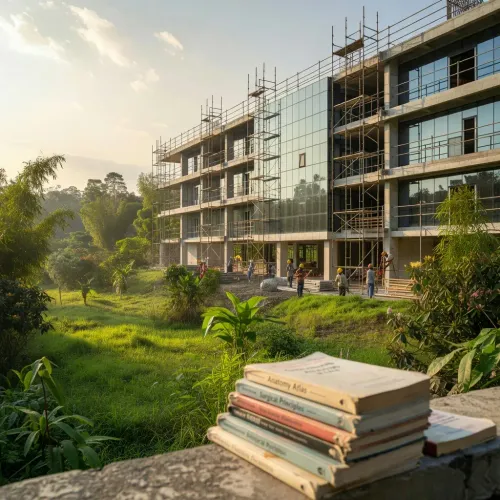
Each district will receive a higher education institution , a medical college , and a technical institution under the plan.
The scheme directly targets Assam's historically low gross enrolment ratio and the persistent outward migration of students to other states.
The approach aligns with the National Education Policy 2020 , which called for multidisciplinary institutional expansion across states.
The plan mirrors district-saturation models already used in other northeastern states to retain local talent.
Detailed district-wise rollout and budget allocations are expected in the next Assam Legislative Assembly session.
Every district in Assam, one college, one medical college, one technical institution — that is the ambition Chief Minister Dr Himanta Biswa Sarma has crystallised into a single, stackable formula called 'One District, Three Institutions', a vision the Chief Minister's Office of Assam amplified on Wednesday, 28 October 2026.
The problem the formula is designed to fix
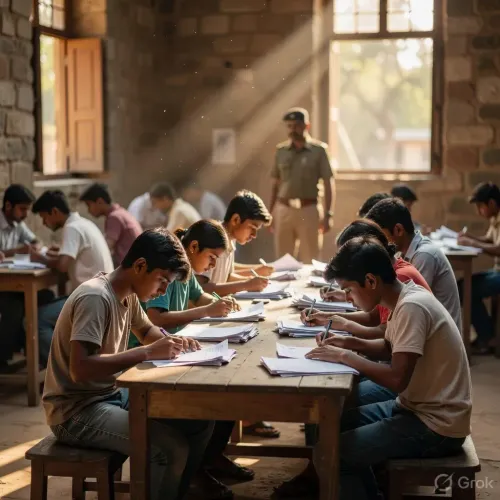
Assam has long wrestled with one of the lower gross enrolment ratios in higher education across Northeast India. The consequence is visible every June: thousands of young Assamese students boarding trains and flights to Bengaluru, Delhi, Pune, and Hyderabad — carrying with them the state's talent and its families' savings. The scheme targets that outward drain at its root by planting quality institutions closer to home, in the district itself.
The three-pillar structure is deliberate. A higher education institution addresses general degree access; a medical college tackles one of the Northeast's most acute infrastructure shortfalls; and a technical institution anchors employability in engineering, polytechnic, or vocational tracks. Together, they are designed to make the calculus of staying home — rather than migrating — finally viable.
Sarma's education track record and the NEP 2020 tailwind
Dr Himanta Biswa Sarma, who served as Assam's education minister before becoming Chief Minister in 2021, has made institutional expansion a signature of his tenure. Assam governments since 2016 have incrementally added district-level colleges and medical colleges to plug longstanding infrastructure gaps — this scheme represents a more systematic, district-saturation approach to the same goal.
It also rides a policy tailwind. The National Education Policy 2020 explicitly called for expanding higher education access through multidisciplinary institutions spread across states — 'One District, Three Institutions' is one state's operational answer to that national directive. The model mirrors district-saturation strategies already tested in other northeastern states to retain local talent.
What the rollout will actually look like
Assam has 35 districts, which means full implementation would require establishing or upgrading institutions across a substantial number of locations — a capital-intensive undertaking. The scheme's current announcement lays out the architecture; the granular test will come in the next Assam Legislative Assembly session, when district-wise timelines and budget allocations are expected to be tabled.
For now, the government's framing is unambiguous: Eastern India's education hub, built one district at a time.
Point of View
Three Institutions' scheme is less a standalone announcement than the latest iteration of a long-running northeastern state project: breaking the talent-export cycle that has historically drained the region of skilled youth. By framing Assam as the 'education hub of Eastern India,' the Chief Minister is staking a regional identity claim — positioning the state in competition with metros rather than simply catching up to them. The scheme's real test, however, will be quality and not just quantity; building structures is faster than building accredited, faculty-staffed institutions that students actually choose over a Bengaluru engineering college. District-wise budget disclosures in the coming assembly session will reveal whether this is a well-funded structural shift or a high-ambition headline awaiting the hard work of implementation.
NationPress
29 Oct 2026
Frequently Asked Questions
What is the 'One District, Three Institutions' scheme in Assam?
'One District, Three Institutions' is an Assam government initiative announced by Chief Minister Dr Himanta Biswa Sarma that aims to establish one higher education institution, one medical college, and one technical institution in every district of the state, with the goal of making Assam the education hub of Eastern India.
How many districts in Assam will benefit from this scheme?
Assam has 35 districts, which means full implementation of the 'One District, Three Institutions' scheme would require new or upgraded institutions across all of them, though district-wise rollout details are yet to be officially confirmed.
Why is Assam launching a district-level education scheme?
Assam has historically had a low gross enrolment ratio in higher education, leading many students to migrate to cities like Bengaluru and Delhi for quality education. The scheme aims to reduce this outward migration by bringing higher, medical, and technical education closer to students' homes.
How does the Assam education scheme relate to NEP 2020?
The National Education Policy 2020 called for expanding higher education access through multidisciplinary institutions spread across states. Assam's 'One District, Three Institutions' plan is a state-level operational response to that national directive.
When will the 'One District, Three Institutions' scheme rollout details be announced?
Specific district-wise timelines and budget allocations for the scheme are expected to be tabled in the next Assam Legislative Assembly session.