CM Himanta Launches 'One District, Three Institutes' Skill Plan
Synopsis
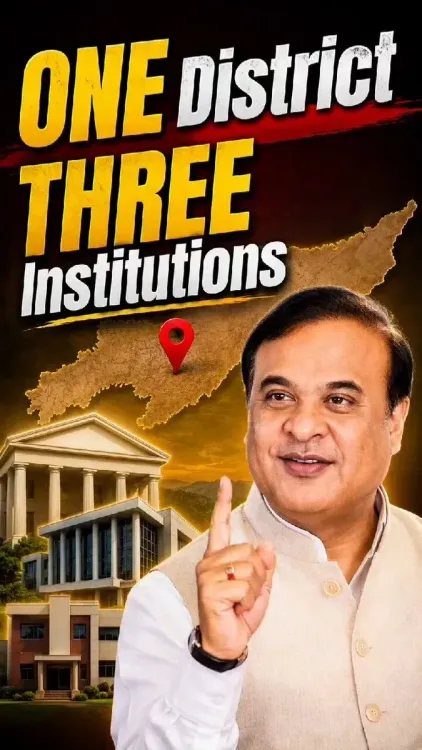
Assam CM Himanta Biswa Sarma on 30 May 2026 outlined the 'One District, Three Institutes' plan, which will place three skill-training institutes in every Assam district to ensure the state's growing industrial base is matched by a job-ready workforce.
Key Takeaways
CM Himanta Biswa Sarma announced the 'One District, Three Institutes' plan on 30 May 2026 to address the skills gap in Assam .
The plan proposes establishing three skill-training institutes per district across the state.
Assam has been attracting investment in petrochemicals, textiles, and tourism since at least 2018 , creating demand for trained workers.
The initiative builds on the national Skill India Mission (2015) and the state's own Assam Skill Development Mission .
The Assam Industrial Policy 2020 set employment-generation targets that the new skilling push is designed to fulfil.
Rollout timelines, institute locations, and budget allocations remain to be announced in a forthcoming state budget.
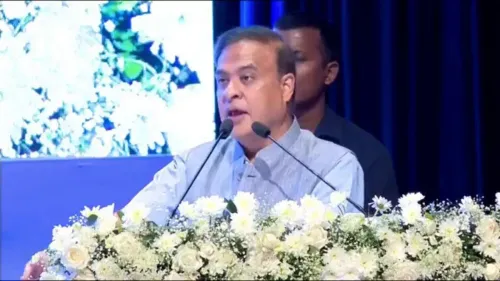
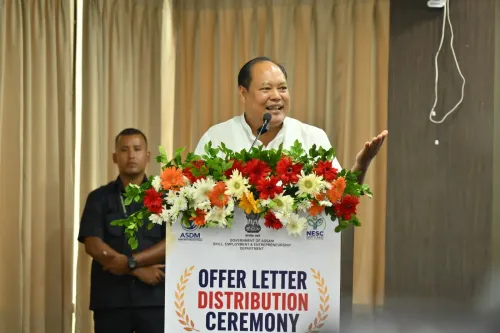
Assam Chief Minister Himanta Biswa Sarma on Saturday, 30 May 2026, unveiled the rationale behind the state's 'One District, Three Institutes' plan, describing it as a direct response to the skills gap that risks leaving young Assamese workers behind as new industries take root across the state.
Context
In a post on X, CM Sarma acknowledged that Assam is 'fast moving up the development ladder with new industries and opportunities opening up,' but cautioned that 'without proper training our youth won't be able to make best use of the opportunities.' The statement frames skilling not as a welfare measure but as an economic necessity tied directly to the state's industrial momentum.
The 'One District, Three Institutes' plan proposes setting up three skill-training institutes in every district of Assam, ensuring that vocational infrastructure keeps pace with industrial expansion rather than lagging behind it.
Policy Backdrop
Assam has been actively courting private investment since at least 2018, when the state began hosting investment summits targeting sectors such as petrochemicals, textiles, and tourism. The Assam Industrial Policy 2020 extended incentives to new manufacturing units and set explicit employment-generation targets, creating downstream demand for a trained workforce.
At the national level, the Skill India Mission, launched in 2015, provided the institutional framework within which state-level bodies like the Assam Skill Development Mission were constituted. The new district-institute model builds on that foundation, pushing delivery closer to where prospective workers actually live.
Similar district-level skilling models have been adopted in other northeastern states under the Act East Policy, which positions the region as a gateway to Southeast Asian markets — adding a cross-border dimension to the demand for certified, industry-ready labour.
Stakeholders and Impact
Assam's youth stand as the most direct beneficiaries. The plan is designed to reduce the outward migration of working-age people by creating employable skills locally, matching them to industries that are already present or actively being attracted to the state.
Emerging industries — particularly in manufacturing and services — are the other key stakeholder group. Investors have consistently flagged the availability of a trained local workforce as a prerequisite for scaling operations, and a district-level institute network would address that concern systematically.
The Assam Skill Development Mission is expected to serve as the coordinating body, managing partnerships with industry for curriculum design, certification, and placement — a model that has shown results in other states when industry buy-in is secured early.
What's Next
Specifics around rollout timelines, funding allocations, and the precise location of the institutes are yet to be publicly detailed. Observers will watch the next Assam state budget closely for line-item allocations that signal the pace and scale of implementation.
Placement and certification outcomes reported by the Assam Skill Development Mission will ultimately determine whether the plan delivers on its promise of bridging the gap between industrial opportunity and workforce readiness — a metric that will matter as much to investors as it does to the young people the scheme is designed to serve.
Point of View
Three Institutes' plan as an economic necessity rather than a welfare gesture signals a deliberate effort to tie Assam's skilling agenda to its investment pitch — a message aimed as much at potential investors as at voters. The move fits a broader pattern in northeastern governance where physical infrastructure projects are increasingly paired with parallel human-capital programmes to make the region's growth story credible to private capital. Positioning the Assam Skill Development Mission as the delivery vehicle also suggests the government wants accountability metrics built in from the start, aware that past skilling schemes have been criticised for poor placement outcomes. Whether the district-institute model can scale quickly enough to match Assam's industrial ambitions will be a key test of the administration's execution capacity.
NationPress
14 Oct 2026
Frequently Asked Questions
What is the 'One District, Three Institutes' plan in Assam?
The 'One District, Three Institutes' plan is an Assam government initiative to establish three skill-training institutes in every district of the state, aimed at equipping youth with the vocational skills needed to take advantage of new industrial opportunities.
Why did CM Himanta Biswa Sarma announce this skilling plan?
CM Sarma stated that while Assam is attracting new industries, youth without proper training cannot benefit from the opportunities. The plan directly addresses this skills gap to ensure industrial growth translates into local employment.
How does the Assam Skill Development Mission relate to this plan?
The Assam Skill Development Mission is the state body expected to coordinate the new institutes, managing industry partnerships for curriculum design, certification, and placement under the 'One District, Three Institutes' framework.
Is the 'One District, Three Institutes' plan linked to Skill India?
Yes, the plan builds on the national Skill India Mission launched in 2015, which created the institutional framework for state-level skilling bodies including the Assam Skill Development Mission.
When will the 'One District, Three Institutes' institutes open in Assam?
Specific rollout timelines and institute locations have not yet been announced publicly. Budget allocations and implementation schedules are expected to be detailed in a forthcoming Assam state budget.