CM Bhupendra Patel joins Maha Aarti ahead of Rath Yatra
Synopsis
Gujarat Chief Minister Bhupendra Patel joined the Maha Aarti at Ahmedabad's Jagannath Mandir on 15 July 2026, the eve of the Rath Yatra, invoking Lord Jagannath's message of compassion toward the poor and praying for the prosperity of all Gujarat citizens on Ashadhi Beej.
Key Takeaways
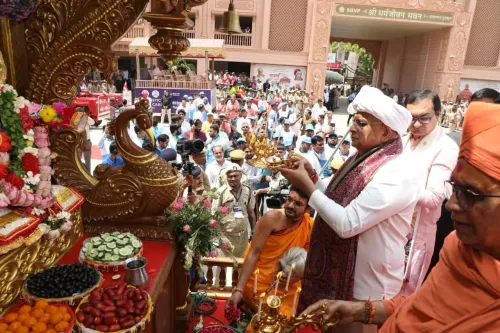
CM Bhupendra Patel attended the Maha Aarti at Jagannath Mandir, Ahmedabad on the evening of 15 July 2026 .
The occasion marked the eve of the annual Jagannath Rath Yatra , one of the largest chariot processions in Gujarat .
Ashadhi Beej was described by the CM as a festival of 'harmony, service, devotion, and cultural unity.' Lord Jagannath was invoked as Daridranarayan — a deity symbolising compassion and service toward the destitute and labourers.
CM Patel offered prayers for 'happiness, peace, prosperity, and continued progress' for all citizens of Gujarat .
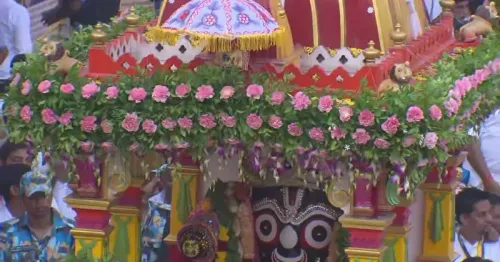
The main Rath Yatra procession was set to take place on 16 July 2026 through the streets of Ahmedabad .
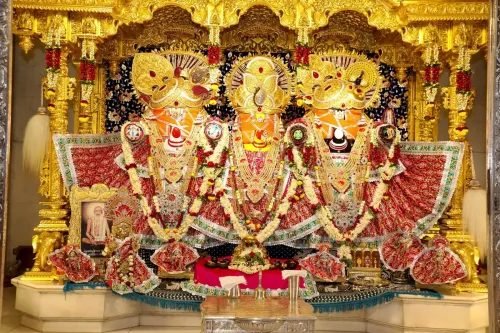
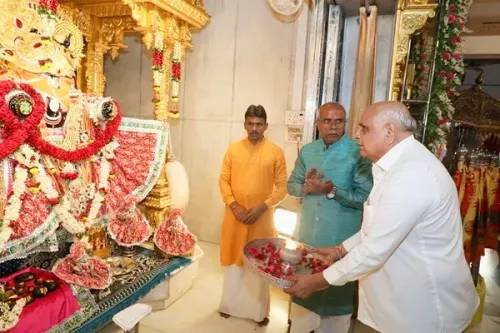
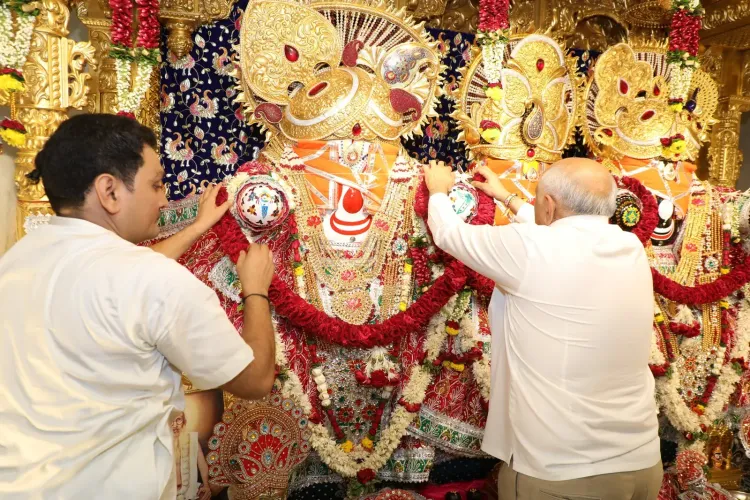
Gujarat Chief Minister Bhupendra Patel participated in the Maha Aarti at the Jagannath Mandir in Ahmedabad on the evening of Wednesday, 15 July 2026, on the eve of the annual Jagannath Rath Yatra, offering prayers and seeking the blessings of Lord Jagannath ahead of the grand chariot procession.
Context
Posting on X, CM Patel shared that he had the privilege of attending the Maha Aarti and performing darshan-pujan (devotional viewing and worship) at the Jagannath Mandir. He described Ashadhi Beej — the auspicious occasion marking the onset of monsoon — as 'a festival of harmony, service, devotion, and cultural unity.' He offered a prayer at the feet of Lord Jagannath for 'happiness, peace, prosperity, and continued progress in the lives of all citizens of the state,' closing with the invocation Jai Jagannath.
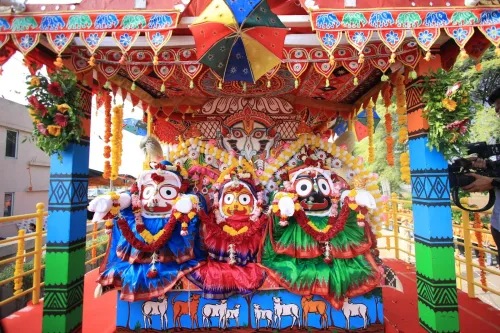
The Rath Yatra in Ahmedabad is one of the largest chariot processions outside Puri, Odisha, drawing lakhs of devotees each year. The festival is anchored in the tradition of Lord Jagannath — revered as Daridranarayan, the god who walks among the poor — venturing out of the temple to meet his devotees on the streets.
Policy Backdrop
Gujarat state governments have extended logistical and security support for the Jagannath Rath Yatra processions in Ahmedabad and other cities for several decades. The BJP-led state administration has maintained a consistent policy of high-level political participation in major religious and cultural festivals, framing them as occasions for reinforcing social cohesion.
CM Patel emphasised the festival's message of compassion toward the marginalised and the working poor, describing Lord Jagannath as a deity who, by traversing the city, delivers 'a divine message of compassion and service toward the destitute and labourers.' This framing aligns with the broader BJP narrative of linking religious observance with themes of social service and inclusivity.
Stakeholders and Impact
The Rath Yatra directly involves lakhs of citizens across Gujarat — devotees, traders, artisans, and urban poor communities who line the procession route. The festival is also a significant event for the state's cultural tourism calendar, with the Jagannath Mandir, Ahmedabad serving as the ceremonial epicentre.
For marginalised communities and daily-wage workers, the festival carries a symbolic dimension: the tradition of the deity coming out of the temple is widely interpreted as a gesture of solidarity with those who may not have routine access to temple spaces. CM Patel's public participation and his explicit invocation of this theme reinforces the state government's positioning on social equity during religious events.
What's Next
The main Rath Yatra procession was scheduled to move through Ahmedabad the following day, 16 July 2026, on the occasion of Ashadhi Beej. Security and crowd-management arrangements are typically coordinated by the Ahmedabad city administration and state police ahead of the procession, which draws one of the largest gatherings in Gujarat's annual festival calendar.
Any cultural programmes or state-sponsored initiatives linked to the festival — including those from the tourism or endowments departments — are expected to be announced in the hours surrounding the main procession day.
Point of View
The CM connects a devotional act to a political message of inclusivity — one that has been a recurring motif for the party in the state. The emphasis on samrasata (social harmony) and service to the poor signals an attempt to frame governance through a cultural lens ahead of the procession that draws lakhs of citizens. This pattern also reinforces the state government's role as an active steward — not merely a logistical facilitator — of Gujarat's major religious events.
NationPress
14 Oct 2026
Frequently Asked Questions
What is the Jagannath Rath Yatra in Ahmedabad?
The Jagannath Rath Yatra in Ahmedabad is an annual chariot procession dedicated to Lord Jagannath , held at and around the Jagannath Mandir . It is one of the largest such processions outside Puri, Odisha , drawing lakhs of devotees each year.
Why did CM Bhupendra Patel attend the Maha Aarti on 15 July 2026?
CM Bhupendra Patel attended the Maha Aarti at Jagannath Mandir, Ahmedabad on the eve of the Rath Yatra to offer prayers and perform darshan-pujan of Lord Jagannath ahead of the main procession on Ashadhi Beej .
What is Ashadhi Beej?
Ashadhi Beej is an auspicious Gujarati observance that marks the onset of the monsoon season. It is closely associated with Jagannath worship and the annual Rath Yatra procession in Gujarat .
What message did CM Patel share about the Rath Yatra?
CM Patel described Ashadhi Beej as a festival of 'harmony, service, devotion, and cultural unity,' and highlighted that Lord Jagannath — venturing out of the temple — delivers a divine message of compassion and service toward the destitute and labourers.
When is the Jagannath Rath Yatra 2026 procession in Ahmedabad?
The main Jagannath Rath Yatra procession in Ahmedabad was scheduled for 16 July 2026 , on the occasion of Ashadhi Beej , with the eve Maha Aarti held on 15 July 2026 .