CM Mohan Yadav launches Indore–Abu Dhabi direct flight

Synopsis
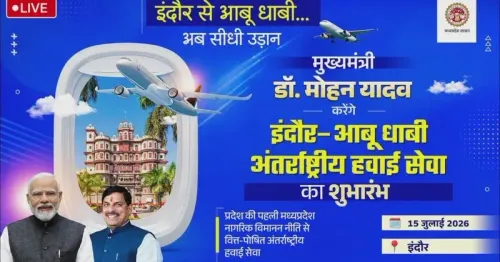
Chief Minister Dr. Mohan Yadav on 15 July 2026 flagged off Madhya Pradesh's first civil-aviation-policy-funded international flight from Indore to Abu Dhabi, marking a milestone in the state's push for global connectivity, trade and tourism through its new dedicated aviation subsidy framework.
Key Takeaways
First policy-backed international flight: The Indore–Abu Dhabi service is the inaugural route funded under the Madhya Pradesh Civil Aviation Policy , the state's first dedicated aviation subsidy framework.
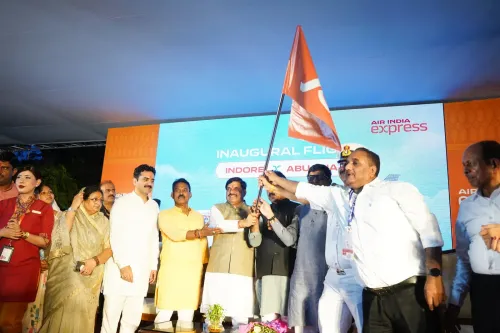
CM personally flags off flight: Dr.
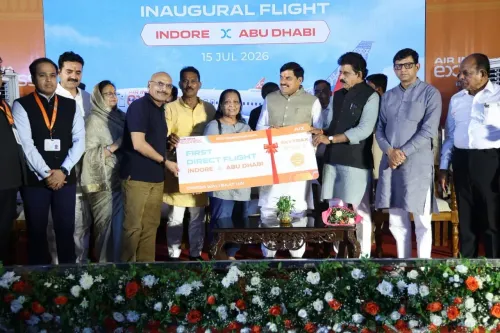
Mohan Yadav handed boarding passes to passengers and flagged off the inaugural service on 15 July 2026 .
Gulf connectivity gap closed: Indore , Madhya Pradesh's commercial capital, gains its first direct link to Abu Dhabi , eliminating the need to transit through Mumbai or Delhi.
Multi-sector impact anticipated: The state government expects the route to boost tourism, trade, investment and employment in the region.
State aviation policies gaining momentum: Madhya Pradesh joins states like Gujarat and Karnataka in using dedicated aviation policies to attract international flights to secondary cities.
Policy lineage: The state framework builds on the National Civil Aviation Policy 2016 and the UDAN scheme launched in 2017 .
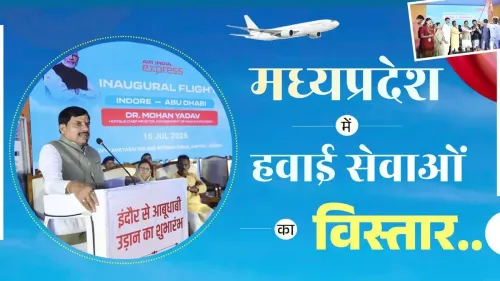
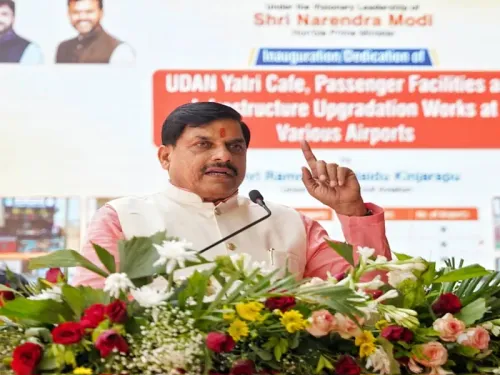
Chief Minister Dr. Mohan Yadav on 15 July 2026 inaugurated Madhya Pradesh's first internationally funded air service under the state's new civil aviation policy, launching a direct flight between Indore and Abu Dhabi. The Chief Minister personally handed boarding passes to passengers and flagged off the inaugural flight from Devi Ahilyabai Holkar International Airport.
Posting on X, the Chief Minister's Office of Madhya Pradesh announced: 'इंदौर से आबू धाबी के बीच शुरू हुई यह सीधी अंतर्राष्ट्रीय उड़ान मध्यप्रदेश की वैश्विक कनेक्टिविटी को नई मजबूती प्रदान करेगी' — ('This direct international flight between Indore and Abu Dhabi will give new strength to Madhya Pradesh's global connectivity and open doors to new opportunities in tourism, trade, investment and employment.')
Context
The Indore–Abu Dhabi route is the first international air service to be financially backed by the Madhya Pradesh Civil Aviation Policy, the state's maiden dedicated framework for subsidising new air routes. Indore, Madhya Pradesh's largest city and commercial capital, has long been the state's busiest aviation hub, yet it previously lacked a direct Gulf connection — a gap keenly felt by the region's business community and its diaspora in the United Arab Emirates.
Abu Dhabi, the UAE's capital, is a major global aviation, trade and tourism node. A non-stop link eliminates the need for passengers to transit through Mumbai, Delhi or Dubai, cutting travel time and cost significantly for central Indian travellers.
Policy Backdrop
The Madhya Pradesh Civil Aviation Policy draws its lineage from the Government of India's National Civil Aviation Policy 2016, which prioritised regional connectivity, and the UDAN scheme launched in 2017 to subsidise routes serving tier-2 and tier-3 cities. The state policy goes a step further by extending financial support specifically to international routes, a mechanism designed to attract airlines to otherwise commercially thin corridors.
Several Indian states — including Gujarat and Karnataka — have introduced comparable aviation policies in recent years to supplement central schemes and secure direct international flights from secondary cities, particularly to Gulf and Southeast Asian hubs that host large Indian diaspora populations and significant investment flows. Madhya Pradesh's policy places it within this growing group of states competing to position their airports as independent international gateways.
Stakeholders and Impact
The direct service is expected to benefit multiple constituencies: the tourism sector stands to gain from increased inbound visitors and outbound pilgrimage traffic; the business community in Indore and the wider Malwa region gains a faster corridor to Gulf markets; and the large Madhya Pradesh diaspora in the UAE will have a more convenient route home. The state government has highlighted employment generation as a further anticipated benefit.
Aviation operators and airport infrastructure providers are also direct stakeholders, as sustained passenger demand on the new route could support arguments for further capacity upgrades at Devi Ahilyabai Holkar International Airport.
What's Next
The immediate test for the new policy will be whether passenger loads on the Indore–Abu Dhabi route are sufficient to sustain commercial viability beyond the subsidy period. Analysts watching the sector will look for announcements on additional international routes, flight frequency increases and any state budget allocations for airport infrastructure in the coming months.
The success or otherwise of this inaugural service is likely to determine the pace at which Madhya Pradesh pursues further international connectivity under its civil aviation policy — and could serve as a template for other landlocked Indian states seeking to build direct Gulf links from their secondary cities.
Point of View
CM Mohan Yadav is associating his administration directly with a tangible connectivity win in Madhya Pradesh's most economically powerful city. The move fits a broader pattern of BJP-governed states using state-level aviation policies to claim credit for international connectivity that the UDAN scheme — a central government initiative — does not fully cover. The real test will come in six to twelve months when subsidy commitments face scrutiny against actual load factors; if passenger demand is thin, the policy's credibility and the route's longevity will both be questioned. For now, the flight signals Madhya Pradesh's ambition to compete with coastal states in attracting Gulf investment and diaspora engagement.
NationPress
16 Jul 2026
Frequently Asked Questions
Which is the new direct international flight from Indore launched in 2026?
A direct flight between Indore and Abu Dhabi was launched on 15 July 2026 by Chief Minister Dr. Mohan Yadav , making it Madhya Pradesh's first internationally funded air service under the state's civil aviation policy.
What is the Madhya Pradesh Civil Aviation Policy?
The Madhya Pradesh Civil Aviation Policy is the state's first dedicated aviation framework that provides financial support — including subsidies — to encourage new domestic and international air services to and from the state, building on central schemes like UDAN .
Why is the Indore–Abu Dhabi flight significant for Madhya Pradesh?
The route gives Indore , Madhya Pradesh's commercial capital, its first direct Gulf connection, removing the need to transit through Mumbai or Delhi . The state government expects it to boost tourism, trade, investment and employment in the region.
What is the UDAN scheme and how does it relate to this flight?
The UDAN scheme , launched in 2017 by the Government of India, subsidises air routes to improve connectivity for tier-2 and tier-3 cities. The Madhya Pradesh Civil Aviation Policy extends a similar subsidy model specifically to international routes, complementing UDAN's primarily domestic focus.
Which airport in Indore operates the Abu Dhabi flight?
The flight operates from Devi Ahilyabai Holkar International Airport in Indore , Madhya Pradesh's largest city and primary aviation hub.