White House Touts Trump's Defense Innovation, Calls US Military 'Most Lethal'
Synopsis
The White House on 15 July 2026 credited President Trump's leadership with delivering 'real results' in defence innovation, describing the US armed forces as 'the most lethal fighting force on the planet.' The post signals continued emphasis on military capability and domestic industrial-base strength ahead of FY2027 defence budget deliberations.
Key Takeaways
The White House posted on 15 July 2026 asserting that President Trump 's defence leadership is producing 'real results' for America and its industrial base.
The US military was described as 'the most lethal fighting force on the planet' — language rooted in the 2018 National Defense Strategy .
Trump's first term saw higher defence budget toplines secured in 2017 , the National Defense Strategy in 2018 , and the creation of the US Space Force in 2019 .
The domestic US defence industrial base and US armed forces are the primary stakeholders in the policy frame the White House is advancing.
Congressional action on the FY2027 NDAA and Pentagon acquisition announcements will be the next concrete tests of these claims.
The statement carries strategic significance for US allies, including India , which is deepening defence-industrial cooperation with Washington .
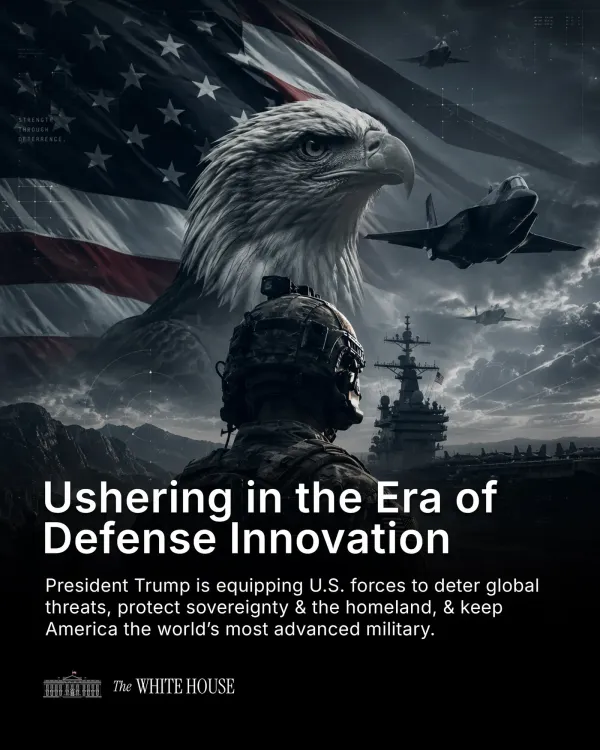
The White House, the official communications account of the Executive Office of the President of the United States, posted on X on Wednesday, 15 July 2026, asserting that President Donald Trump's leadership in defence innovation is delivering 'real results' for America and its industrial base, describing the US military as 'the most lethal fighting force on the planet.'
Context
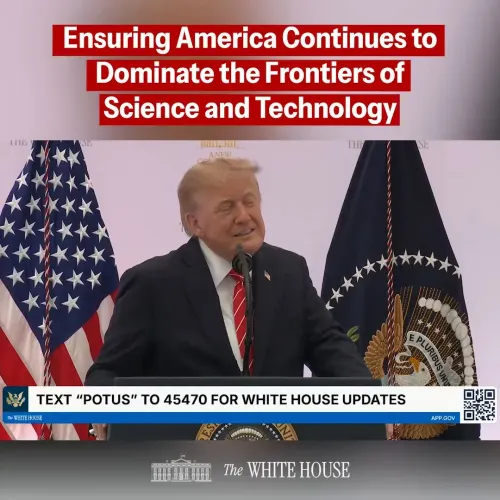
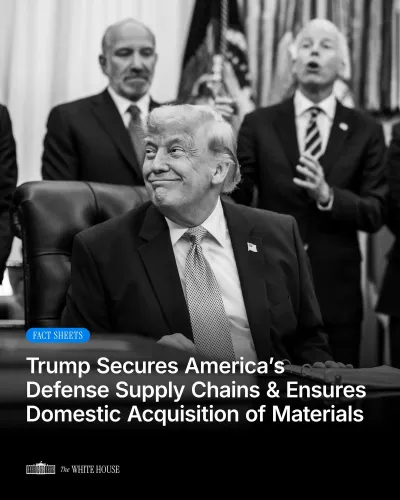
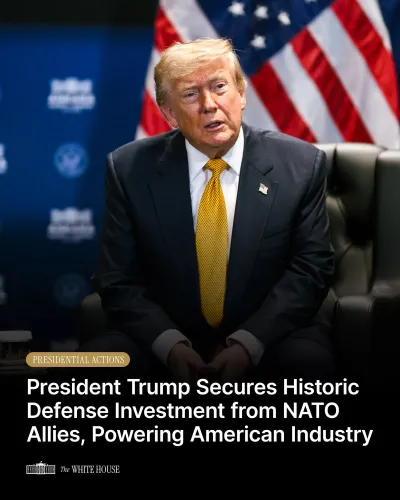
The post, accompanied by an image, carries a pointed message: Trump-era defence policy is producing tangible outcomes for both military capability and the domestic industrial base. The White House framed the claim in emphatic terms, calling the US armed forces 'the most lethal fighting force on the planet.' No specific programme, contract, or budget figure was cited in the post itself.
The statement fits a broader pattern of presidential communications that link executive leadership directly to military readiness and industrial strength — a rhetorical frame that has been consistent across both of Trump's terms in office.
Policy Backdrop
The foundations of Trump's defence posture were laid during his first term. In 2017, the administration proposed and secured higher defence budget toplines aimed at expanding force structure and procurement. The 2018 National Defense Strategy formally elevated great-power competition as the central organising principle of US defence planning, directing investment toward emerging technologies and rapid prototyping.
In 2019–2020, executive actions created the United States Space Force and launched several defence innovation initiatives targeted at strengthening the domestic industrial base — the same base the White House referenced in the 15 July 2026 post. The US Department of Defense has, across successive administrations, stressed the link between technological superiority, supply-chain security, and deterrence of peer competitors.
The concept of 'lethality' as a core metric gained formal prominence in the 2018 National Defense Strategy, which directed the Pentagon to prioritise it alongside readiness and alliances. The current post revives that framing explicitly.
Stakeholders and Impact
The primary stakeholders in this narrative are the US armed forces — Army, Navy, Air Force, Marine Corps, Coast Guard, and Space Force — and the sprawling network of US defence contractors that constitute the industrial base. A stronger industrial base translates to more resilient supply chains, faster weapons development cycles, and greater domestic employment in the defence sector.
For US allies and partners — including India, which has deepened defence-industrial cooperation with Washington through initiatives such as the Initiative on Critical and Emerging Technology (iCET) — signals from the White House about American military capability carry strategic weight. Statements projecting US military dominance are closely watched in New Delhi, particularly as both countries expand co-production and technology-sharing arrangements.
What's Next
Congressional deliberations on the FY2027 National Defense Authorization Act (NDAA) will be the next major legislative test of how the administration's defence priorities translate into law and funding. Any new Pentagon acquisition reform announcements or major contract awards in the coming months will provide concrete data points against which the White House's claims of 'real results' can be measured.
As great-power competition with China and strategic rivalry with Russia continue to shape US defence planning, the administration's emphasis on lethality and industrial-base strength is likely to remain a central pillar of its national security communications — and a key variable in shaping allied defence postures worldwide.
Point of View
Broadening its political coalition. For India, such assertions of US military pre-eminence reinforce the value of the bilateral defence partnership, even as New Delhi watches closely for concrete programme announcements. The absence of specific metrics in the post, however, leaves the claim open to scrutiny once legislative and procurement details emerge.
NationPress
14 Oct 2026
Frequently Asked Questions
What did the White House say about Trump and defense on 15 July 2026?
The White House posted on 15 July 2026 that President Trump's leadership in defence innovation is delivering 'real results' for America and its industrial base, and called the US military 'the most lethal fighting force on the planet.'
What is the US National Defense Strategy and how does it relate to Trump?
The 2018 National Defense Strategy, issued during Trump's first term, reoriented US defence planning toward great-power competition and directed investment in emerging technologies and lethality — the same themes the White House highlighted in its July 2026 post.
How does US defense policy affect India?
India and the United States have deepened defence-industrial cooperation through frameworks such as the Initiative on Critical and Emerging Technology (iCET). Statements projecting US military strength influence the strategic calculus in New Delhi and shape co-production and technology-sharing discussions.
What is the FY2027 NDAA and why does it matter?
The FY2027 National Defense Authorization Act is the annual legislation that sets US defence policy and spending priorities. Congressional deliberations on the bill will be the next major test of whether the administration's defence innovation claims translate into funded programmes.
When was the US Space Force created and who created it?
The US Space Force was established in 2019 under President Trump, as part of a broader set of defence innovation initiatives launched during his first term to modernise the military and strengthen the industrial base.