CM Fadnavis Inaugurates India-UK CETA Cargo Exchange in Mumbai
Synopsis
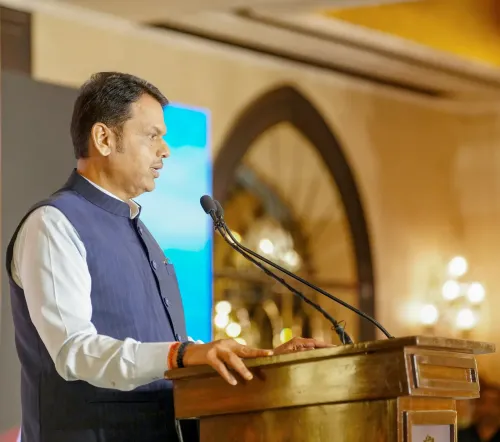
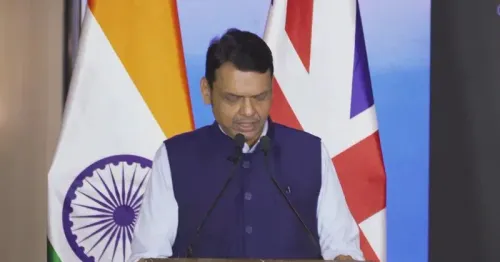
Chief Minister Devendra Fadnavis presided over a ceremonial inauguration and cargo exchange in Mumbai on 15 July 2026, marking the entry into force of the India-UK Comprehensive Economic and Trade Agreement, with Maharashtra ministers and British Deputy High Commissioner Harjinder Kang in attendance.
Key Takeaways
CM Devendra Fadnavis led the ceremonial inauguration of the India-UK CETA in Mumbai on 15 July 2026 .
A physical cargo exchange between Indian and British representatives marked the pact's entry into force.
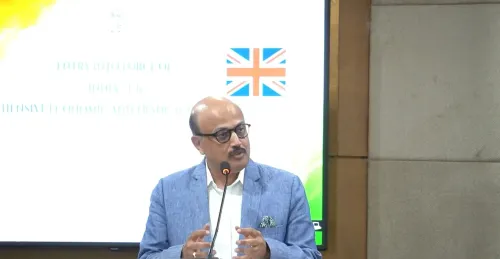
Harjinder Kang , Trade Commissioner for South Asia and British Deputy High Commissioner for Western India, represented the UK at the event.
Maharashtra ministers Mangal Prabhat Lodha and Jaykumar Rawal were present at the ceremony.
India-UK CETA negotiations were formally launched in January 2022 following Brexit.
The agreement aims to reduce tariffs and boost goods, services, and investment flows between India and the United Kingdom .
The Chief Minister's Office of Maharashtra announced on 15 July 2026 that Chief Minister Devendra Fadnavis presided over a ceremonial inauguration and cargo exchange in Mumbai, marking the entry into force of the India-UK Comprehensive Economic and Trade Agreement (CETA). Senior Maharashtra ministers and British diplomatic officials were present at the event, held at 4:35 PM.
What Happened
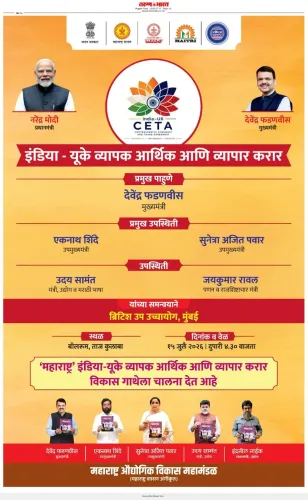
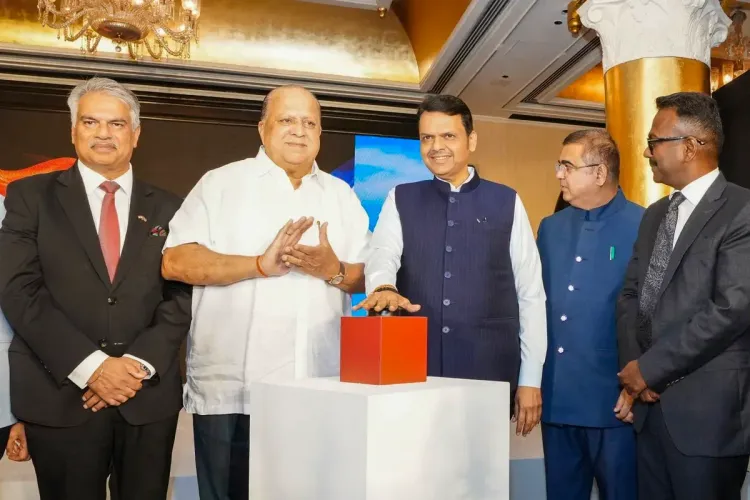
The ceremony, conducted at CM Devendra Fadnavis's hands — as the post describes, 'इंडिया-यूके सर्वसमावेशक आर्थिक व व्यापार कराराच्या अंमलबजावणीनिमित्त औपचारिक उदघाटन आणि कार्गोची देवाण-घेवाण' ('ceremonial inauguration and cargo exchange marking the implementation of the India-UK Comprehensive Economic and Trade Agreement') — symbolised the pact's transition from a signed document to an operational framework. A physical cargo exchange between Indian and British representatives served as the centrepiece of the event.
Present alongside CM Fadnavis were Minister Mangal Prabhat Lodha, Minister Jaykumar Rawal, and Harjinder Kang, who serves as Trade Commissioner for South Asia and British Deputy High Commissioner for Western India, along with other dignitaries.
Context
The India-UK CETA is a bilateral trade pact designed to reduce tariffs and expand flows of goods, services, and investment between the two nations. Negotiations were formally launched in January 2022, following the United Kingdom's exit from the European Union, which freed London to pursue independent trade partnerships.
India has been a priority partner for the UK in its post-Brexit trade strategy, particularly in services and technology sectors. For India, the agreement fits into a broader push to diversify export markets and attract investment from developed economies.
Policy Backdrop
Maharashtra — home to Mumbai, India's financial capital and one of its largest port hubs — stands among the states with the most direct stake in expanded India-UK trade. The state's manufacturing, financial services, and logistics sectors are positioned to benefit from reduced trade barriers.
The choice of Mumbai as the venue for the ceremonial inauguration underscores the city's role as a gateway for bilateral commerce. The presence of both state-level political leadership and a senior British diplomatic official signals that implementation is being treated as a high-priority milestone by both sides.
Stakeholders and Impact
Indian exporters — particularly in textiles, pharmaceuticals, and engineering goods — along with UK businesses in financial services and professional services, are among the primary beneficiaries anticipated under the agreement. Maharashtra's industrial base, which includes significant export-oriented manufacturing, is expected to see early gains.
The cargo exchange ceremony, while largely symbolic, marks the practical start of the agreement's implementation phase. Trade and commerce ministries on both sides are expected to monitor early bilateral trade statistics to assess the pact's initial impact.
What's Next
Observers will watch for the publication of first-quarter bilateral trade data following the agreement's entry into force, as well as any scheduled meetings of the joint India-UK review committee under the pact. The Maharashtra government's engagement in this ceremony suggests the state may pursue further bilateral investment facilitation with UK partners in the months ahead.
Point of View
A deliberate signal from both governments that implementation is a political priority, not merely a bureaucratic formality. For CM Fadnavis, hosting the event consolidates Maharashtra's position as India's premier trade gateway at a moment when states are increasingly competing to attract foreign investment. The presence of a senior British diplomatic official rather than a junior functionary suggests London is investing political capital in making early implementation visible. Analysts will track whether the ceremonial momentum translates into measurable trade-flow gains in the first two quarters of implementation.
NationPress
16 Jul 2026
Frequently Asked Questions
What is the India-UK CETA?
The India-UK Comprehensive Economic and Trade Agreement (CETA) is a bilateral trade pact between India and the United Kingdom aimed at reducing tariffs and expanding trade in goods, services, and investment. Negotiations began in January 2022 after the UK left the European Union.
What happened at the Mumbai ceremony on 15 July 2026?
Chief Minister Devendra Fadnavis presided over a ceremonial inauguration and cargo exchange in Mumbai on 15 July 2026, marking the official entry into force of the India-UK CETA. Ministers Mangal Prabhat Lodha and Jaykumar Rawal, along with British Deputy High Commissioner Harjinder Kang, were present.
Who is Harjinder Kang?
Harjinder Kang is the Trade Commissioner for South Asia and British Deputy High Commissioner for Western India, representing UK trade and diplomatic interests in the region. He attended the Mumbai ceremony as the senior British official.
How does the India-UK trade agreement affect Maharashtra?
Maharashtra, home to Mumbai — India's financial capital and a major port hub — is among the states with the greatest direct stake in the India-UK CETA. The state's manufacturing, logistics, and financial services sectors are expected to benefit from reduced trade barriers under the agreement.
When did India and UK start free trade agreement talks?
India and the UK formally launched free trade agreement negotiations in January 2022, following the UK's exit from the European Union's single market.