CM Fadnavis Launches India-UK CETA Ceremony in Mumbai
Synopsis
Chief Minister Devendra Fadnavis presided over a formal inauguration and symbolic cargo exchange in Mumbai on 15 July 2026 to mark the launch of the India-UK CETA. With bilateral trade at $56 billion and a 2030 doubling target, Maharashtra — which draws 39% of India's FDI — is positioned to be the agreement's biggest state-level beneficiary.
Key Takeaways
CM Devendra Fadnavis inaugurated a symbolic cargo exchange ceremony in Mumbai on 15 July 2026 to mark the operationalisation of the India-UK CETA .
Current India-UK bilateral trade stands at $56 billion , with a target to double it by 2030 .
Maharashtra attracts 39% of India's total FDI and leads in IT, pharma, automobiles, and agricultural exports.
Industries in Pune, Nashik, Kolhapur , and Chhatrapati Sambhajinagar , as well as farm produce like Nashik grapes and Konkan Alphonso mangoes , are set to gain duty-free access to UK markets.
Fadnavis credited the agreement to PM Narendra Modi , Union Minister Piyush Goyal , and UK PM Keir Starmer .
Maharashtra aims to reach a $1 trillion economy and contribute significantly to India's goal of becoming a developed nation.
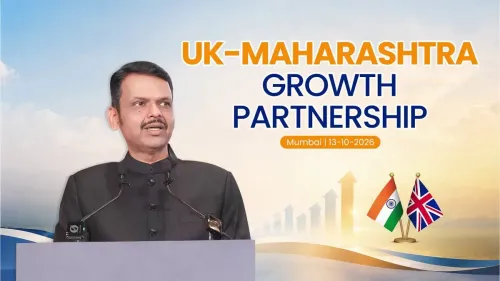
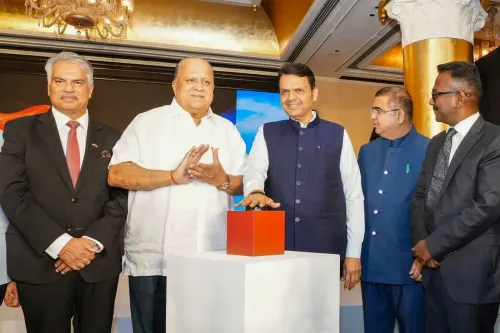
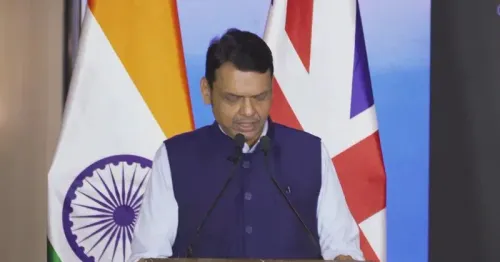
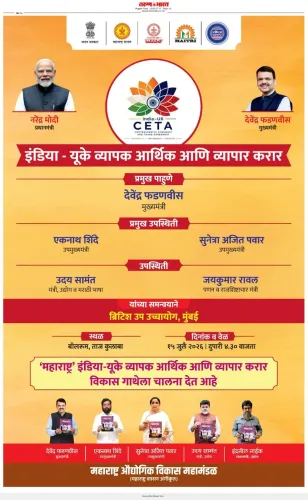
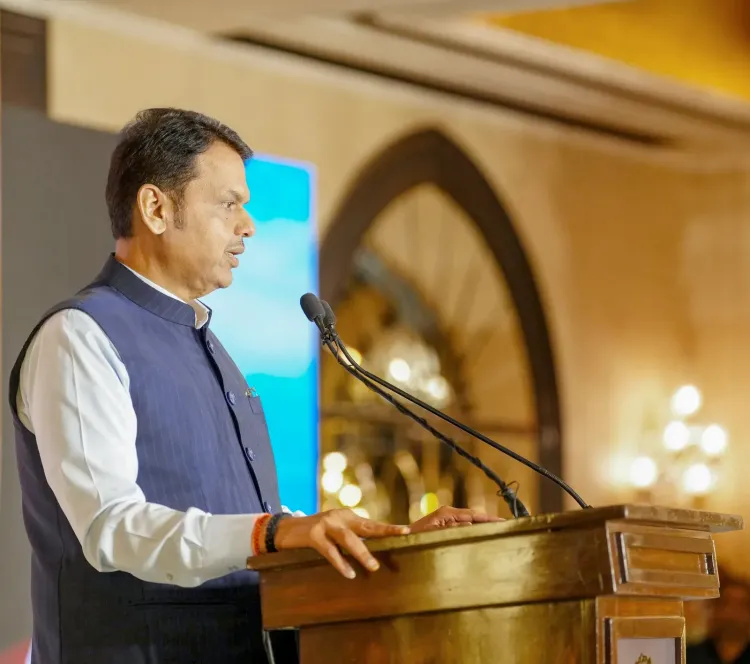
The Chief Minister's Office of Maharashtra announced on Wednesday, 15 July 2026 that Chief Minister Devendra Fadnavis presided over a formal inauguration and symbolic cargo exchange ceremony in Mumbai to mark the commencement of the India-United Kingdom Comprehensive Economic and Trade Agreement (CETA), signalling a new chapter in bilateral trade and investment for the state.
Context
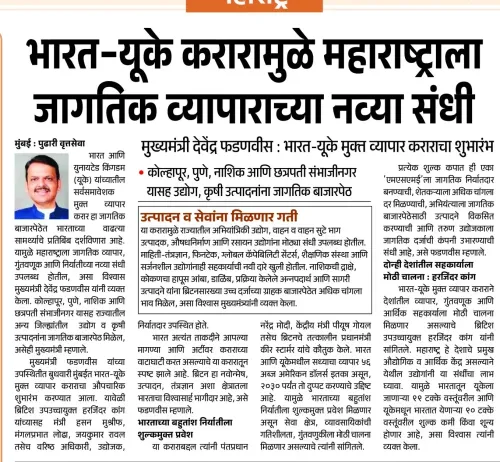
The ceremony celebrated the operationalisation of the India-UK CETA, a landmark bilateral agreement aimed at reducing tariffs, liberalising services, and boosting investment flows between the two nations. Speaking at the event, CM Fadnavis credited the deal to the leadership of Prime Minister Narendra Modi, Union Minister Piyush Goyal, and UK Prime Minister Keir Starmer, calling it 'a historic agreement that demonstrates India trading confidently as a capable global partner.'
The CMO's post quoted Fadnavis as saying: 'Bharata-UK karara ha tyach parivartanachaa pudhacha mahatvachaa tappa ahe' — 'The India-UK agreement is the next important milestone of that same transformation' — referring to the arc from India's 1991 economic reforms through the Make in India initiative.
Policy Backdrop
Current bilateral trade between India and the UK stands at $56 billion, with a stated target to double that figure by 2030. The CETA is designed to provide duty-free or reduced-tariff access to a majority of Indian exports entering the UK market, while opening new corridors for services, professional mobility, investment, and innovation.
India has pursued such bilateral agreements with developed economies as part of a broader export-diversification strategy that stretches back to the 1991 liberalisation and gained momentum with the Make in India programme launched in 2014. The India-UK CETA represents the most significant trade pact India has concluded with a major Western economy in recent years.
Stakeholders and Impact
Maharashtra already attracts 39 per cent of India's total foreign direct investment (FDI) and leads the country in financial services, IT, pharmaceuticals, automobiles, start-ups, data centres, and agricultural exports. CM Fadnavis said industries in Pune, Nashik, Kolhapur, and Chhatrapati Sambhajinagar would gain direct access to global markets through the agreement.
The agricultural sector stands to benefit substantially: Nashik grapes, Konkan Alphonso mangoes, pomegranates, processed foods, and marine products are expected to fetch better prices in the high-value UK consumer market. Fadnavis framed each tariff reduction as 'an opportunity for an MSME to become a global exporter, for a farmer to get a better price, for an engineer to develop products for global markets, and for a young entrepreneur to build a world-class company.'
IT firms, fintech companies, Global Capability Centres, educational institutions, and creative industries are also expected to benefit from expanded cooperation under the services and investment chapters of the agreement. Infrastructure projects such as the Atal Bihari Vajpayee Shivdi-Nhava Sheva Atal Setu, the Hinduhridaysamrat Balasaheb Thackeray Maharashtra Samruddhi Mahamarg, Navi Mumbai International Airport, Vadhavan Port, and proposed 'Third Mumbai', international Edu-City, and Medi-City projects were cited by Fadnavis as enhancing the state's global competitiveness.
What's Next
The Maharashtra government has committed to provide full support to industries, exporters, and MSMEs seeking to access global markets, including export facilitation, world-class infrastructure, and a business-friendly environment. Fadnavis stated that Maharashtra would lead the country in converting the opportunities created by the India-UK CETA into 'new industries, investment, exports, employment, and prosperity for ordinary citizens.'
Present at the ceremony were Minister Mangalprabhat Lodha, Minister Jaykumar Rawal, Trade Commissioner for South Asia and British Deputy High Commissioner for Western India Harjinder Kang, and other dignitaries. Sectoral guidelines from the state government on utilising duty-free access — particularly for agricultural produce — and progress tracking toward the 2030 bilateral trade doubling target will be closely watched in the months ahead.
Point of View
Fadnavis is positioning himself as a pro-globalisation administrator at a time when state-level economic leadership is increasingly scrutinised by investors. The 39% FDI share and the pipeline of infrastructure mega-projects give Maharashtra a structural advantage over rival states in capturing the CETA's early dividends, but translating tariff reductions into on-the-ground MSME growth will require the sectoral facilitation guidelines the government has promised. The broader arc — from liberalisation to Make in India to bilateral FTAs — suggests India is graduating from a reactive trade posture to a confident, deal-making economy, and Maharashtra intends to be the proof of concept.
NationPress
14 Oct 2026
Frequently Asked Questions
What is the India-UK CETA and why does it matter for Maharashtra?
The India-UK Comprehensive Economic and Trade Agreement (CETA) is a bilateral pact that reduces tariffs, liberalises services, and promotes investment between India and the United Kingdom. Maharashtra, which attracts 39% of India's FDI and leads in IT, pharma, and agri-exports, is expected to be among the biggest state-level beneficiaries.
What happened at the Mumbai ceremony on 15 July 2026?
Chief Minister Devendra Fadnavis presided over a formal inauguration and a symbolic cargo exchange in Mumbai to mark the commencement of the India-UK CETA, attended by state ministers, and the British Deputy High Commissioner for Western India.
How much is India-UK bilateral trade currently and what is the target?
Current India-UK bilateral trade stands at $56 billion. The two countries have set a target to double this figure by 2030 through the provisions of the CETA.
Which Maharashtra industries and farm products will benefit from the India-UK trade deal?
Engineering, automobiles and auto-components, pharmaceuticals, chemicals, IT, fintech, and Global Capability Centres are key industrial beneficiaries. On the agricultural side, Nashik grapes, Konkan Alphonso mangoes, pomegranates, processed foods, and marine products are expected to gain better market access in the UK.
What is Maharashtra's $1 trillion economy target?
Chief Minister Fadnavis has expressed confidence that Maharashtra will become a $1 trillion economy in the future, contributing significantly to India's goal of becoming a developed nation ('Viksit Bharat'). The India-UK CETA is seen as a key enabler of that ambition.