India-UK FTA: Maharashtra CM Fadnavis eyes $1 trillion economy boost
Synopsis
Maharashtra CM Devendra Fadnavis used the India-UK FTA launch to make a sweeping claim: that the deal, covering 99% of Indian exports to the UK, positions Maharashtra — already drawing 39% of India's FDI — as the primary gateway for a bilateral trade relationship targeting $112 billion by 2030. The real test is whether MSMEs and farmers can be mobilised fast enough to capture that access.
Key Takeaways
Maharashtra CM Devendra Fadnavis addressed the India-UK FTA implementation launch in Mumbai on 15 July .
The FTA will eliminate or reduce tariffs on 99% of Indian exports to the UK and 90% of UK imports into India.
India-UK bilateral trade currently stands at $56 billion , with a target to double it by 2030 .
Maharashtra attracts 39% of India's total FDI and is targeting a $1 trillion economy.
Industrial hubs including Pune , Nashik , Kolhapur , and Chhatrapati Sambhajinagar are set to gain direct UK market access.
The deal also covers cooperation in education, climate, defence, and technology under the 'UK-India Vision 2035' framework.
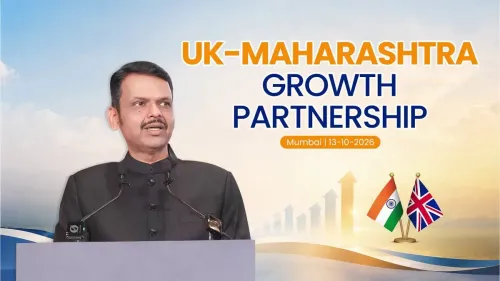
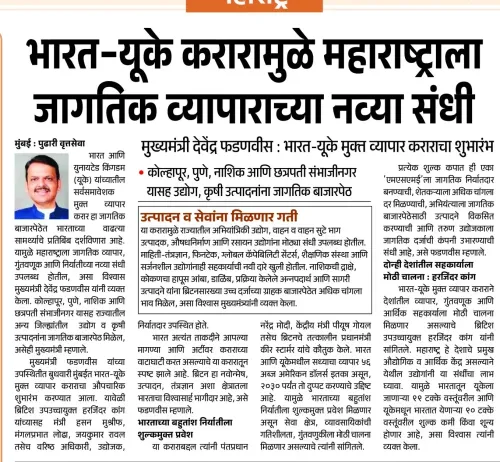
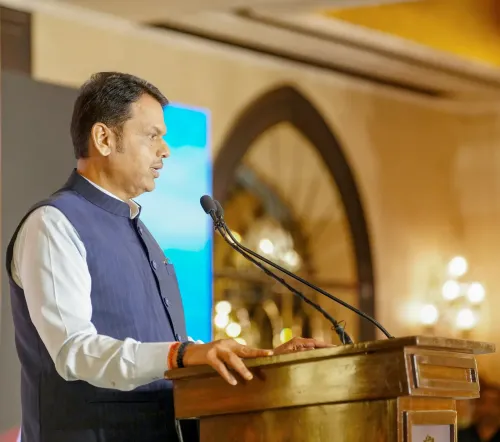
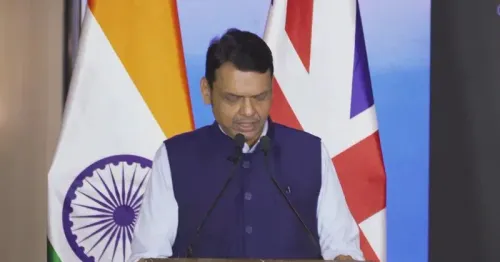
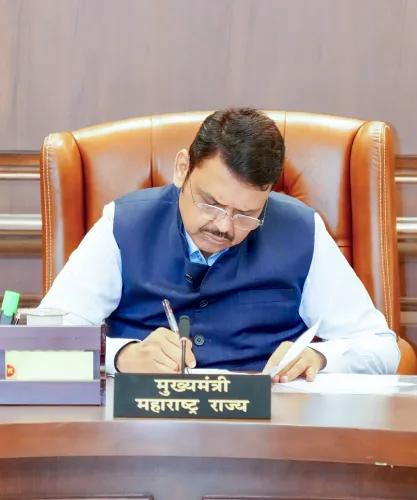
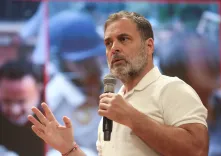
Maharashtra Chief Minister Devendra Fadnavis on Wednesday, 15 July declared that the implementation of the India-United Kingdom Free Trade Agreement (FTA) will open up transformative trade, investment, and export opportunities for Maharashtra — a state he described as the engine of India's economic ambitions. Speaking at the FTA implementation launch ceremony in Mumbai, Fadnavis said a progressive India depends on a progressive Maharashtra.
What the FTA Means for Maharashtra
The India-UK FTA is set to eliminate or significantly reduce tariffs on 99 per cent of Indian exports to the UK and 90 per cent of UK imports entering India. Bilateral trade between the two nations currently stands at $56 billion, with a strategic target to double this figure by 2030.
Chief Minister Fadnavis highlighted that industrial and agricultural hubs including Pune, Nashik, Kolhapur, and Chhatrapati Sambhajinagar will gain direct access to premium global markets as a result. 'Every tariff reduction is an opportunity for an MSME to become a global exporter, for a farmer to get better prices, for an engineer to build products for the global market, and for a young entrepreneur to scale a world-class enterprise,' he said.
Maharashtra's Investment Dominance
Fadnavis underscored Maharashtra's outsized role in India's economic landscape, noting that the state currently attracts 39 per cent of India's total Foreign Direct Investment (FDI). He expressed confidence that the state's trajectory toward becoming a $1 trillion economy will be a defining pillar in India's journey to becoming a developed nation.
Mega infrastructure projects — including the Atal Setu, Samruddhi Expressway, Navi Mumbai International Airport, Vadhavan Port, and the planned 'Third Mumbai' township — were cited as active drivers of the state's global competitiveness. Planned International Edu-Cities and Medi-Cities were also flagged as emerging pillars.
State Government's Outreach Plan
State Protocol and Marketing Minister Jaykumar Rawal said the marketing department, working in coordination with other state bodies, will run targeted awareness and guidance programmes to help local farmers and MSMEs understand and leverage the deal's benefits. The Chief Minister also assured businesses that the government remains committed to simplifying export procedures and sustaining an industry-friendly regulatory environment.
UK's Strategic Perspective
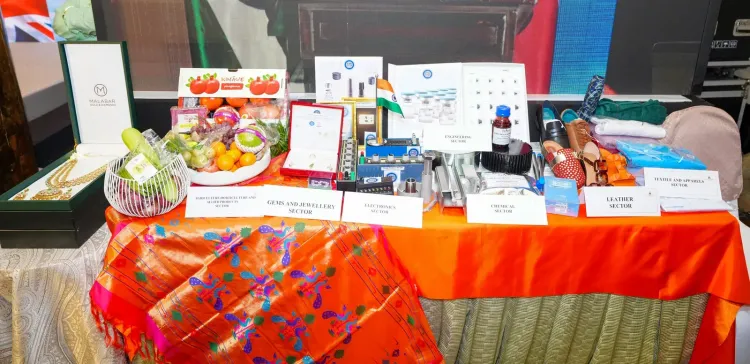
British Deputy High Commissioner Harjinder Kang praised Maharashtra as India's industrial powerhouse and noted that the FTA extends well beyond tariffs. He pointed to deepened cooperation in education, climate action, defence, and technology under the 'UK-India Vision 2035' framework as a broader strategic dividend of the agreement. Dignitaries at the event unveiled symbolic cargo boxes to mark the launch, representing the seamless movement of goods between the two nations.
With implementation now formally under way, the focus shifts to how quickly Maharashtra's MSMEs, farmers, and exporters can be mobilised to capture the new market access — and whether the state's infrastructure pipeline can scale fast enough to meet the demand.
Point of View
Logistics costs remain high, and the UK market has its own compliance thresholds that Indian MSMEs routinely underestimate. The planned outreach programmes by Minister Rawal are a step in the right direction, but the timeline to double bilateral trade to $112 billion by 2030 leaves little room for slow implementation. The 'UK-India Vision 2035' framing also signals that this is as much a geopolitical alignment as a trade deal — which adds durability but also complexity.
NationPress
14 Oct 2026
Frequently Asked Questions
What is the India-UK Free Trade Agreement and when was it implemented?
The India-UK Free Trade Agreement is a bilateral trade pact that eliminates or reduces tariffs on 99% of Indian exports to the UK and 90% of UK imports into India. Its implementation was formally launched in Mumbai on 15 July 2025.
How will the India-UK FTA benefit Maharashtra specifically?
Maharashtra's industrial hubs — Pune, Nashik, Kolhapur, and Chhatrapati Sambhajinagar — will gain direct access to UK markets with sharply reduced tariffs. The state, which already attracts 39% of India's FDI, is positioned to be the primary gateway for expanded bilateral trade.
What is the bilateral trade target between India and the UK?
India and the UK currently trade at $56 billion annually. The strategic target is to double this to approximately $112 billion by 2030, supported by the tariff reductions under the FTA.
What does the FTA cover beyond tariffs?
Beyond tariff cuts, the agreement deepens cooperation in education, climate action, defence, and technology under the 'UK-India Vision 2035' framework, according to British Deputy High Commissioner Harjinder Kang.
How will Maharashtra help MSMEs and farmers benefit from the deal?
State Protocol and Marketing Minister Jaykumar Rawal announced that the marketing department will run awareness and guidance programmes in coordination with other state bodies to help local farmers and MSMEs understand and utilise the FTA's benefits.