CM Himanta Launches Assam State Higher Education Council

Synopsis
Assam CM Himanta Biswa Sarma announced the Assam State Higher Education Council as the new governance body for higher education, marking a shift from infrastructure-building to systemic, transparent regulation aligned with NEP 2020.
Key Takeaways
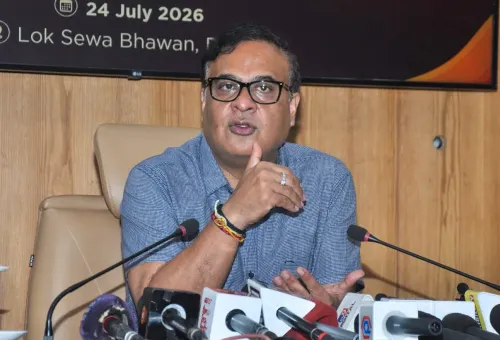
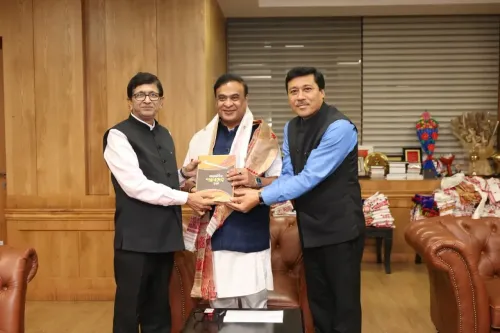
Assam Chief Minister Himanta Biswa Sarma announced the Assam State Higher Education Council on 14 August 2026 to steer higher education reforms.
The Council aims to make Assam's higher education ecosystem more organised, transparent and structured.
The move signals a deliberate shift from physical infrastructure expansion to regulatory and systemic governance.
It aligns with the National Education Policy 2020 , which directs states to establish dedicated higher education councils.
Rashtriya Uchchatar Shiksha Abhiyan (RUSA) , launched in 2013 , provides the funding and policy framework underpinning such state-level reforms.
As NEDA convenor, Sarma's initiative could set a governance template for other Northeast states.
The bricks are laid — now come the rules that govern them. Assam Chief Minister Himanta Biswa Sarma announced on Friday, 14 August 2026 that the state will channel its higher education reforms through the Assam State Higher Education Council, promising a more organised, transparent and structured ecosystem for students across the state.
From concrete to governance
Sarma framed the shift in deliberate sequence: 'We have built the infrastructure, we are now building the systems which drive it.' The statement signals a conscious pivot — Assam's years of physical expansion in colleges and universities now give way to the harder, less visible work of regulatory architecture. The Council is positioned as the engine that will coordinate standards, accreditation and institutional accountability across the state's higher education landscape.
Where the Council fits in India's education map
The move aligns squarely with the National Education Policy 2020, which directed states to establish or strengthen dedicated higher education councils as a pillar of coordinated governance. Rashtriya Uchchatar Shiksha Abhiyan (RUSA), launched in 2013, had already seeded the funding and frameworks for exactly this kind of state-level reform. Assam's formalisation of the Council follows a pattern visible across several states post-NEP — building the institutional layer that turns central policy intent into on-ground delivery.
For the Northeast, the stakes are sharper. States under the North-East Democratic Alliance (NEDA), which Sarma himself convenes, have pushed education modernisation as a lever for improving access and quality metrics in a region historically underserved by higher-education infrastructure. A functional regulatory council could set a template others in the region follow.
What students in Assam stand to gain
Sarma's announcement centres the Council's mandate on student benefit — transparency in admissions, structured institutional standards, and a clearer accountability chain between the state and its colleges and universities. The specifics of digital systems, new regulatory frameworks or linked budgetary action are yet to be detailed publicly, but the directional signal is unambiguous: governance, not just construction, is now the priority.
If the Council delivers on its stated mandate, Assam's students could see more predictable accreditation cycles, cleaner institutional data and a state body with the authority to enforce standards — tools that have been missing even where buildings have not.
Point of View
Making it easier to access central funding and harder for critics to oppose on principle. For the Northeast, where higher education quality gaps remain significant, a functional regulatory council could be genuinely consequential — but the test will be in implementation details, budgetary commitment and whether the Council is granted real enforcement authority or remains advisory.
NationPress
28 Sept 2026
Frequently Asked Questions
What is the Assam State Higher Education Council?
The Assam State Higher Education Council is a state-level body established to coordinate and govern higher education in Assam, focusing on organised administration, transparency and structured standards for colleges and universities.
Why did CM Himanta Biswa Sarma announce this council?
CM Sarma announced the Council to shift Assam's higher education focus from physical infrastructure to systemic governance, ensuring institutions meet consistent standards and students benefit from greater transparency and accountability.
How does this relate to the National Education Policy 2020?
NEP 2020 directs states to establish or strengthen higher education councils for coordinated governance. Assam's move is a direct implementation of this national policy directive at the state level.
What is RUSA and how is it connected to this announcement?
Rashtriya Uchchatar Shiksha Abhiyan (RUSA), launched in 2013, is a central government scheme that funds and provides frameworks for state higher education reforms — the policy and financial backbone for councils like the one Assam is now formalising.
How will Assam students benefit from the Higher Education Council?
Students stand to gain through more transparent admissions processes, clearer accreditation standards, and a dedicated state authority with the mandate to enforce quality benchmarks across higher education institutions in Assam.