CM Himanta eyes medical college in every Assam district
Synopsis
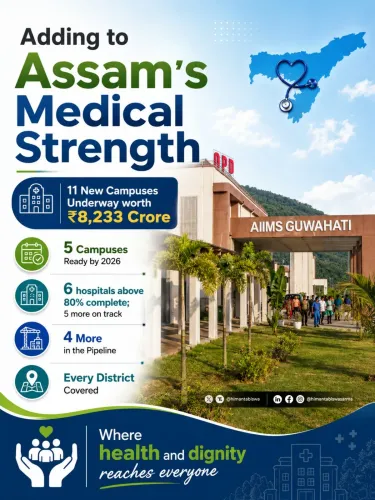
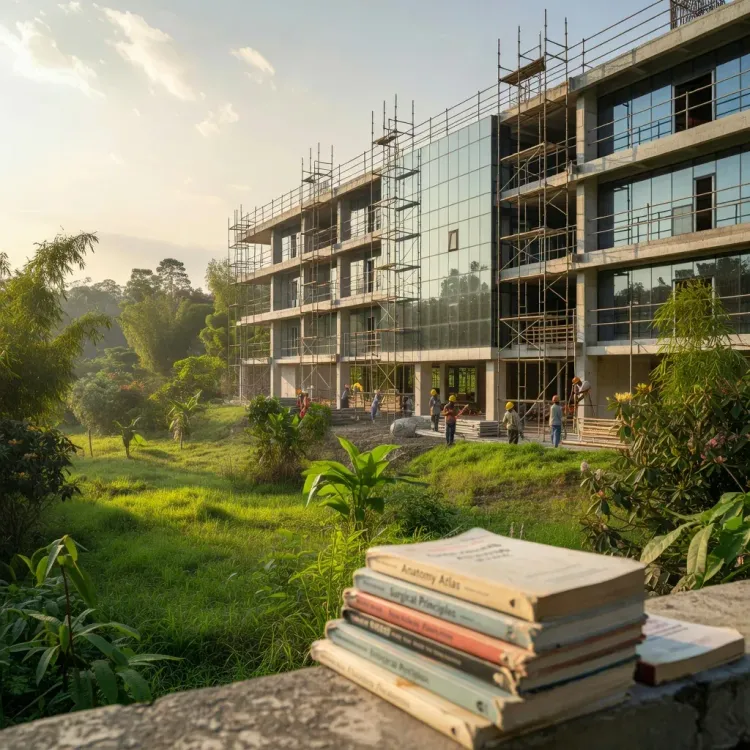
Assam Chief Minister Himanta Biswa Sarma has announced that 14 medical colleges are complete and 11 more are under construction, with a five-year vision to place one medical college, one engineering college, and one university in every district of the state.
Key Takeaways
14 medical colleges have already been completed across Assam under the current government.
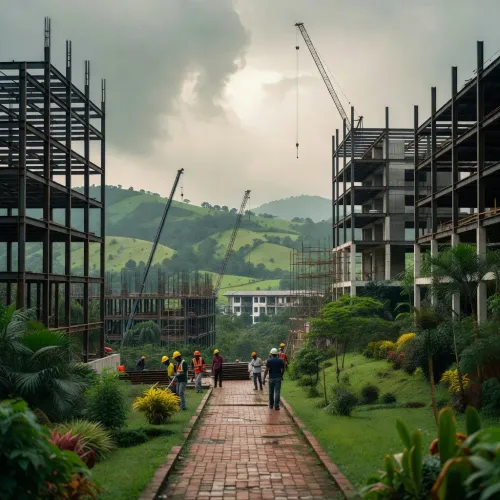
11 more medical colleges are under construction, including in Goalpara , Bajali , and Hailakandi .
Himanta Biswa Sarma has set a goal of a medical college in every district of Assam.
A five-year 'One District – Three Institutions' framework will add one medical college, one engineering college, and one university per district.
The expansion targets healthcare access for Assam's 3.5 crore-plus residents, particularly in underserved rural districts.
State budget allocations and national regulatory approvals will determine the pace of rollout through 2031 .
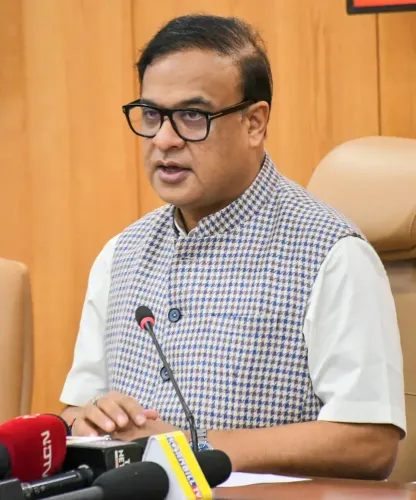
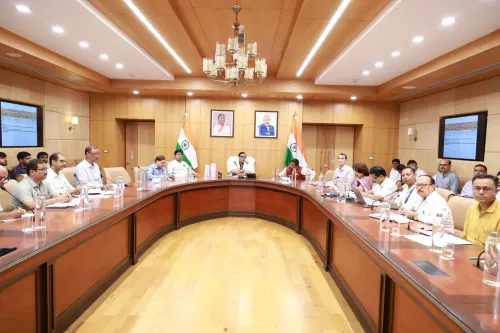
The Chief Minister's Office of Assam announced on Tuesday, 26 May 2026 that the state government is pursuing a landmark expansion of healthcare and higher-education infrastructure, with Chief Minister Dr. Himanta Biswa Sarma outlining a plan to establish a medical college in every district of the state.
What was announced
Speaking through the official CMO account, Dr. Sarma stated that 14 medical colleges have already been completed across Assam, while 11 more are currently under construction — including facilities in Goalpara, Bajali, and Hailakandi. The Chief Minister described the government's ambition as ensuring 'a medical college in every district of Assam.' He further unveiled a five-year vision under the banner of 'One District – Three Institutions': one medical college, one engineering college, and one university in each of the state's districts.
Context
Assam, a northeastern state of over 3.5 crore residents, has historically faced shortages of trained medical professionals and limited access to specialised healthcare in rural and remote districts. The state government began accelerating district-level medical college creation between 2016 and 2020, establishing or upgrading institutions in districts including Barpeta, Tezpur, and Diphu to increase the number of MBBS seats available to local students. Bajali, one of the three districts specifically named in Tuesday's post, is among Assam's more recently carved-out administrative units, signalling that the expansion is reaching newer and smaller districts.
Policy backdrop
The 'One District – Three Institutions' framework marks a significant broadening of what was previously a health-infrastructure-focused agenda. By pairing each proposed medical college with an engineering college and a university, the Sarma government is positioning district-level higher education as an integrated cluster rather than a single-sector intervention. This approach mirrors a broader national pattern since 2014, in which state governments have moved to correct doctor-to-population imbalances and reduce the migration of students from the Northeast to colleges in other parts of India. Retaining local talent while building local institutional capacity has become a recurring theme in northeastern development policy.
Stakeholders and impact
The most direct beneficiaries of the expansion are medical aspirants from Assam who currently compete for limited seats or travel outside the state for professional education. Rural patients in underserved districts such as Hailakandi in southern Assam and Goalpara in western Assam stand to gain improved access to trained doctors once new colleges begin producing graduates. District administrations will be required to support land acquisition, local infrastructure, and coordination with state and central regulatory bodies for the new institutions.
What's next
The government's stated timeline spans the next five years, meaning construction and operationalisation of the remaining medical colleges, as well as the linked engineering colleges and universities, will be a continuing legislative and budgetary priority through at least 2031. Regulatory clearances from bodies overseeing medical and university education at the national level will be critical milestones. State budget allocations in successive years will serve as the clearest indicator of whether the 'One District – Three Institutions' vision translates from announcement to ground-level delivery.
Point of View
Engineering, and university ambitions into a single district-level grid, CM Sarma is signalling that the state's development model is shifting from sector-by-sector additions to an integrated institutional ecosystem. For a northeastern state that has long struggled with talent outmigration and healthcare deficits, this is a politically resonant and substantively significant commitment. The real test will come in successive state budgets and in how quickly the 11 colleges already under construction are operationalised and staffed.
NationPress
9 Oct 2026
Frequently Asked Questions
How many medical colleges does Assam have in 2026?
According to the Chief Minister's Office of Assam, 14 medical colleges have been completed in the state as of May 2026 , with 11 more currently under construction.
What is the 'One District – Three Institutions' plan in Assam?
The 'One District – Three Institutions' plan announced by CM Himanta Biswa Sarma aims to establish one medical college, one engineering college, and one university in every district of Assam over the next five years.
Which districts are getting new medical colleges in Assam?
The Chief Minister specifically named Goalpara , Bajali , and Hailakandi among the districts where medical colleges are currently under construction, as part of a broader plan covering all districts.
When will Assam have a medical college in every district?
CM Himanta Biswa Sarma has outlined a five-year timeline for the broader 'One District – Three Institutions' vision, pointing to a target horizon of around 2031 , subject to budget allocations and regulatory approvals.
Why is Assam building so many medical colleges?
Assam has historically faced a shortage of trained doctors and limited healthcare access in rural and remote districts. The expansion aims to increase MBBS seats, retain local talent, and reduce dependence on medical institutions in other parts of India.