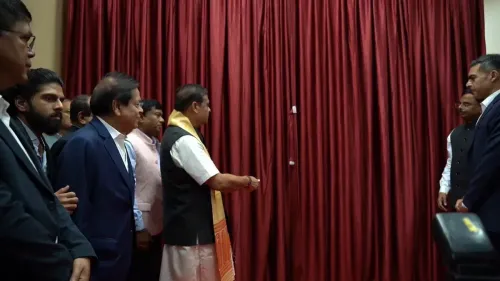
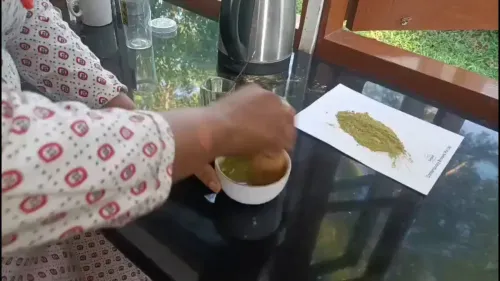
CM Himanta marks International Tea Day, hails Assam Tea's 200-year legacy
Synopsis
On International Tea Day, 21 May 2026, Assam Chief Minister Himanta Biswa Sarma celebrated Assam Tea's 200-plus-year legacy and honoured the lakhs of tea garden workers who have defined the state's identity, opening an eight-post thread on the industry's history and significance.
Key Takeaways
CM Himanta Biswa Sarma posted an eight-tweet thread on International Tea Day, 21 May 2026 , honouring Assam Tea's legacy.
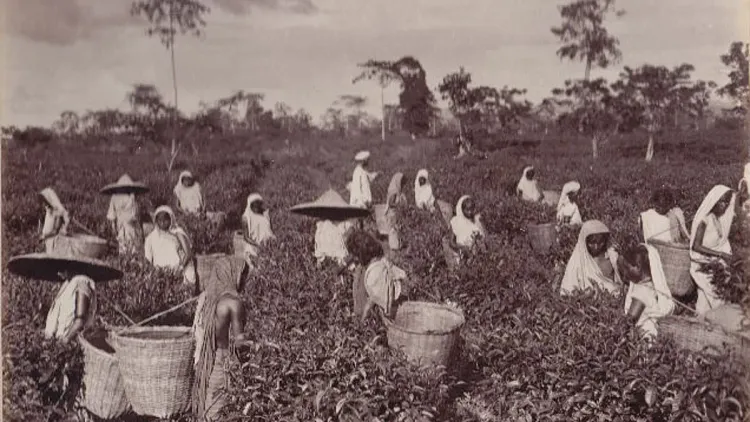
Assam Tea has a commercial history of over 200 years , with organised cultivation beginning in 1837 and the Assam Company formed in 1839 .
Assam produces approximately half of India's total tea output , making it a pillar of the state's economy.
The post pays tribute to the lakhs of hardworking families in tea gardens who have shaped Assam's cultural identity.
The state has pursued GI registration and export campaigns to protect and promote Assam Tea's global brand.
Welfare of tea-tribe communities — covering wages, housing, and healthcare — remains an active policy priority for the Assam government.
Assam Chief Minister Himanta Biswa Sarma on Thursday, 21 May 2026 took to X to mark International Tea Day, celebrating the over-200-year legacy of Assam Tea and paying tribute to the lakhs of families whose labour has shaped the state's most iconic identity.
Context
In a thread spanning eight posts, CM Sarma wrote: 'From the lush tea gardens of Assam to tea cups across the world, Assam Tea carries a glorious legacy spanning over 200 years.' He framed the occasion not merely as a celebration of a beverage but as a recognition of the 'hardworking families who shaped this identity of Assam.'
International Tea Day is observed every year on 21 May as a United Nations-backed global event that highlights the cultural, economic, and social significance of tea production and trade worldwide. The day draws attention to the livelihoods of millions of smallholder farmers and plantation workers across tea-growing nations.
Policy Backdrop
The roots of commercial tea cultivation in Assam stretch back to 1823, when wild tea plants were first documented by Robert Bruce. Organised planting began from 1837 onward, and by 1839 the Assam Company — India's first joint-stock tea enterprise — had been floated, marking the formal start of an industry that would grow to define the state.
Today, Assam produces roughly half of all tea grown in India, making the sector a cornerstone of both the state's economy and its cultural identity. Successive state governments have worked to strengthen the product's global standing through Geographical Indication (GI) registration and export promotion campaigns, while also addressing the welfare of tea-tribe communities who form the backbone of the workforce.
Stakeholders and Impact
The tea industry supports lakhs of workers across hundreds of gardens spread through Assam's districts, many of them belonging to tea-tribe communities with deep historical ties to the plantations. Their wages, housing, healthcare, and educational access remain active policy concerns for the state government.
On the global stage, Assam Tea competes with producers in China, Sri Lanka, and Kenya. CM Sarma's post, amplified on International Tea Day, reinforces the state's ongoing effort to leverage agricultural heritage for domestic pride and international market positioning. The GI tag attached to Assam Tea provides a legal framework to protect its provenance and premium branding in export markets.
What's Next
The full eight-tweet thread from CM Sarma is expected to elaborate further on the industry's history, workforce, and the state government's vision for the sector. Observers will watch for any announcements tied to the occasion — including fresh welfare schemes for tea garden workers or the state's participation in upcoming international tea trade events.
With global demand for single-origin, traceable teas rising, Assam's ability to marry its centuries-old legacy with modern branding and worker welfare standards will determine how effectively the state converts cultural pride into sustained economic gains for its tea-growing communities.
Point of View
As this community represents a significant voter bloc in Assam whose welfare has been a recurring theme in state policy debates. By anchoring the message in a 200-year historical arc, the Chief Minister frames the BJP-led government as a steward of a living heritage rather than merely an administrator. The post fits a broader pattern of northeastern leaders using cultural pride as both an economic development tool and a vehicle for regional identity assertion within India's federal framework.
NationPress
15 Oct 2026
Frequently Asked Questions
Why is International Tea Day celebrated on 21 May?
International Tea Day is observed on 21 May every year following a United Nations resolution to mark the cultural, economic, and social importance of tea production and trade globally.
How old is the Assam Tea industry?
Commercial tea cultivation in Assam spans over 200 years , with wild plants documented in 1823 , organised planting from 1837 , and the Assam Company — India's first joint-stock tea enterprise — established in 1839 .
How much of India's tea does Assam produce?
Assam produces roughly half of India's total tea output , making it the single largest tea-growing region in the country.
What did CM Himanta Biswa Sarma say on International Tea Day 2026?
CM Himanta Biswa Sarma posted an eight-tweet thread celebrating Assam Tea's 'glorious legacy spanning over 200 years' and paid tribute to the 'lakhs of hardworking families who shaped this identity of Assam.'
What is the GI tag for Assam Tea?
Assam Tea holds a Geographical Indication (GI) tag that legally protects its provenance, helping distinguish it in global export markets from teas produced in China , Sri Lanka , and Kenya .