CM Himanta Highlights Assam's Big Week: Matcha, Livelihoods, Green Drive

Synopsis
Assam Chief Minister Himanta Biswa Sarma on July 6, 2026 shared a weekly highlights video citing Matcha tea's global recognition, a rural livelihood push, and the Brikhya Bandhu afforestation initiative as the state's standout developments of the week.
Key Takeaways
CM Himanta Biswa Sarma posted a weekly highlights video on July 6, 2026 covering three key state developments.
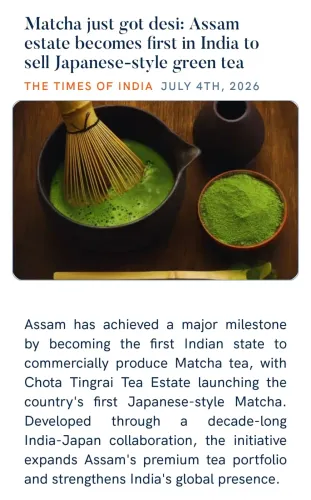
Matcha tea from Assam was cited as achieving global recognition, marking a potential milestone for the state's specialty tea sector.
A rural livelihoods initiative was highlighted as receiving a 'major boost,' though specific programme details are yet to be officially confirmed.
The Brikhya Bandhu initiative was described as setting the stage for a greener Assam , reflecting the state government's afforestation priorities.
Assam's government has pursued specialty tea diversification and GI-tag promotion as part of agricultural policy since the 2000s .
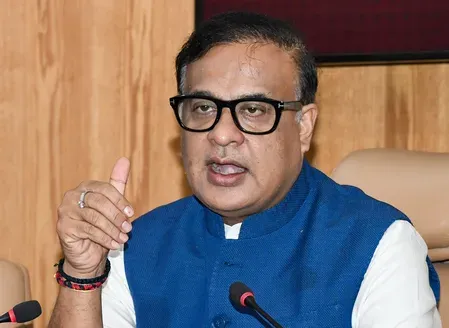
Assam Chief Minister Himanta Biswa Sarma on Monday, July 6, 2026, shared a weekly highlights reel on X, pointing to three developments he described as landmark for the state: a breakthrough for Matcha tea on the global stage, a significant push for rural livelihoods, and the launch of the Brikhya Bandhu tree-plantation initiative aimed at expanding Assam's green cover.
Context
Sarma described the week as one of 'local action to global recognition,' citing Matcha tea as making history and rural communities receiving a major boost alongside the rollout of the Brikhya Bandhu initiative. The post was accompanied by a video summarising the week's developments across agriculture, livelihood programmes, and environmental action in Assam.
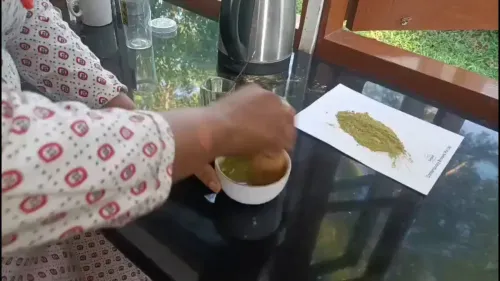
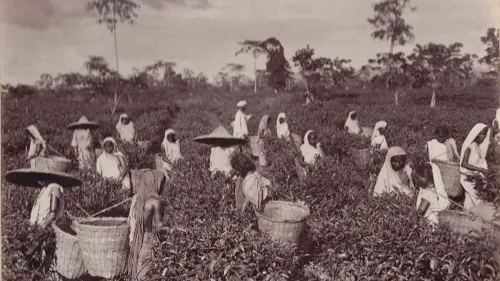
The state has long been identified with its tea industry, and the government has in recent years sought to diversify beyond conventional black tea into specialty variants that can command premium pricing in international markets. Matcha, a finely ground green tea powder, represents a relatively newer addition to Assam's specialty tea portfolio.
Policy Backdrop
Assam has pursued agricultural diversification strategies since the 2000s, promoting specialty and GI-tagged tea products as a route to higher export earnings and better returns for growers. The state's tea belt, concentrated in Upper Assam and parts of the Brahmaputra valley, supports millions of workers and smallholder growers whose incomes are closely tied to commodity prices and market access.
On the environmental side, afforestation drives have become a recurring feature of BJP-led state governments across India, with plantation targets often tied to national green cover goals. The Brikhya Bandhu initiative — the name translates roughly to 'Friend of Trees' — appears to be the latest in this lineage, though specific targets and coverage details are yet to be confirmed from official records.
Stakeholders and Impact
Tea growers and rural communities across Assam stand to be the primary beneficiaries if the highlighted schemes translate into sustained policy implementation. Specialty tea markets, including Matcha, offer significantly higher per-kilogram realisations compared to bulk black tea, which could meaningfully lift farmer incomes if export pipelines are established and maintained.
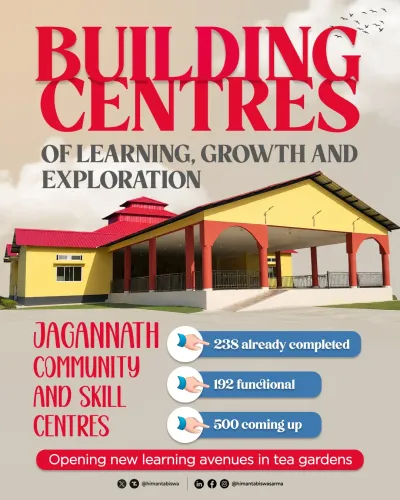
The livelihood component, while not detailed in the post, aligns with the state government's broader push under Sarma's leadership to connect rural households with formal economic opportunities, a priority that has featured prominently in Assam's budget allocations and scheme announcements in recent years. Environmental initiatives such as Brikhya Bandhu also carry implications for communities dependent on forest resources and for Assam's climate resilience given its vulnerability to floods and erosion.
What's Next
Detailed figures on Matcha tea export agreements, the scale of the rural livelihood boost, and afforestation targets under Brikhya Bandhu are expected to emerge through official government communications, assembly sessions, or economic surveys in the coming weeks. Observers will watch whether the Matcha milestone translates into verifiable export contracts or GI-tag milestones that can be independently confirmed.
The broader pattern — combining agricultural export promotion with environmental drives — is one CM Sarma has used consistently to position Assam as a development success story within the BJP's Northeast narrative ahead of future electoral cycles.
Point of View
Livelihood, and environmental wins into a single communication to reinforce Assam's image as a proactive, development-oriented state under BJP governance. The Matcha tea angle is particularly significant: positioning a Northeast Indian state as a supplier of a globally fashionable product signals an ambition to move up the agricultural value chain beyond bulk commodity exports. The Brikhya Bandhu branding follows a well-established pattern of giving plantation drives memorable, vernacular identities to build public ownership. Taken together, these moves suggest the Sarma administration is carefully curating its development record ahead of future electoral cycles in the Northeast.
NationPress
5 Oct 2026
Frequently Asked Questions
What is the Brikhya Bandhu initiative in Assam?
Brikhya Bandhu, meaning 'Friend of Trees,' is an afforestation and tree-plantation initiative launched by the Assam government under CM Himanta Biswa Sarma aimed at expanding the state's green cover. Specific targets and coverage details are yet to be officially confirmed.
Is Assam producing Matcha tea?
Yes, Assam has been diversifying its tea portfolio to include specialty variants such as Matcha , a finely ground green tea powder. CM Sarma cited a global recognition milestone for Assam Matcha in his July 2026 weekly highlights, though specific details of the milestone are yet to be independently verified.
What rural livelihood schemes are active in Assam in 2026?
The Assam government under CM Himanta Biswa Sarma has run multiple rural livelihood programmes linked to agriculture, self-help groups, and skill development. The specific scheme referenced in the July 6, 2026 weekly highlights has not yet been detailed in official communications.
What is Himanta Biswa Sarma's role in Northeast India politics?
Himanta Biswa Sarma is the Chief Minister of Assam and a senior BJP leader. He also serves as the convenor of the North-East Democratic Alliance (NEDA) , making him a central figure in coordinating BJP-aligned governance across the northeastern states.
How is Assam promoting specialty tea exports?
Assam has pursued agricultural diversification since the 2000s , promoting GI-tagged and specialty tea products — including orthodox and green tea variants — to earn higher export realisations and improve returns for growers beyond bulk black tea markets.