CM Himanta: Assam first state to produce Matcha tea commercially
Synopsis
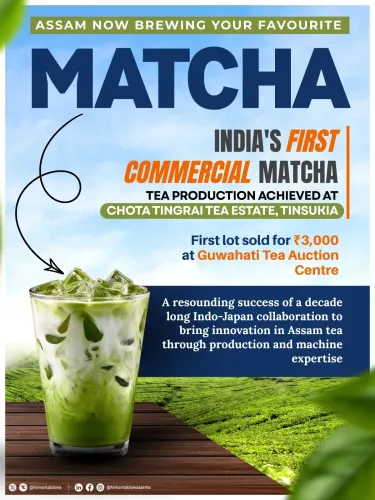
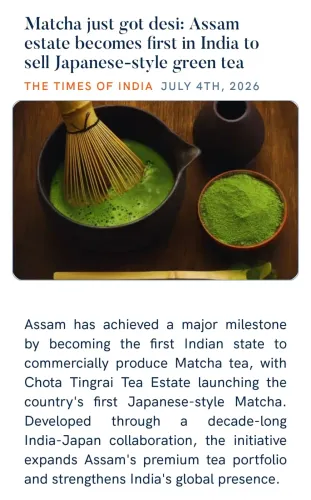
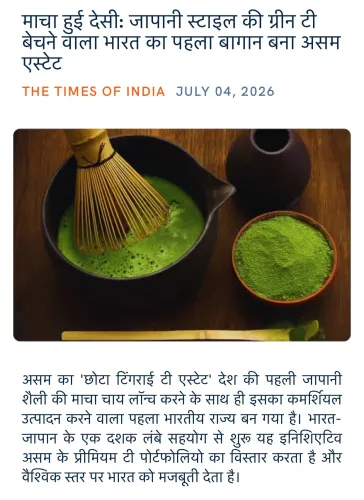
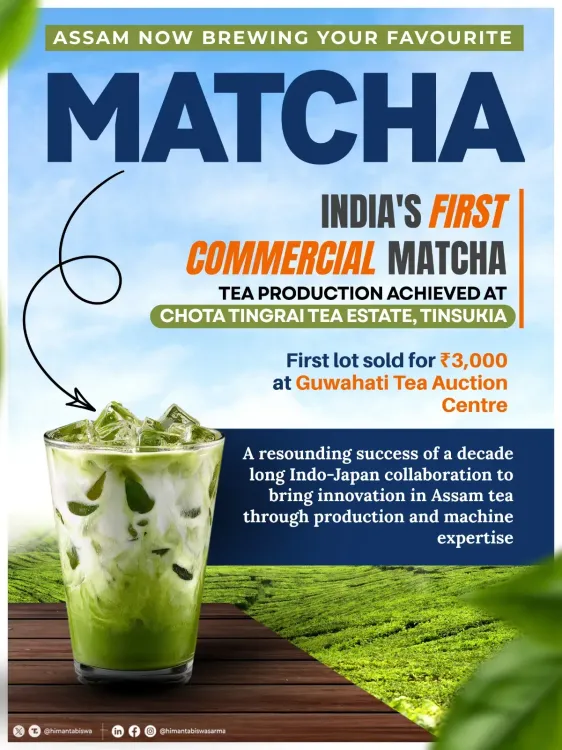
Assam has become India's first state to commercially produce Matcha tea, with Chief Minister Himanta Biswa Sarma announcing production at Chota Tingrai Tea Estate in Tinsukia. The move, backed by India-Japan collaboration, marks a major diversification push for the Assam tea brand in global specialty markets.
Key Takeaways
Assam is now the first state in India to commercially produce Matcha tea .
Production has begun at the Chota Tingrai Tea Estate in Tinsukia , Upper Assam.
The initiative has been enabled by India-Japan bilateral ties and collaboration in agriculture and food processing.
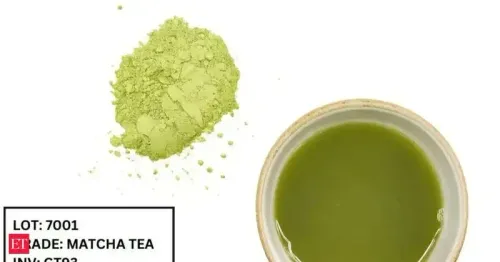
Matcha lots from the estate have already been sold at the Guwahati Tea Auction Centre , fetching competitive prices.
The move is aimed at strengthening Brand Assam Tea in global specialty and premium markets.
The development aligns with India's broader Act East Policy and the state's ongoing push to move beyond bulk CTC tea exports.
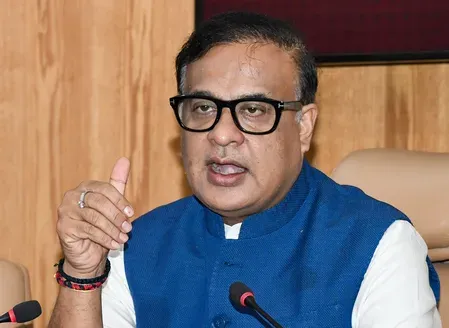
Assam Chief Minister Himanta Biswa Sarma announced on Friday, 3 July 2026 that Assam has become the first state in India to commercially produce Matcha tea, with production underway at the Chota Tingrai Tea Estate in Tinsukia. The Chief Minister credited strong India-Japan ties and bilateral collaboration for making the milestone possible, adding that the Matcha lots have already fetched a competitive price at the Guwahati Tea Auction Centre.
Context
In his post, Sarma wrote: 'Your favourite Matcha brew, will now be produced in Assam. Furthering our glorious tea legacy, Assam becomes the first State in India to commercially produce Matcha tea at the Chota Tingrai Tea Estate in Tinsukia.' He described the move as a 'diversification to the viral drink' that will 'help strengthen brand Assam Tea in the global markets.' The announcement positions Assam's centuries-old plantation sector at the centre of a fast-growing global specialty-beverage trend.
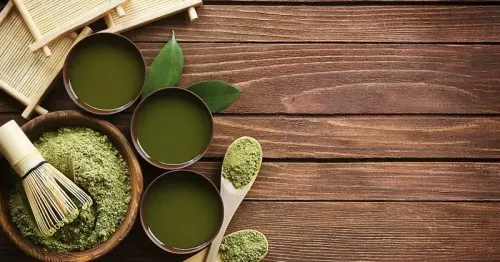
Matcha — a finely ground powder of shade-grown green tea leaves — has surged in international popularity, particularly in East Asian, European, and North American markets. Until now, commercial Matcha production was dominated almost entirely by Japan, with the Uji and Nishio regions holding the most recognised appellations. Assam's entry marks a significant structural shift for Indian tea exports.
Policy Backdrop
Commercial tea cultivation in Assam dates to the 1820s, following the discovery of indigenous Camellia sinensis plants, and the state today accounts for more than half of India's total tea output. Despite this scale, the industry has long been criticised for its heavy dependence on bulk CTC (crush-tear-curl) auctions, which yield lower per-kilogram realisations than specialty or value-added products.
The India-Japan Comprehensive Economic Partnership Agreement, concluded in 2011, liberalised bilateral trade and opened channels for technical collaboration in agriculture and food processing — the framework that Sarma appears to be referencing when he credits 'strong India-Japan ties.' Under India's Act East Policy, Japan has emerged as a key partner for technology transfer and agro-processing investment in the Northeast, making Assam a natural candidate for Japanese Matcha cultivation know-how.
The Guwahati Tea Auction Centre, operational since 1970, serves as the primary price-discovery platform for Northeast Indian teas. The fact that Matcha lots from Chota Tingrai have already been offered and 'fetched a handsome price' at the centre signals early commercial viability, though precise auction figures have not been disclosed.
Stakeholders and Impact
Tea planters and estate owners across Upper Assam — particularly in Tinsukia and neighbouring districts — stand to benefit most directly if the Matcha model proves replicable. Specialty tea exporters who have struggled to compete with bulk-grade commodity pricing will find a new, higher-margin product category opening up. Workers on estates that pivot to shade-grown Matcha cultivation could also see changes in harvesting and processing workflows.
For the broader Assam Tea brand, the development offers a route into premium retail and café supply chains globally — segments where Japanese Matcha currently commands a dominant premium. Sarma's framing of the announcement around 'brand Assam Tea in the global markets' suggests the state government views this as a long-term export positioning exercise, not merely a single-estate experiment.
What's Next
Attention will now turn to the volume of Matcha lots offered at subsequent Guwahati Tea Auction Centre sessions and whether other Upper Assam estates follow Chota Tingrai's lead in setting up shade-growing and stone-grinding infrastructure. Any fresh India-Japan agricultural memoranda of understanding — potentially covering additional Japanese tea cultivars or processing machinery — could accelerate the rollout. The state government is expected to detail a broader diversification roadmap as the initiative matures, with the Matcha pilot serving as the proof-of-concept for Assam's shift toward high-value niche teas.
Point of View
Sarma simultaneously advances the Centre's Act East Policy narrative while projecting Assam as a proactive economic actor rather than a passive recipient of central schemes. The choice of the Guwahati Tea Auction Centre as the price-discovery venue is also deliberate: it legitimises the new product within existing institutional infrastructure rather than routing it through private channels, lending the announcement credibility with planters and exporters alike. If the Matcha pilot scales, it could pressure other tea-producing states to accelerate their own value-addition strategies.
NationPress
2 Oct 2026
Frequently Asked Questions
Which is the first state in India to produce Matcha tea?
Assam is the first state in India to commercially produce Matcha tea, with production starting at the Chota Tingrai Tea Estate in Tinsukia district.
Where is Matcha tea being produced in Assam?
Matcha tea is being commercially produced at the Chota Tingrai Tea Estate located in Tinsukia district of Upper Assam.
What is the role of Japan in Assam's Matcha tea production?
Strong India-Japan bilateral ties and collaboration — facilitated in part by the 2011 Comprehensive Economic Partnership Agreement — have provided the technical know-how and framework that made Matcha production in Assam possible.
Has Assam Matcha tea been sold at auction?
Yes. Matcha lots from Chota Tingrai Tea Estate have already been offered at the Guwahati Tea Auction Centre and have fetched a competitive price, according to CM Himanta Biswa Sarma.
Why is Matcha tea significant for Assam's tea industry?
Matcha is a high-value specialty product that commands premium prices in global markets, offering Assam's tea sector a route beyond its traditional dependence on lower-margin bulk CTC tea exports.