Assam first state to commercially produce Matcha tea at Tinsukia estate
Synopsis
Assam has quietly pulled off a first that Japan long monopolised — commercial Matcha tea production. The milestone at Chota Tingrai estate in Tinsukia, backed by a decade of Indo-Japan collaboration, signals a strategic pivot for India's largest tea-producing state: from bulk black tea to premium green tea, with the first lot already fetching ₹3,000 at the Guwahati auction.
Key Takeaways
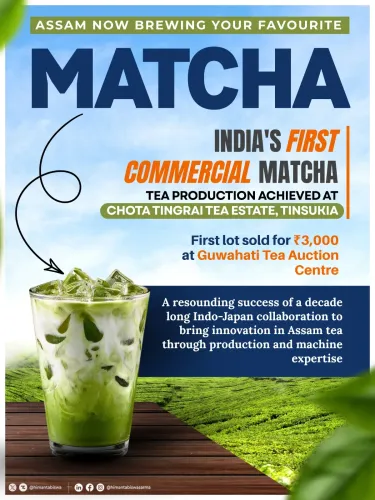
Assam has become the first state in India to commercially produce Matcha tea , announced on 4 July 2025 .
Commercial production is underway at the Chota Tingrai Tea Estate in Tinsukia district .
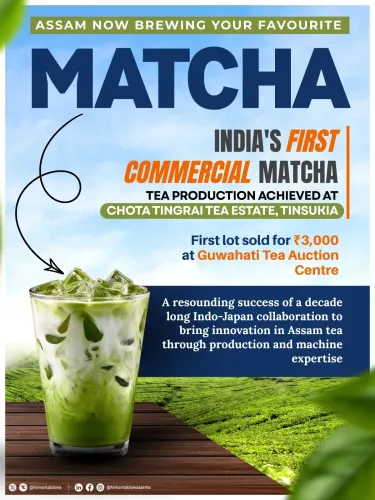
The first lot was sold for ₹3,000 at the Guwahati Tea Auction Centre .
The breakthrough follows a decade-long Indo-Japan collaboration involving technical expertise and specialised machinery.
The move is aimed at diversifying Assam's tea industry beyond conventional black tea into premium global markets.
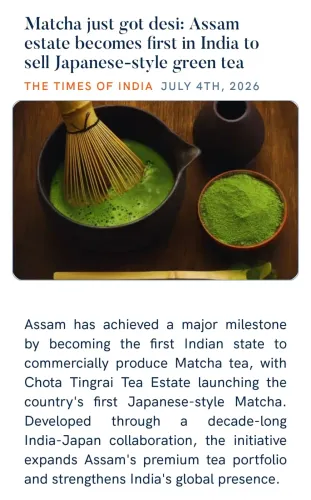
Assam has become the first state in India to commercially produce Matcha tea, with the milestone achieved at the Chota Tingrai Tea Estate in Tinsukia district, Chief Minister Himanta Biswa Sarma announced on Friday, 4 July 2025. The development marks a significant diversification for Assam's globally renowned tea industry, which has long been dominated by conventional black tea.
The Historic First
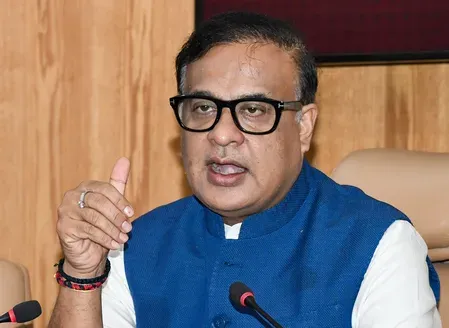
Chief Minister Sarma made the announcement via a post on social media platform X, stating: 'Your favourite Matcha brew will now be produced in Assam. Furthering our glorious tea legacy, Assam becomes the first state in India to commercially produce Matcha tea at the Chota Tingrai Tea Estate in Tinsukia.'
The first lot of Assam-produced Matcha tea was sold for ₹3,000 at the Guwahati Tea Auction Centre, signalling encouraging early market acceptance for the premium product.
A Decade of Indo-Japan Collaboration
According to Chief Minister Sarma, the commercial breakthrough is the outcome of a decade-long Indo-Japan collaboration aimed at introducing innovation into Assam's tea sector. The partnership involved technical expertise, specialised machinery, and knowledge sharing — elements that enabled the state to replicate the exacting cultivation and processing standards that Matcha demands.
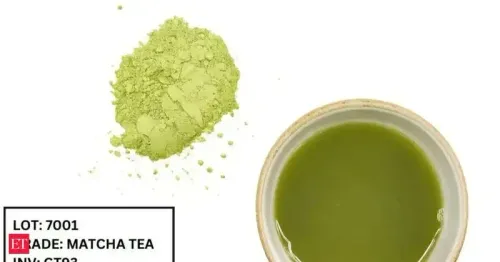
Matcha is a finely ground powder produced from specially cultivated green tea leaves and has witnessed a sharp rise in global popularity, driven by its use in beverages, desserts, and health-focused food products. Japan has traditionally dominated global Matcha supply, making Assam's entry into commercial production a notable development for the Indian tea industry.
Why This Matters for Assam's Tea Sector
Assam is India's largest tea-producing state, and the shift toward premium green tea products addresses a structural challenge the industry has faced: heavy dependence on bulk black tea exports, which are vulnerable to price volatility. Commercial Matcha production is expected to open new domestic and international market opportunities while boosting value addition for growers and processors.
Notably, global demand for Matcha has surged in recent years, with the product commanding premium pricing compared to conventional teas. Assam's entry positions it to capture a share of this high-margin segment.
Broader Push to Modernise Assam Tea
This development is part of a sustained effort by the Assam government to expand the state's tea product portfolio beyond its traditional black tea identity. Officials have pointed to innovation and modern processing techniques as central to the strategy.
Chief Minister Sarma said the successful commercial production 'reflects the state's commitment to modernising its tea sector while preserving its rich heritage.' Industry observers expect the Chota Tingrai estate's success to encourage other Assam tea gardens to explore similar diversification.
With the first auction lot sold and market signals positive, the focus now shifts to scaling production and building Assam Matcha's presence in premium domestic and export markets.
Point of View
But the real test lies in scale and consistency. Japan's Matcha dominance is built on centuries of cultivar selection and microclimate precision — replicating that quality reliably across multiple harvests is a different challenge from a successful first lot. The ₹3,000 auction price is an encouraging signal, but premium buyers — particularly export markets — will demand batch-to-batch uniformity before committing volume orders. The Indo-Japan collaboration is a sound foundation, yet Assam's tea industry has a history of innovation announcements that plateau at pilot scale. Whether Chota Tingrai becomes a replicable model or a celebrated one-off will define whether this is a genuine industry pivot or a well-deserved headline.
NationPress
2 Oct 2026
Frequently Asked Questions
Which is the first state in India to commercially produce Matcha tea?
Assam is the first state in India to commercially produce Matcha tea, with production initiated at the Chota Tingrai Tea Estate in Tinsukia district. The achievement was announced by Chief Minister Himanta Biswa Sarma on 4 July 2025.
Where was the first Assam Matcha tea sold and at what price?
The first lot of Assam-produced Matcha tea was sold at the Guwahati Tea Auction Centre for ₹3,000, signalling positive early market acceptance for the premium product.
What is Matcha tea and why is it significant?
Matcha is a finely ground powder made from specially cultivated green tea leaves, traditionally produced in Japan. It has seen sharp global demand growth due to its use in beverages, desserts, and health food products, and commands premium pricing over conventional teas.
How did Assam develop the capability to produce Matcha tea?
The commercial production is the result of a decade-long Indo-Japan collaboration that brought technical expertise, specialised machinery, and knowledge sharing to Assam's tea sector, enabling the state to meet the exacting standards Matcha production requires.
How does Matcha production benefit Assam's tea industry?
Matcha production allows Assam to diversify beyond conventional black tea, which is vulnerable to price volatility. It opens new premium domestic and export markets, boosts value addition for growers and processors, and positions Assam in a high-margin global segment.