Rajnath Singh Pays Tribute to Indian Doctors, Cites Ancient Maxim
Synopsis
Union Defence Minister Rajnath Singh honoured Indian doctors on 18 July 2026, invoking the ancient Sanskrit maxim 'Vaidyo Narayano Hariih' — equating physicians with the divine — and calling them exemplars of service, dedication, and excellence rooted in India's civilisational medical tradition.
Key Takeaways
Rajnath Singh posted a tribute to Indian doctors on 18 July 2026 on X.
He cited the Sanskrit maxim 'वैद्यो नारायणो हरिः' — 'the physician is akin to the divine Narayana' — from India's Ayurvedic tradition.
He described Indian doctors as 'bearers of hope, faith, and life' and 'exemplars of service, dedication, and excellence.' National Doctors' Day has been observed on 1 July every year since 1991 , honouring Dr Bidhan Chandra Roy .
The tribute aligns with the government's sustained effort since 2014 to integrate India's traditional medical heritage into mainstream health policy via the Ministry of AYUSH .
Union Defence Minister Rajnath Singh on Saturday, 18 July 2026, paid tribute to Indian doctors, invoking a classical Sanskrit maxim to honour the medical community's spirit of service and dedication.
Context
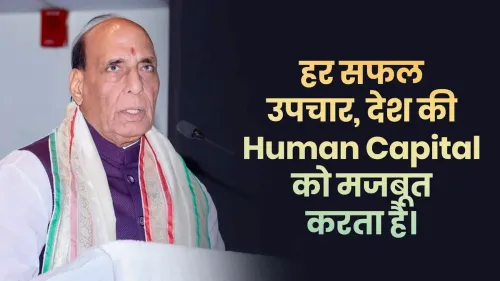
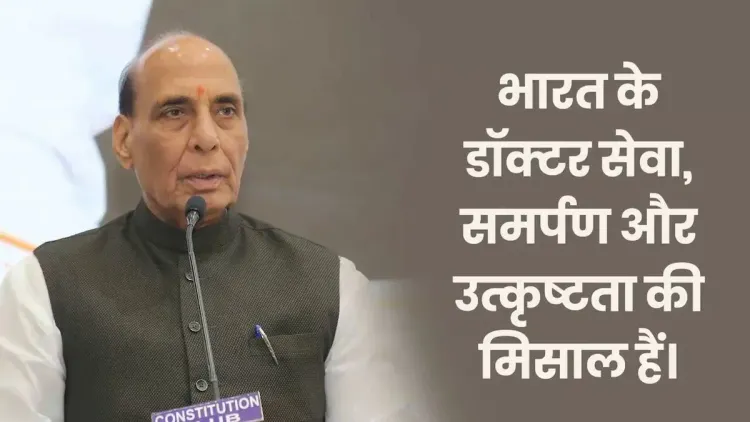
In his post on X, Rajnath Singh wrote in Hindi: 'वैद्यो नारायणो हरिः' — meaning 'the physician is akin to the divine Narayana (Vishnu)' — to underscore the revered place physicians hold in India's civilisational tradition. He stated that in India's medical tradition, doctors are regarded not merely as healers but as 'bearers of hope, faith, and life.' He described Indian doctors as 'exemplars of service, dedication, and excellence.'
The tribute draws on a Sanskrit aphorism rooted in Ayurvedic philosophy, which has long equated the physician's role with a near-sacred responsibility toward the patient. The phrase reflects a cultural continuum that predates modern medicine and continues to resonate in contemporary discourse on healthcare ethics.
Policy Backdrop
India has observed National Doctors' Day on 1 July every year since 1991, commemorating the birth and death anniversary of eminent physician and statesman Dr Bidhan Chandra Roy. The day serves as a formal occasion for the government and civil society to recognise the contributions of the medical fraternity.
Since the establishment of the Ministry of AYUSH in 2014, successive governments have made a sustained effort to integrate India's traditional medical heritage — including Ayurveda, Yoga, Unani, Siddha, and Homoeopathy — into mainstream health policy. Framing physicians through the lens of classical Indian thought aligns with this broader cultural and policy orientation. Rajnath Singh's post reflects that pattern, situating modern medical professionals within an ancient tradition of selfless service.
Stakeholders and Impact
The tribute speaks directly to India's approximately 1.3 million registered allopathic doctors as well as the large community of AYUSH practitioners across the country. For the medical community, public recognition from a senior Union Cabinet minister carries symbolic weight, particularly at a time when the profession faces pressures ranging from infrastructure gaps in rural areas to concerns over doctor safety.
The invocation of the 'Vaidyo Narayano Harihi' maxim also resonates with traditional medicine practitioners who often feel their contributions are underacknowledged relative to their allopathic counterparts. By using a phrase drawn from classical Ayurvedic texts, Singh implicitly acknowledges both streams of healing.
What's Next
Observers will watch whether Rajnath Singh's tribute is followed by substantive policy announcements — particularly around the integration of traditional medicine into armed forces medical services, given his portfolio as Defence Minister. Upcoming parliamentary sessions may also see discussions on updates to the National Health Policy that further embed India's traditional medical systems into public healthcare delivery. The broader government emphasis on cultural framing of healthcare professionals is expected to continue as a thematic thread in official communication.
Point of View
' Singh bridges Ayurvedic philosophy and contemporary medicine, reinforcing the government's AYUSH-centric health narrative. The post also serves a soft-diplomacy function within the medical community at a time when doctor welfare and rural healthcare access remain politically sensitive. It signals that the government's engagement with healthcare professionals will continue to carry both symbolic and policy dimensions.
NationPress
17 Oct 2026
Frequently Asked Questions
What did Rajnath Singh say about Indian doctors?
Rajnath Singh said that in India's medical tradition, doctors are regarded not merely as healers but as 'bearers of hope, faith, and life,' and called them exemplars of service, dedication, and excellence, citing the Sanskrit maxim 'Vaidyo Narayano Hariih.'
What does 'Vaidyo Narayano Hariih' mean?
'Vaidyo Narayano Hariih' is a Sanskrit phrase meaning 'the physician is akin to the divine Narayana (Vishnu).' It originates in India's Ayurvedic philosophical tradition and conveys that a doctor's healing role is of near-sacred importance.
When is National Doctors' Day celebrated in India?
National Doctors' Day is observed on 1 July every year in India since 1991, marking the birth and death anniversary of eminent physician and statesman Dr Bidhan Chandra Roy.
Why does Rajnath Singh speak about traditional medicine?
As a senior BJP leader, Rajnath Singh's references to traditional Indian medical heritage align with the government's policy of promoting AYUSH systems — Ayurveda, Yoga, Unani, Siddha, and Homoeopathy — which have been institutionally supported since the Ministry of AYUSH was created in 2014.
What is Rajnath Singh's current role?
Rajnath Singh is the Union Minister of Defence of India. He is a senior BJP leader and has previously served as Chief Minister of Uttar Pradesh and Union Home Minister.