CM Sawant Highlights Women Turning Waste to Wealth in Goa
Synopsis
Goa Chief Minister Pramod Sawant has highlighted women artisans who are converting waste materials into marketable products through state training support, framing their work as a model of Nari Shakti aligned with Swayampurna Goa and Atmanirbhar Bharat goals.
Key Takeaways
Goa CM Pramod Sawant on 23 May 2026 spotlighted women artisans converting waste into livelihood products.
Training is delivered by the Department of Handicrafts, Textiles and Coir , a state government body.
The initiative is framed under Swayampurna Goa , the state's self-reliance scheme, and Atmanirbhar Bharat , the national mission launched in May 2020 .
Women participants are earning independently and supporting families, reducing household economic vulnerability.
The 'Wealth out of Waste' model integrates circular-economy practices with women's skill development.
Future expansion may involve formal linkages with central coir and textile development schemes.
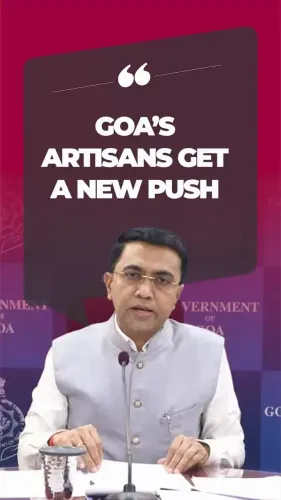
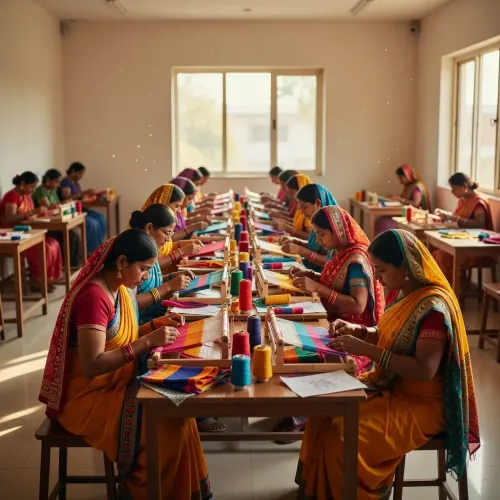
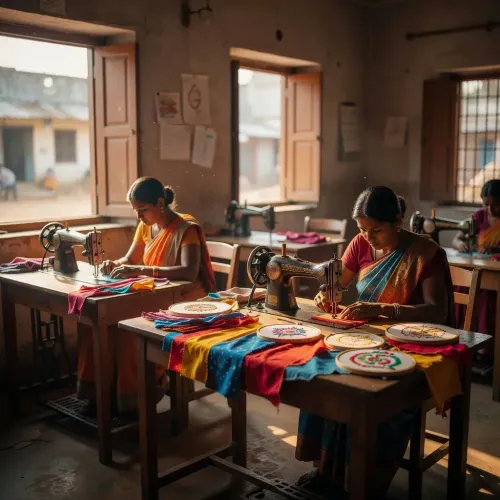
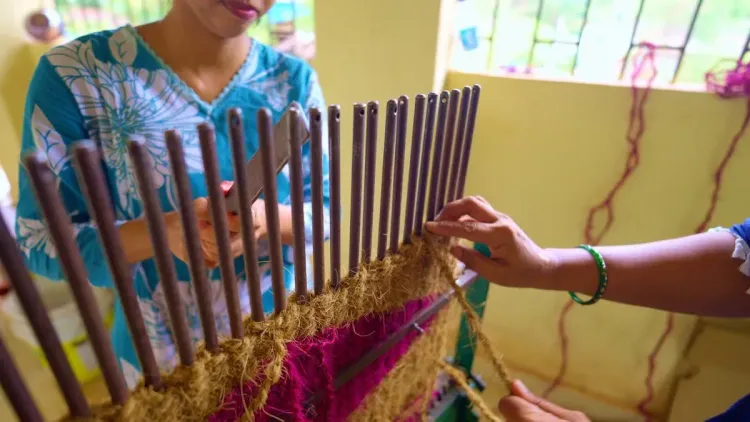
Goa Chief Minister Pramod Sawant on Saturday, 23 May 2026, spotlighted a group of women artisans who are converting waste materials into marketable products through training provided by the Department of Handicrafts, Textiles and Coir, calling their journey a shining example of Nari Shakti — women's power — in action.
Context
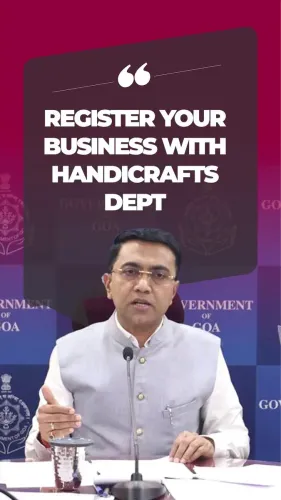
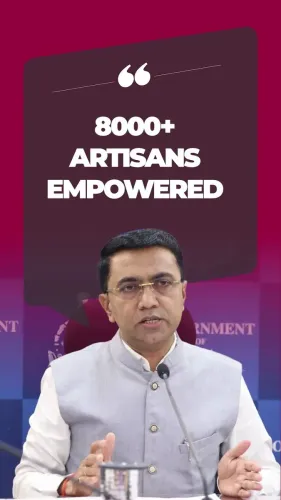
In his post, CM Sawant described the initiative as transforming 'Wealth out of Waste' into a meaningful livelihood. He noted that the participating women are 'strengthening their livelihoods, earning independently, and supporting their families with dignity and confidence.' The post was accompanied by a video documenting the women's work and progress.
The Department of Handicrafts, Textiles and Coir — a Goa state government body — delivers skill training focused on traditional crafts, coir products, and income-generating activities that make use of locally available materials, including waste streams that would otherwise go unused.
Policy Backdrop
CM Sawant linked the initiative to two overlapping policy frameworks: Swayampurna Goa, the state's own self-reliance scheme that promotes skill development and sustainable livelihoods, and Atmanirbhar Bharat, the national self-reliance mission launched by the Government of India in May 2020 to advance domestic entrepreneurship and economic independence.
The convergence of these two frameworks reflects a deliberate strategy to align state-level craft and coir programmes with central government priorities around women's economic participation and circular-economy practices. Goa has increasingly positioned its traditional handicraft sector as a vehicle for this alignment, channelling training support toward women in households that depend on supplementary income.
Stakeholders and Impact
The primary beneficiaries are women artisans and their families across Goa. By earning independently through craft-based livelihoods, these women reduce household economic vulnerability while contributing to the state's broader goal of self-sufficiency. The 'Wealth out of Waste' model also carries an environmental dimension, diverting local waste materials into productive use.
The initiative sits within a wider national pattern in which multiple Indian states have scaled skill training for women to support household incomes, linking grassroots economic activity to both the Nari Shakti and Atmanirbhar Bharat narratives. For Goa, the coir and handicrafts sector offers a culturally rooted entry point for this kind of programme.
What's Next
Attention will now turn to whether the Goa government expands the training intake under Swayampurna Goa and formalises linkages with central schemes administered by the Ministry of Textiles or the Coir Board of India. State budget allocations for the Department of Handicrafts, Textiles and Coir in the coming fiscal cycle will indicate how much institutional weight is being placed behind such livelihood programmes.
If the model of converting waste into craft products is scaled and formally integrated with national coir development schemes, it could serve as a replicable template for other coastal states with similar resource profiles and women-led micro-enterprise potential.
Point of View
Or whether the initiative remains a showcase without institutional depth.
NationPress
6 Oct 2026
Frequently Asked Questions
What is the 'Wealth out of Waste' initiative in Goa?
It is a livelihood programme supported by the Goa government's Department of Handicrafts, Textiles and Coir, under which women are trained to convert waste materials into marketable craft products, enabling them to earn independently.
What is Swayampurna Goa?
Swayampurna Goa is a state government scheme that promotes self-reliance through skill development, sustainable livelihoods, and the use of local resources, aimed at making Goa economically self-sufficient at the household level.
How does this relate to Atmanirbhar Bharat?
Atmanirbhar Bharat is a national self-reliance mission launched by the Government of India in May 2020. The Goa initiative aligns with its goals by fostering domestic entrepreneurship and economic independence, particularly among women.
Which department runs the handicraft training for women in Goa?
The Department of Handicrafts, Textiles and Coir, a Goa state government department, delivers the training and support for craft-based and coir-based income generation.
What did Goa CM Pramod Sawant say about women artisans?
CM Sawant said the women are 'strengthening their livelihoods, earning independently, and supporting their families with dignity and confidence,' calling their journey a shining example of Nari Shakti contributing to Swayampurna Goa and Atmanirbhar Bharat.