West Bengal revises professional tax rates: Key slabs for salaried, self-employed
Synopsis
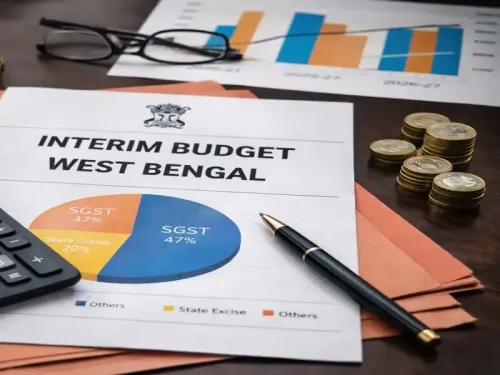
West Bengal has doubled the professional tax exemption for salaried workers to ₹20,000 a month and, for the first time, brought digital-economy professionals — from data scientists to OTT producers — under a mandatory ₹2,500 annual levy. The revision is the state's most sweeping update to its professional tax framework in years, with a 14-day window still open for public objections.
Key Takeaways
The West Bengal Finance Department issued revised professional tax rates on 21 August , notified by State Finance Secretary Sanjaya Bansal .
The monthly exemption threshold for salaried persons is doubled from ₹10,000 to ₹20,000 .
Salaried slabs range from ₹100/month (income ₹20,001–₹30,000) to ₹208/month (income above ₹1,00,000).
Self-employed individuals earning up to ₹2,50,000 annually remain exempt; those up to ₹20,00,000 pay ₹2,500/year .
A flat ₹2,500 annual tax is now mandatory for digital professionals including ITeS providers , data scientists , OTT producers , and cybersecurity experts .
Stakeholders have 14 days to submit objections or suggestions on the new structure.
The West Bengal Finance Department on Friday, 21 August issued a revised professional tax structure for both salaried employees and self-employed individuals across the state, doubling the exemption threshold for salaried persons from ₹10,000 to ₹20,000 per month. The notification was issued by State Finance Secretary Sanjaya Bansal.
New Slabs for Salaried Employees
Under the revised structure, salaried persons earning up to ₹20,000 a month are fully exempt — a significant relief compared to the earlier ceiling of ₹10,000. Those earning between ₹20,001 and ₹30,000 will pay ₹100 per month, while those in the ₹30,001–₹50,000 bracket will pay ₹140 per month.
Employees drawing between ₹50,001 and ₹1,00,000 monthly will be taxed at ₹170 per month. Those earning above ₹1,00,000 per month will pay the highest slab of ₹208 per month.
Self-Employed and Business Categories
Self-employed individuals with annual income up to ₹2,50,000 remain exempt. Those earning between ₹2,50,000 and ₹5,00,000 annually will pay ₹1,000 per year, while those with annual income up to ₹20,00,000 will pay ₹2,500 per year.
Businesses involved in essential commodities transport and public services are exempt from professional tax up to an annual turnover of ₹10,00,000. Notably, a one-time annual tax of ₹2,500 has been made mandatory for a specific set of professions and businesses.
Who Falls Under the Mandatory ₹2,500 Annual Tax
The mandatory flat levy applies to a wide range of modern and traditional businesses, including shops in shopping complexes and multiplexes, air-conditioned eateries, beauty parlours, gymnasiums, nursing homes, diagnostic centres, and petrol pumps. The digital economy is also covered — Information Technology Enabled Services (ITeS) providers, cloud computing firms, data scientists, cybersecurity experts, OTT platform producers, online educators, and digital marketing agency owners are all included.
Objection Window and Next Steps
The state government has invited objections or suggestions on the revised tax structure within 14 days of the notification. This consultation window signals that the rates are not yet final and could be adjusted based on stakeholder feedback. The revision represents the most comprehensive overhaul of West Bengal's professional tax framework in recent years, bringing digital-economy professions formally into the tax net for the first time.
Point of View
000 exemption ceiling had not kept pace with wage growth for years. The more significant move, however, is the state's decision to formally tax the digital economy: ITeS, cloud computing, OTT production, and digital marketing are now explicitly in scope. This is a quiet but meaningful signal that state governments are beginning to close the informal exemption that tech-adjacent professions have long enjoyed. The 14-day objection window is standard procedure, but industry bodies representing digital workers and gig-economy platforms would be wise to engage — the flat ₹2,500 levy is modest now, but it establishes a precedent for future escalation.
NationPress
22 Aug 2026
Frequently Asked Questions
What are the new professional tax slabs in West Bengal for salaried employees?
Under the revised structure, salaried employees earning up to ₹20,000 per month are exempt. Those earning ₹20,001–₹30,000 pay ₹100/month; ₹30,001–₹50,000 pay ₹140/month; ₹50,001–₹1,00,000 pay ₹170/month; and those above ₹1,00,000 pay ₹208/month.
How has the professional tax exemption limit changed in West Bengal?
The monthly exemption threshold for salaried persons has been doubled from ₹10,000 to ₹20,000. This means a larger section of lower-income employees will now pay no professional tax at all.
Who must pay the mandatory ₹2,500 annual professional tax in West Bengal?
The flat ₹2,500 annual levy applies to a specific list including shops in shopping complexes and multiplexes, air-conditioned eateries, beauty parlours, gymnasiums, nursing homes, diagnostic centres, petrol pumps, ITeS providers, cloud computing firms, data scientists, cybersecurity experts, OTT platform producers, online educators, and digital marketing agency owners.
What is the professional tax rate for self-employed individuals in West Bengal?
Self-employed persons with annual income up to ₹2,50,000 are exempt. Those earning between ₹2,50,000 and ₹5,00,000 pay ₹1,000 annually, while those with income up to ₹20,00,000 pay ₹2,500 annually.
Can citizens object to the revised West Bengal professional tax rates?
Yes. The state government has opened a 14-day window from the date of notification for stakeholders to submit objections or suggestions on the new professional tax structure.